“7 Things to Pray for Your Children” and other links I liked and learned from this week:
From my delicious.com account:
- Seven Things to Pray for Your Children // desiringgod.org parenting, prayer
- 10 Time Management Rules That You Are Breaking // timemanagementninja.com TimeManagement
- 10 Things Your Son Needs From You // allprodad.com Fatherhood, Sons, Dads
- Starting Spiritual Conversations // loganleadership.com evangelism, conversations // “Sometimes people honestly have no idea how to answer a spiritual question. Modeling your own response first makes it easier for them by giving them a category for how to respond.”
- 12 Essentials of Powerful Church Communications // churchplants.com ChurchCommunication
- How to Keep Your Insecurity From Hurting Your Church // pastors.com leadership, insecurity // “Competitiveness, combativeness, and complaining do not have a place in the church of Jesus Christ, especially in the life of a minister of the Gospel of Jesus Christ.”
- Disciple Being or Disciple Making? // loganleadership.com Discipleship // “Disciple-making requires making new disciples. Disciple-being involves only existing disciples.”
- 9 Leadership Acceleration Skills // visionroom.com leadership, personaldevelopment // “bad leaders, average leaders, and even good leaders can change their spots.”
Morning Prayers
Starting the day with surrender… 
- Lord, I exalt You as Lord and Master and King of my life.
- Lord, I place my life at your complete 100% disposal, today and forever.
- Lord, I humble myself under Your might hand (1 Peter 5:7).
- Lord, empty me of myself and fill me with Your Spirit (Ephesians 5:18).
- Lord Jesus, I desire to come after you today, denying myself, taking up my cross and following You (Luke 9:23).
- Lord, I crucify my flesh with its passions and desires (Galatians 5:24).
- Lord, I reckon myself dead to sin but alive to God in Christ Jesus (Romans 6:11).
- Lord, I present my body as a living sacrifice (Romans 12:1) and as an instrument of Your righteousness (Romans 6:13).
- Create in me a pure heart, O God (Psalm 51:10), that I may see You (Matthew 5:8).
- In repentance, I ask for You to cleanse me of all unrighteousness (1 John 1:9).
- I cry out for Your wisdom, knowing that my own is insufficient for this day (Proverbs 3:5-7).
- Lord, have your way with me.
- Lord, open my eyes to see where you’re working.
- Lord, give me the courage today & forever to walk through the doors you open.
- Lord, help me see as you see, hear as you hear, and speak as you speak today & forever.
- Lord, rule and reign in and through my life today, as you rule and reign over all creation.
- Lord, take this life for Your good and glory today and forever.
- Lord, I can do nothing apart from you (John 15:5).
- Lord, teach me, use me, change me today and forever.
- Lord, I am Your willing bond-slave (Luke 1:37).
- Lord, give me thick skin and a tender heart.
- Holy Spirit, be my teacher and guide today and forever.
25 Ways for Men to Be Servant Leaders… and other links I liked and learned from this week:
From my delicious.com account:
- The Real Definition of a Gospel-Centered Leader – excerpt from the book Creature of the Word by Matt Chandler, Eric Geiger, & Josh Patterson – churchleaders.com leadership
- EntreLeadership by Dave Ramsey Kindle Edition just $1.99
- Leaders of Courageous Character: Why They’re Needed but Lacking– With Four Ways to Be One – edstetzer.com leadership, Courage
- 25 Ways for Men to be Servant Leaders – by Micah Carter, from the Men’s Fraternity Study Bible – hcsb.org Men, husbands, family
- The Science Behind Coffee and Why it’s Actually Good for Your Health – lifehacker.com – “Coffee isn’t just warm and energizing, it may also be extremely good for you. In recent years, scientists have studied the effects of coffee on various aspects of health and their results have been nothing short of amazing.”
- “Offering to Others the New Life He Has Given Me” – Great testimony of life change from NOBTS student Shaun Grunblatt – unlimitedpartnerships.org “Before receiving Christ at the age of twenty seven, my life had been devastated by the effects of my sin and foolish choices. I lost everything to drugs and alcohol. Then through a series of tragedies, I came to a place of humble brokenness before the Lord.”
- A Letter to the Church, from a Pastor – What’s your pastor thinking? ronedmondson.com pastors
- 10 Reasons Dads Should Have Date Night With Their Daughters – playgrounddad.com parenting, Daughters
Gospel: God Gets Explicit
Explicit lyrics in the 80’s, brought on the Parental Advisory labels for cassettes and then CD’s in the 90’s. So, I’ve always considered the word explicit to mean naughty. Then while reading Matt Chandler’s 2012 book Explicit Gospel, I used my handy “look up in dictionary” feature on the Mac toolbar and learned the definition had little to do with potty words. Explicit is defined as “stated clearly and in detail, leaving no room for confusion or doubt.” That’s actually a great adjective for the message of God. Though there is a lot of confusion about what Christianity, religion, the Gospel is all about (see my last post), God has laid it out where anyone can grasp his desire. So in an effort to be explicit this morning, here’s a few of my fav verses, definitions, links and resources to remove doubt and confusion and state it clearly and in detail. I’ll be adding to this post over the next few weeks as our church studies the Explicit Gospel. Get to know the Gospel!!!
- 1 Corinthians 15:1-8 – “Now I would remind you, brothers, of the gospel… that Christ died for our sins in accordance with the Scriptures, 4 that he was buried, that he was raised on the third day in accordance with the Scriptures…”
- John 3:16 – “For God so loved the world, that he gave his only Son, that whoever believes in him should not perish but have eternal life.”
- Romans 6:23 – “the wages of sin is death, but the free gift of God is eternal life in Christ Jesus our Lord.”
- Ephesians 2:1, 4-5 – “And you were dead in the trespasses and sins… But God, being rich in mercy, because of the great love with which he loved us, even when we were dead in our trespasses, made us alive together with Christ—by grace you have been saved”
Definitions:
- Gospel comes from the word “Evangel” which means Good News. “Evangel” was news of a great historical event that changed the listeners condition and required response. So the gospel is news of what God has done to accomplish salvation through Jesus Christ in history.
- Martin Luther: “The gospel is a story about Christ, God’s and David’s son, who died and was raised, and is established as Lord. This is the gospel in a nutshell.”
- Tim Keller: “Through the person and work of Jesus Christ, God fully accomplishes salvation for us, rescuing us from judgment for sin into fellowship with him, and then restores the creation in which we can enjoy our new life together with him forever.”
- John Piper: “The Gospel is the good news of our final and full enjoyment of the glory of God in the face of Christ.”
- Ed Stetzer: “The gospel is the good news that God, who is more holy than we can imagine, looked upon with compassion, people, who are more sinful than we would possibly admit, and sent Jesus into history to establish his Kingdom and reconcile people and the world to himself. Jesus, whose love is more extravagant than we can measure, came to sacrificially die for us so that, by His death and resurrection, we might gain through His grace what the Bible defines as new and eternal life.”
- Tullian Tchividjian: ”The Gospel is the the good news that in and through Christ’s life, death, and resurrection, God makes all things new.”
Links:
Gospel? Ain’t Nobody Got Time for That!
Though some churches are growing, we live in a day of declining church attendance. And beyond the pragmatistic solutions that we have to offer and conference about, we also must connect the dots to the reality that people are turning to other things for good news (substance, pleasure, people, false religions, etc.) and YEP, they’re saying to our Gospel, “Ain’t nobody got time for that!” Now, there are eternal consequences to this. Devastating. Eternal. Consequences. Why and how MUST be priorities for Christians and churches concerned about the Gospel, the Great Commission, the glory of God, the lives and souls of people.
In our Lenten study called The Explicit Gospel, our church is currently focusing on What is the Gospel? How do we make it part of everyday life? How do we share it in relevant ways to our friends? How do we allow the Gospel to influence how we do church? prepare for the future? etc.
There are good reasons to point to for the answer to the question, “Why are people turning to other things for Good News?” Why do p
1. It’s Spiritual. The Bible actually says that many people will not get it. Some people will never have time for that! That’s why Jesus often concluded truth statements with the phrase, “He who has ears to hear let him hear” (Matthew 11:15, Mark 4:9, Luke 8:8) knowing that some would not be able to comprehend the spiritual truth and respond to it. In the Parable of the Sower found in Matthew 13, Mark 4, and Luke 8, Jesus predicted that only one in four people that hear the word will respond with fruitfulness. The spiritual obstacles of Satan, suffering, and stuff can get in the way of us understanding and responding to the Gospel. See also 2 Corinthians 4:4.eople not have time for the Gospel of Jesus Christ? Here’s a few:
2. Compelling Counterfeits. Counterfeit Gospels scatter the landscape and many of them are compelling. A counterfeit gospel is anything that adds to or takes away from the Gospel or from Jesus’ work of defeating sin at the cross and death at the tomb. It’s + or – Jesus. Anything that we count on for hope, peace, salvation, security, significance outside of Jesus is a counterfeit. These can be substance, pleasure, possessions, people, or almost anything our heart goes after. It can also be something good. A compelling counterfeit can be found in church every Sunday with people who are trusting Jesus AND their religious activity to bring them salvation. The true Gospel is Jesus + or – nothing.
3. Failure to Communicate. We can’t blame ourselves for the Spiritual realities and counterfeits around us, but God put communication of the Gospel right on our to do list (Matthew 28:18-20, Acts 1:8, Romans 10:14-17). The Apostle Paul asks the obvious and challenging questions in Romans 10:14-15, “how can they hear about him unless someone tells them? And how will anyone go and tell them without being sent?” God’s plan for getting the Gospel to those around us is US. It’s our job to communicate it every way we can. We must be committed to telling, churches must be committed to sending. And we must be committed to living out the Gospel everyday. This includes applying the Gospel to our own lives as well. Our actions MUST line up with our message. Someone quipped about Christians, “Your actions speak so loudly that I can’t hear what you’re saying.” And “If it weren’t for Christians, there’d be more of us.” How are we communicating the Gospel must be a constant question?
Next, we’ll look at answers to the question, What is the Gospel? and What does it have to do with my everyday life?
Join Bridge Church on Sunday’s at the Lake Pontchartrain Basin Maritime Museum in Madisonville as we continue this series and together seek to live out the Gospel In Christ, On Mission, 4 Others.

“Why Nice People Kill Churches” and other links I liked and learned from this week
From my delicious.com account:
1. Epic Quotes on Discipleship & Influence from Prof Howard Hendricks (1924-2013) willmancini.com quotes, howardhendricks, discipleship
- You can impress from a distance, but you can only impact up close.
- You teach what you know, but you reproduce what you are.
- Dusty Bibles lead to dirty lives.
2. Don’t Waste Your Wedding – Great Ideas for making your wedding distinctly Christian. catherinestrodeparks.com weddingplanning
3. 7 Common Energy and Time Wasters for Leaders ronedmondson.com TimeManagement, Leadership
4. The Fine Art of Delegation [Podcast] michaelhyatt.com delegation, Leadership
- Imperative #1: Admit that working non-stop is unsustainable.
- Imperative #2: Understand your unique calling
- Imperative #3: Select qualified leaders to assist you
- Imperative #4: Give these leaders responsibility and authority
- Imperative #5: Only do those things which others cannot do.
5. The Latest Pornography Statistics – Covenant Eyes Annual Report for 2013. covenanteyes.com Porn
6. Why Nice People Kill Churches paulalexanderblog.com Leadership, staff
“when being nice begins to trump being honest because you don’t want to experience the discomfort of a difficult conversation, that’s not nice…that’s selfish.”
7. Startling Facts: An Up Close Look at Church Attendance in America churchleaders.com churchgrowth, churchdecline
- Less than 20% of Americans regularly attend church.
- American church attendance is steadily declining.
- Mid-sized churches are shrinking; only the smallest and largest are growing.
- The increase in churches thr0ugh planting and multiplication is only 1/4 what’s needed to keep up with population growth.
Marriage Policy Triage
I’m blessed to be part of a great student & church network called Unlimited Partnerships at New Orleans Baptist Theological Seminary. Each month  we meet for collaboration, learning, fellowship, encouragement, etc. UP also seeks to provide links to quality mentors for students serving in churches as well as help with resourcing their jobs in church plants or churches that can’t afford staff. For more info, check out UnlimitedPartnerships.org.
Yesterday we met and discussed what’s sure to become a huge issue in the next 10 years: All things Marriage & Sexuality. Here’s a brief recap of our meeting:
Dr. Ken Schroeder, Pastor of FBC Mandeville, shared with us about Prepare & Enrich. P & E is a great pre-marital assessment tool for couples that helps them get to know strengths & weaknesses & gives counselors & pastors a base line for how to prepare the couple for Christian Marriage. Check out www.prepare-enrich.net for more info & training opportunities.
Whatever you use, have a plan to prepare couples for the big day & success till death do us part. I’ve never had the chance to get trained in Prepare & Enrich, so I use Dennis Rainey’s book Preparing for Marriage as a baseline for pre-marital preparation.
We discussed some of the Must Have’s for Church Marriage Policies unrelated to building use:- Counseling Sessions / A Plan for Preparation for Christian Marriage- To see the plan for the wedding, so that songs utilized concur with the message of Christ in the wedding.
- Counseling Sessions / A Plan for Preparation for Christian Marriage- To see the plan for the wedding, so that songs utilized concur with the message of Christ in the wedding.
- A wedding coordinator may be required as well.
- Some Pastors require Covenant Marriage as state laws allow.
- Marriage policies should define marriage. Here’s the link to a Baptist Press article concerning the need for Updated Marriage Policies with the reality of cultural shifts on this issue. It’s only a matter of time before some Church get sued and/or makes news for refusing a same-sex ceremony. It’s already happened to a nice Christian baker.
Issues: Should I do the wedding? Check out the Joe McKeever’s recent article that deals with these issues & more HERE. Dr. Joe says doing weddings is a faith endeavor because you never know which ones will make it and which won’t. Many weddings I’ve performed exceeded my expectations, while some surprised me with great disfunction. Making the decision to perform a wedding or not can be difficult. As I struggled through these issues as a young pastor I settled on what I wanted to do & here’s my language to prospective couples: “I don’t just do weddings, but I will help you prepare for Christian Marriage. Is that what you want?” If yes, & 90% of the time it is, then I have an opportunity to describe what that looks like & what preparing for that will look like. But here’s some issues our network discussed yesterday in this regard:
– Cohabitation. It’s becoming more and more common. Consensus: each situation should be taken separately. When I was struggling through this question as a young pastor, I wrote a series of blog post working out my position. Find them here: Part 1, Part 2, Part 3. Some of the links are no longer good, b/c it’s 6 years old, but feel free to use or improve upon what you can.
– Same-Sex Marriage – Church policy should clearly define marriage by your convictions.
– Undocumented Immigrants – Question to consider: Is having their marriage recognized by the state as important as having them right before God?
– Non-Believers – Each situation should be taken separately.
Ideas for Discipleship in a Culture of Cohabitation, Divorce, etc.
– Celebrate Marriage by celebrating anniversaries, weddings, etc.
– Utilize Marriage studies
– Utilize Marriage retreats
– Incarnate at Bridal Showers, presenting a path to Christian Marriage.
– Consider a Free Wedding Weekend. Here’s a link to one a friend of mine is a part of. CLICK HERE for a few links in Outreach Mag concerning this innovation.
Books & Resources Mentioned by our students & pastors:
- Love & Respect
- Sacred Marriage
- Saving Your Marriage Before It Starts
- Date Your Wife by Justin Buzzard
- Mingling of Souls by Matt Chandler
- Song of Solomon by Tommy Nelson
- Redeeming Love by Francine Rivers
- Preparing for Marriage by Dennis Rainey, et al.
- For Wedding Ceremony preparation, Jim Henry’s Pastors Wedding Manual is great.
Our next meeting will be March 25th. Let me know if you have anything to add or subtract. Or if you’d like to be part of our network.
What is Lent? The Season of the Cross
This week marks the beginning of a major religious celebration around the world called Lent. In our area it means FRIDAY’S ARE FOR SEAFOOD! What is Lent exactly? In Brief:
For Roman Catholics, the Eastern Orthodox Church, and other liturgical protestant denominations (those with a continuous history before AD 1500) Lent is the forty day period from Ash Wednesday to Holy Saturday. It is to be a season of soul-searching and repentance. It can be loosely traced to the early days of the church, but was certainly less formal (most scholars believe the time of fasting was two to three days and not forty) and of course much more spiritual. Lent, as we know it today, originated in the fourth century and has changed in practice throughout the years. In AD 325, the Council of Nicea discussed a forty day season of fasting and preparation for new converts to be baptized. In the seventh century, Gregory the Great moved the beginning of Lent from Sunday to Wednesday, now called Ash Wednesday. He is also credited with beginning the ceremony of marking foreheads with ashes, as a symbol of repentance taken from the Old Testament. The practice of fasting during Lent has become more relaxed over the centuries and in 1966, the Roman Catholic Church restricted fast days to Ash Wednesday and Good Friday.
Having moved to South Louisiana just 10 years ago, I have observed that Lent is practiced but not understood by many. Even many irreligious people will give up something of value (if you count chocolate, certain adult drinks, coffee, or some other modern convenience that doesn’t really affect a person’s way of life as valuable) and will abstain from meat on Friday. When asked the purpose behind this, the person will say, “I’m not sure,” or take a great guess that would fool everyone if they were playing the board game Balderdash. Herein lies the problem with modern spirituality – it’s long on activity and short on meaning and understanding.
Too often we use religious expression, such as Lent, as a means to fit in, to feel better about ourselves, but not to understand and conform to God’s desire for our lives. In many ways Lent illustrates our lack of understanding about God and His will for humanity. Many people give up for forty days what they know they shouldn’t be doing anyway. In the 2002 movie 40 Days and 40 Nights, a single man vows to stay celibate during Lent, but meets the girl of his dreams and regrets being unable to rebel against God’s commands concerning sexual purity (1 Thessalonians 4:3-8) and to “let the marriage bed be undefiled” (Hebrews 13:4) until Lent is over. As this movie illustrates, some people may see Lent as a window of time to be serious about their faith. I tend to believe God deserves and expects 365 days of devotion and obedience, not just forty.
A somber season of soul-searching and repentance, which includes fasting, is necessary for our generation. I don’t search my soul when I give up my favorite commodity but when I understand and get a glimpse of what God has done for me through Jesus Christ. His suffering, His sacrifice, and His love should make us forget modernity for awhile and focus ourselves on repentance and new life that Christ’s death and resurrection make possible.
So how should we view Lent? One 19th Century preacher called it “The Season of the Cross.” I like that. It’s the cross that is the centerpiece of our faith (1 Corinthians 15:3) and it’s the cross that we are called to carry (Luke 9:23). So, join me during the season of the cross and do more than just mark your calendar and do without some material luxury. Let’s increase our awareness of Christ’s love and His desire for our lives. We may find ourselves gaining more, spiritually, than we could ever give up in 40 days.
Our church will be going through The Explicit Gospel Series during this season. Pick up a book or devotional guide this Sunday.
The Bible on Partying
“These are the Lord’s appointed festivals, the official days for holy assembly that are to be celebrated at their proper times each year” ~ Leviticus 23:4.
It’s unfortunate that Christianity is often seen as an un-Party. Christians often leave their party lifestyles and join churches where we do socials instead of celebrations. Unfortunate because God used Celebration and Festivals and Parties to reveal much about Himself and His Messiah throughout scripture. While some of these festivals were somber occasions for soul searching and repentance, there were also occasions where God called his people to elaborate celebration of His work on their behalf.
There is one BIG DIFFERENCE in a real Christian celebration than the world’s parties:
The world parties to FORGET and ESCAPE reality. Christ followers party to REMEMBER and CELEBRATE present and future reality.
Here’s a brief overview of the Old Testament Festivals, what they celebrated, and why they were important:
- The Sabbath – Lev 23:1-3. One day each week. A time of rest from work celebrating God’s rest at the end of creation week.
- The New Moon – Numb 28:11-15. One day each month. Celebration that included special offerings and blowing of trumpets.
- Passover – Lev 23:5. One Day. Celebrated when God spared the lives of Israel’s firstborn children in Egypt and freed the Hebrews from slavery. Reminded the people of God’s deliverance.
- Unleavened Bread – Lev 23:6-8. Seven Days. Celebrated the Exodus from Egypt. Reminded the people the were leaving the old life behind and entering a new way of life.
- First Harvest – Lev 23:9-14. One Day. Celebrated the first crops of the barley harvest. Reminded the people how God provided for them.
- Harvest or Pentecost – Lev 23:15-22. One Day. Celebrated the end of the barley harvest and beginning of the wheat harvest. Gave the people an opportunity to thank God and throw a party over the harvest.
- Trumpets – Lev. 23:23-25. One Day. Celebrated the beginning of the civil new year. Expressed joy and thanksgiving to God for the past year.
- Day of Atonement – Lev 23:26-32 One day. Celebrated the removal of sin from the people and the nation. Provided restored fellowship with God.
- Shelters – Lev 23:33-43. Seven Days. Celebrated God’s protection and guidance in the wilderness. Served as a time for people to renew their commitment to God and their trust in His guidance and protection.
These celebrations formed the story of the peoples lives, led them in celebrating God’s character and revelation, and provided a foretaste of what was to come in Christ.
Jesus often used these festivals and times of celebration to reveal Himself. It was the Festival of Shelters or Booths that Jesus used as the backdrop of several big reveals about Himself. This was a 7-day party, which celebrated God’s protection and guidance of the Israelites during their flight to the wilderness. And by all accounts this was an awesome celebration. The Roman Historian Josephus referred to this festival as the greatest of the Hebrew celebrations.
Living Water. The event climaxed with a water event at the pool of Siloam. The people would parade, with loud music, from the Temple to the pool where the priest would fill up a pitcher with water. They would then parade back to the Temple, approach the altar and pour the water along with a pitcher of wine into two basins as a thank offering to the Lord for his provision. An ancient Rabbi wrote that “Anyone who has not seen this water ceremony has never seen rejoicing in his life.” It was either at the pool or at the temple pouring ceremony that John 7:37-38 tells us, “Jesus stood and shouted to the crowds, ‘Anyone who is thirsty may come to me! Anyone who believes in me may come and drink! For the Scriptures declare, ‘Rivers of Living Water will flow from his heart.’”
The Light of the World. On the first day of the Festival, the Temple was illuminated with a huge candelabras that stood 75 feet tall, with 16 large blazes that burned throughout the week. This was to celebrate the Pillar of Light that God provided for the people during the wilderness wanderings. Since the Temple was on a hill, everyone could see the light from miles around. During the lighting there would have been loud music, dancing, and parades. It was this setting that most likely played backdrop to Jesus‘ statement in John 8:12, “I am the light of the world. If you follow me, you won’t have to walk in darkness, because you will have the light that leads to life.”
Matthew’s Table. But maybe most instructive for us as Christians, is Jesus’ unscripted parties. The New Testament tells us that after and encounter with Jesus, Matthew, a wealthy Tax Collector turned disciple, threw a party and invited all his friends to meet Jesus (see Matthew 9:9-13, Mark 2:13-17, Luke 5:27-32). And evidently this group would not have been invited to today’s church social. The religious leader actually called them “scum” (Mark 2:16) and Matthew himself calls them “disreputable sinners” (Matthew 9:10). It seems that part of Jesus‘ plan for reaching people was to go where they were, meet them as they are, and be Himself. To practice “active proximity” to those who needed to hear His Good News the most.
Alan Hirsch in his great book Untamed: Reactivating a Missional Form of Discipleship quips, “not only did the social outcasts and sinners want to be around Jesus, but Jesus wanted to be around them.” When we’re seeking to be like Jesus, we’ll be looking for opportunities to reveal Him to the world. Celebration is still one great way. In our day there are still many opportunities. Here’s a few ideas:
- Invite friends to a community celebration around a holiday. Take time to share with individuals or the group how this holiday helps you worship or makes you grateful to God.
- Organize a team to volunteer at a community festival and be available to the non-profit or municipality putting it on. Intentionally build relationships.
- Throw a party in your front yard or back yard and invite neighbors who you don’t know.
- Have people over to dinner. Begin a Matthew’s Table night where you share your home and your table with people that you know who need a second chance or could never hang out at the church socials.
God wants to reveal Himself. He wants to use you. He used celebration in the past and he can today. And who knows how many of those “disreputable sinners” around Matthew’s table became followers of Christ and Church Planters that gathered at festivals and around tables and continued the Jesus story for the rest of their lives. Imagine the possibilities…
Check out the Bridge Church How to guide on Block Parties and begin using celebration to glorify God and reach out to friends and neighbors.
Church Multiplication INSIDE
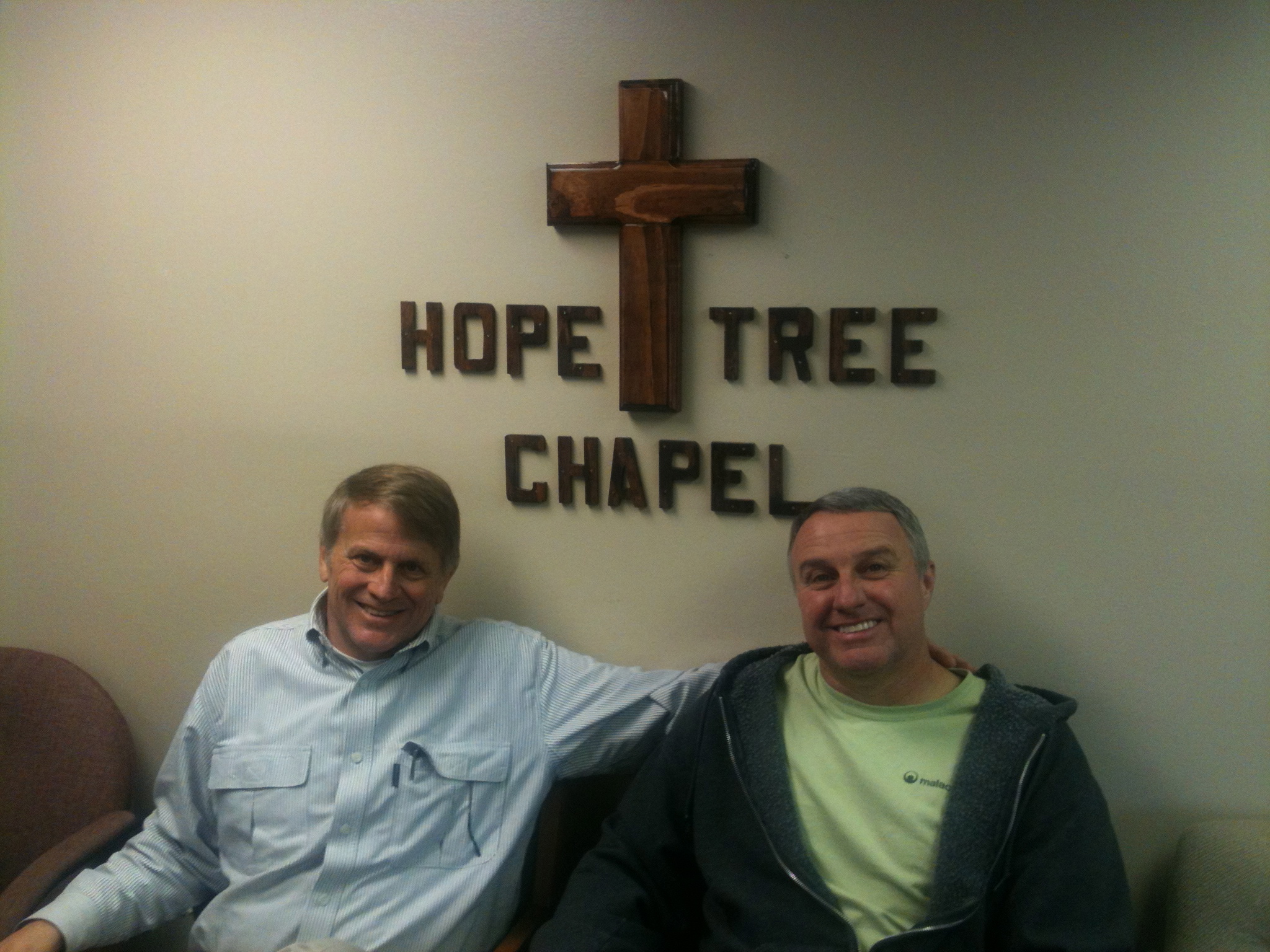
Shane O’Hara (left) director of Team 518. Dave (right), Inmate Chaplain & Church Planter at a South Louisiana Jailhouse.
Dave is now a hero of mine. Met him this week and learned about his church starting endeavor INSIDE one of South Louisiana’s Jailhouses. He served there as an inmate chaplain. He will be released on Friday and will continue his mission on the OUTSIDE. Pray for Dave and others like him who are overcoming and helping others overcome through prison ministry. Pray for the many Inmate Chaplains, reaching out to those INSIDE like none of us can.
If you’re interested in joining men like Dave and being ON MISSION to those in prison, shoot me a line. Laborers are needed to facilitate Celebrate Recovery, Fatherhood classes, Financial Planning classes, Discipleship courses, or help with churches starting INSIDE.
“I was in prison and you came to me” ~ Jesus, Matthew 25:42