 “Pride is the only disease in the world that makes everyone sick except the person who has it.” A few questions to help recognize pride in yourself:
 Pride is the #1 Enemy of Spiritual Growth, Relational Growth, Personal Growth & the biggest obstacle to people experiencing God. And Pride is often easy to recognize in others, but tough to recognize in ourselves. It’s a matter of what’s in your heart. That can be determined most often by what’s coming out your mouth (Luke 6:45).
7 Reasons to Make Ramp Building Part of Your Local Ministry
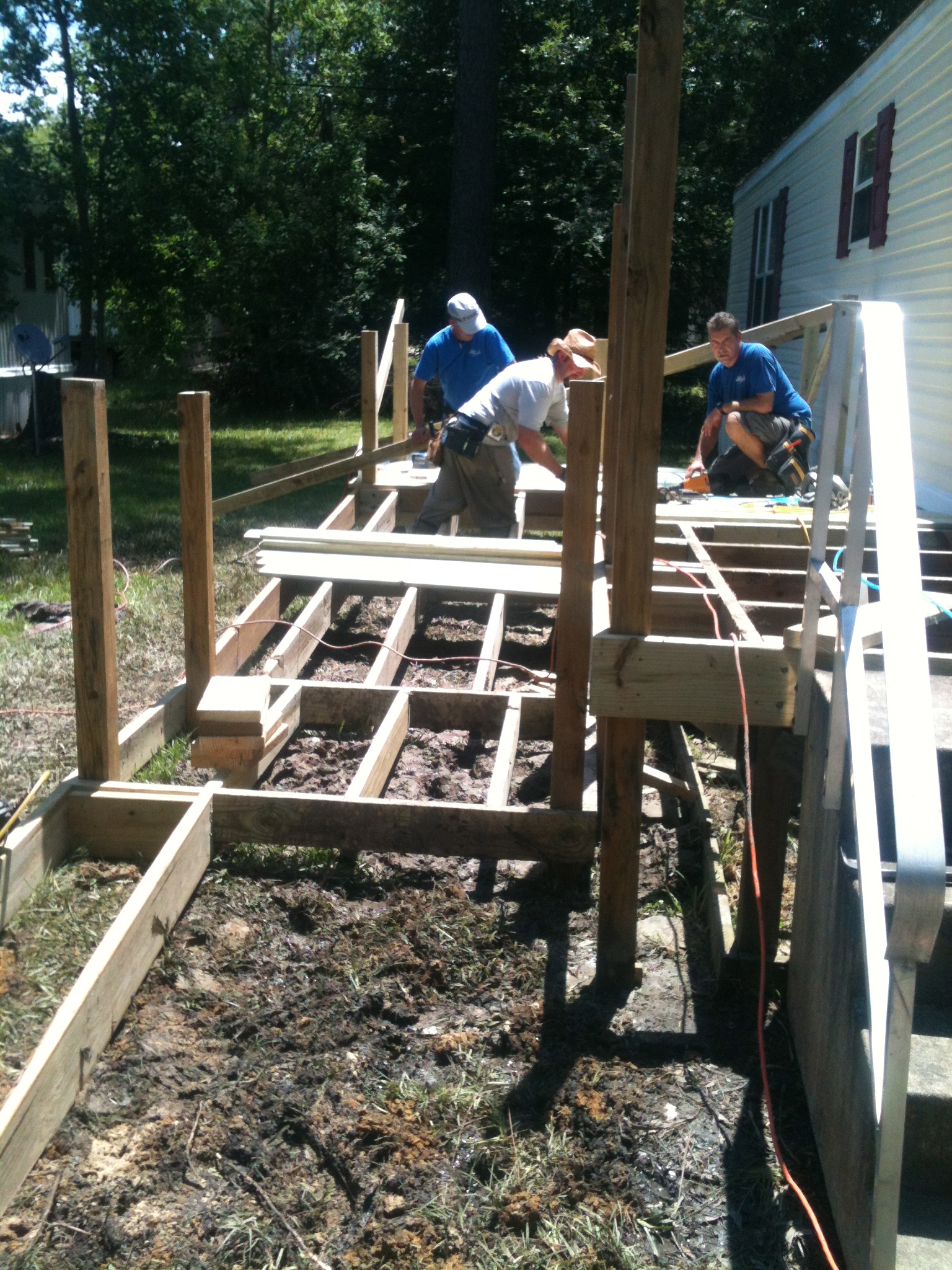 One of the first projects our church did together when we got started was build a wheelchair ramp. We’re blessed with men with the tools & know how & opportunities for this work is plentiful in every community. Here’s 7 reasons why I love Ramp Building as part of a church’s local ministry:
- Access & the Gospel. There are elderly & handicapped people who feel like captives in their own homes due to lack of access. We’ve even had several people in our community that couldn’t get out of their homes without help from the Fire Dept. What a great way to be good news & share the good news with a family & neighborhood. Access to God was built through Christ (1 Peter 3:18).
- Send the carpenter types. “I never knew I had anything to offer to the church” – a carpenter type after completing a ramp project through our church in 2010. If you’re thinking about Creating Sending Capacity & Sending the Whole Church, you must think about projects for the construction gifted men in the congregation. And some men in the community jump on these projects before jumping into attending church.
- Stimulate the local economy. Ramps cost approximately $25 per foot. $800-$1,200. Buy local. Don’t ask for a discount. But be thankful & promote the business when they give it.
- Projects for Real Men. What was the last thing your church did to promote authentic manhood? Construction, Power Tools, Sweat, Rescuing the Helpless, etc. Ramp & light construction ministry bring out some of the best in men & gives them great opportunity for fellowship around a challenging mission.
- Father & Son Projects. Looking forward to my boys being a little older so they can get more involved in ramp building, but I’ve enjoyed seeing a few Father & Son moments on ramp projects through my church. Also, have had great opportunities to explain the why behind church & ministry to my boys through describing the life situations of people we have served through construction ministry.
- Partnerships with local agencies. Your local Council on Aging, Easter Seals, Parish or County Social Services Dept., local Fire Depts. & others can give you a list to get started on. Also, chances are, your church has elderly, widows, people with handicaps, with access issues in their homes now. “do good to all people, and especially to those who are of the household of the faith” Galatians 6:10.
- Monuments to a Caring Church. Ramp building makes for long memories in a community. “That church came and built that.” Memories that make it harder for people in neighborhoods to say that nobody cares about them. That means we’ve brought hope & made ourselves available to meet other needs.
Here’s some good tips on doing construction as a ministry & how to get started from our 2012 Faith in Action Roundtable.
A few ramp projects completed this summer by the men of Bridge Church & our partners. The first was for an elderly deaf man in a wheelchair. The second was for a member of a sister congregation who had fallen & broken her leg & now faced some disabilities.


Worth Reading: Church Zero
 Great book with a raw, refreshing, kingdom centered approach to church leadership & church planting. Peyton Jones speaks plainly about business as usual & CEO approaches that have turned the movement of Jesus into an enterprise. Also, gives great instruction to returning to Ephesians 4:11-12 leadership – Apostles, Prophets, Evangelists, Shepherds, Teachers – describing the roles of each with how they function together. Adding this one to my Church Planting Bibliography.
A few quotes:
- Shame on the church planter who is church planting simply because nobody will give him a church of his own! Equal shame, however, is also due to the pastor who is afraid to lose people because he needs their money for fuel to keep the machine running.
- Church planting is essentially bringing the unique gospel community presence of Jesus Christ into the midst of a surrounding non-gospel community.
- Jesus was an army of one… You’re not.
- church planting is less Field of Dreams & more True Grit.
- the Western church today is obsessed with size, the first-century church was obsessed with reach, & that made all the difference.
- The church’s command from Jesus was not to “hold till I return” but to “secure the beachhead” of every distant shore.
- The focus shouldn’t be cramming more people into churches, but seeing more people rescued from the tyranny of Satan, sin, & self. If that means merging churches, halving churches, or helping other churches, then we’d gladly do it to see people rescued…
- church planting is not a spectator sport. It’s a full contact sporting event. You’re going to sweat. It’s going to hurt. You’re going to get muddy.
14 Years Later!
Yesterday was our 14th Anniversary! And I’m getting old enough to do some of my own time lapsed photography. Yikes! Visited one of our favorite spots on Southwestern Seminary’s campus this week with our now expanded families. No camera phone’s back then. Kodak all the way! Lot’s of great memories & hard learning between these two shots. Would I do it all over again? Indeed!


Why is Local Outreach So Hard? 20 Reasons:
 As church attendance declines, we must look at our communities as a mission field. Why don’t we? Here’s some reasons, assumptions, & excuses I’ve heard, said, felt as a church leader:
- As churches, we have turned inward & focused on campus.
- As churches, we have “hired it done” by church staff instead of equipping people for the work of local outreach.
- Witnessing means inviting people like me to my church.
- The compelling call to “Go” (Matthew 28:19-20) begins at the borders of our own country.
- Assumption: “Everybody has a church already.”
- Assumption: “They know where we are if they need us.”
- Assumption: “The needy around here get plenty of help from the government.”
- Assumption: “We don’t have enough money.”
- Assumption: “The city won’t let us share the gospel.”
- As church leaders, we feel tension between “Go. It’s about the people out there” & “Come. What’s going on in here is vital.”
- It takes a lot of energy to maintain the on campus ministry.
- If we challenge people to reach out & serve in non-traditional ways they may go to another church.
- Local outreach = Advertising.
- Excuse: “Our area has some dangerous neighborhoods.”
- Excuse: “We will one day.”
- Excuse: “We tried that already.”
- Excuse: “We might get taken advantage of.”
- Excuse: “My people are not ready.”
- Sinful unspoken assumption: “We don’t really want ‘those people’ coming to our church.”
- Sinful unspoken assumption: “It won’t help our bottom line.”
What other reasons, excuses, assumptions could you add to this list? How does your church reach out to your local community?
Commitment, Honor, and Transfer Growth
Transfer Growth is the term church leaders use when members swap churches. It’s not the preferred method of church growth but is accepted as part of ministry in our “church of your choice” culture. This topic makes for a lot of hallway conversation at Pastor’s conferences & is brought up as issues of concern for pastors regarding church planting & revitalization efforts. I’ve written about the Transfer Growth Boogie Monster & its implications for church multiplication. There ARE good reasons for Christians to transfer, i.e. moving to a new community, being led by the Spirit to connect with another church’s mission, or being sent out by a church to start something new. And bad reasons: “I’m not getting fed”, difficulty in relationships, “they’re too judgemental” – i.e. the church confronted my sin, wanting to disconnect from responsibility to serve. Here are some of the issues that transfer growth creates and has created for the church:
- Designing ministries for Christians. As church leaders, it’s easy to strategize & plan either out of fear that people might leave for another church, or in hopes that Christians will notice our church & jump on. So, instead of equipping/releasing people for the work of the ministry (Ephesians 4:11-12) & focusing on the needs of the unchurched culture, we slowly begin trying to hold onto or attract people by giving them what we think they want.
- Low Commitment, Disposable Relationships. Our low-commitment culture has crept into the church & produced shallow relationships that are disposable after one difficult conversation or awkward moment. We grow spiritually & relationally through such conversations & moments. Without them, shallow, superficial, non-confessional faith could result. Seen this in church lately? How can we teach that commitment to Christ & a community of followers, not a cooler church with more going on is the pathway to spiritual growth?
- Greener grass thinking. Today, we have people who have transferred two to three times and found the same issues at every place and have given up completely on church. What if leaders could have used it as an opportunity to teach about commitment, that relationships are tough & messy everywhere & that God wants to use these issues to shape & form us? Grass gets green because you water & fertilize it. In church that means committing to Christ, obeying his word, & doing it with others – consistently.
- The appearance of success. Churches growing by transfer growth appear successful & can be the envy of ministry circles, but the real measure is the influence on the community. Only allowing the gospel to infuse the cultural context & change indigenous unreached people will result in a transformed city. What difference does it make if our church grows, but the community around us remains the same?
How can we fulfill the Great Commission, teach people to honor commitments, be a unified church in our communities, and make room for those swapping churches? A few ideas from a sojourner:
- Develop a vision for expanding the kingdom, not growing one church. When your church grows by transfer growth it may be at the expense of another church. If that church is small, big holes may be left to fill. How does that help the kingdom? Can I help that Pastor? Should I hold these people accountable to fulfill the commitment they made at the church? I heard Bob Roberts say years ago, “What’s good for my church numerically is not always best for the kingdom, but what’s best for the kingdom is always best for my church.” I think that applies well to transfer growth.
- Get to know other pastors in the area. When people know that you’re not in competition with Pastor ____ & that you actually like him, want to see him succeed, & intend to honor him at every turn (Romans 12:10), you will help them get a vision for the kingdom & release any ill will they may have. Especially those who are coming with an axe to grind. I learned pretty quick in ministry that when someone comes to my church with an axe in the back of a pastor down the street, it won’t take long for that axe to be in my back. If you ARE in competition with Pastor ____, REPENT, & get a kingdom mindset, then invite an area pastor or two to lunch or join or start a network of ministry leaders working for the good of the region.
- Assuming you have an intentional process for developing members – When people are transferring ask, “Have you talked with your current pastor about this?” If we believe that church membership is a spiritual decision, then God will confirm it. Encourage them to talk with their current pastor about how God is leading them. This is another way to honor our brothers in arms pastoring other congregations in our area. It also communicates that this is a serious decision & that you’re more interested in spiritual growth than gaining another satisfied consumer of your particular religious goods & services.
- Assuming you have an intentional process for developing members – When people are transferring ask, “Have you made any pledges or commitments that you need to honor or be released from at your current church?” If we believe that church membership is a spiritual decision, and if we believe what scripture says about commitment (Proverbs 20:25; Ecclesiastes 5:4-6), this is a great question to ask of transfers. Especially if churches in your area are in the middle of building or capital campaigns. Pastors, we have little right to complain about lack of commitment in our congregants, if we welcomed them in at the expense of their commitments to another congregation.
- “…do the work of the evangelist…” 2 Timothy 4:5. The evangelist is concerned about growing the flock from those outside of it. And that’s what we must do to turn the tide of decline in Western Christianity. In their book On the Verge, Dave Ferguson & Alan Hirsch, outline the strategic problem facing the church in North America. “The majority of churches in the US are using a model of church designed to reach 40% of the population. This leaves around 60% outside the reach of the church.” Simply put, we’re all fishing in the same pond. We need churches that design ministries for the 60%. Churches that will step out of the church of your choice circle of influence & send people to the hard places, to have hard conversations with people who have little inclination to be impressed by our music, programs, building design, or clever sermon outlines. Churches that won’t be as concerned about size as they are about reach into the unchurched community. Churches that see the opportunity to take mission trips into their communities just as they do to foreign countries. Churches that will ask “Where is the church not?” & go there until the gospel message has been heard by all.
Not all transfer growth is bad or bad for the kingdom. But my desire is for commitment, honor, evangelism, kingdom growth, and community transformation to take precedence over a bigger crowd at my church next Sunday.
What are other issues created by Transfer Growth? What do you do as a ministry leader to disciple transfers? Does this matter at all?
 I love Louisiana. It’s one of the most unique places on earth. From Mardis Gras to Duck Dynasty to Acadiana to Cafe Dumonde, you can find a lot here that you can’t find anywhere else. One thing about Louisiana is that we tend to be defined by our excesses – food, drink, parades, etc. I like this list:

 Lane Corley