Devo: Overcoming Faith Needs Patience and Attentiveness
 Growing up in rural Louisiana, I heard lots of talk around the coffee pot at church or barber shop or anywhere else that people gathered about duck hunting & fishing. One story that stuck with me was about how the indians hunted ducks on Catahoula Lake.
When ducks would fill the lake, the indians would take hollowed gourds & float them out toward the ducks. When the gourds got near the ducks, of course they would fly off. The next day, the indians would float the gourds again, with the same result. The next day they’d do it again. Next day, again. Everyday, until the time came that the ducks grew comfortable that there was no danger & they quit flying away. Then one day, the Indians would take the hollowed gourds & put them on their heads & then swim out to the ducks. Not thinking they were in any danger, the ducks would not fly off & the indians would carefully begin to snatch ducks under the water, snap their necks & tie them to their belts.
You probably don’t need me to make any application here. But I’ve thought about this story often from both sides.
The Indians
The Indians patience won them a great prize. Proverbs 16:32 – “Patience is better than power…” They probably were able to harvest far more ducks than I or anyone else has with a powerful shotgun. Why? They devised a plan & faithfully carried it out. Someone said, “It’s not what you do today, it’s what you do everyday that counts.” Some things only happen by deliberate, daily action. What needs my attention every day to overcome? What habits can I form that will gain me a great harvest? Overcoming an addiction, growing a church, seeing a loved one saved, growing spiritually. All this takes great patience & habitual attention.
The Ducks
The Ducks grew complacent & comfortable with possible danger. Proverbs 1:32 – “the complacency of fools will destroy them.” The Message paraphrase of that verse says it like this, “Carelessness kills, complacency is murder.” What am I growing complacent about that could possibly destroy me? Habits? Entertainment? Relationships? What am I growing less concerned about that could prove dangerous to me, my marriage, my family?
Stalled in your faith? Add Patience & Slay Complacency.

Why Do Most Churches Stay Small?
Largely because most pastors don’t know how to build systems, structures, and processes that are not contingent upon them. Most pastors can care for people, but don’t build systems of care. Most pastors can develop leaders individually, but lack the skill to implement a process of leadership development. When a pastor can’t build systems and structures that support ministry, the only people who are cared for or empowered to lead are those who are “near” the pastor or those very close to the pastor. This limits the size of the church to the size of the pastor.”
– Darrin Patrick
Shared by Ed Stetzer on Episode 23 of the Newchurches.com Podcast


Great Weekend for Missions Conferences!
Lots of good networking, collaborating, learning, & challenging going on this weekend across Louisiana around Missions & Evangelism:
>> Collegiate Evangelism Conference
at Calvary in Alexandria. Pray for Michael Wood, Pastor of First Baptist West Monroe & others who will challenge 500+ college students about evangelism & devotion Near & Far. Thanks to Mark Robinson & all our awesome Louisiana BCM Directors who pull off this great event each year. I’ll be facilitating a breakout called Discover Church Planting on Saturday.
>> Crescent City Conference
on engaging Muslims through Church Planting & Evangelism in North America at Iglesia Bautista Horeb in Gretna. Pray for speakers Dr. Mike Edens & Dr. Page Brooks from the New Orleans Baptist Theological Seminary & Dr. Aslam Masih from the North American Mission Board. Thanks Ryan Melson, David Rodriguez & others for organizing.
>> Voyage Youth Missions Conference
at Tall Timbers. Pray for John King, Missions Pastor at Temple Baptist in Ruston & others who will challenge 150+ teenagers about missions. And they’ll all be on mission in Alexandria/Pineville on Saturday. Thanks to Jess Archer & Janie Wise for their work with Voyage & M-Jam.
Somebody should definitely come out of this weekend with a desire to plant a church! Praying…


From 15 to 175! Another Successful Revitalization


Another huge turn around on a property gifted to a healthy church from a church struggling to stay alive. Fellowship Church on Airline, planter/pastor Todd Blount, was gifted Immanuel Baptist Church on Airline Dr. in Gonzalez. Immanuel last reported 15 in worship. Fellowship has had between 130 & 175 since moving onto the property. Fellowship plans to construct a new building on the property later this year with the help of the Mission Builder Program (https://louisianabaptists.org/missionbuilder).
This makes at least NINE huge turn arounds in Louisiana through church mergers or gifting of properties in the last few years. At least three more in the works this year.
- Is your church struggling to maintain healthy systems? Would merging or gifting your property be a good option for your community?
- Is your church ready to multiply? Are you in a place where you could merge or take on an additional campus?
A few resources to help with these conversations:

2016 Church Planting Scoreboard
Yea, I love whiteboards… First scoreboard update for Louisiana Baptists Church Planting in 2016.

A few Observations:
- 73% of church starts since 2014 have been in south Louisiana, where 70% of Louisiana’s population & 35% of Southern Baptist churches are.
- 2/3 of church plants have been non-Anglo, so hopefully we’re making progress toward our “every people group” objectives from the President’s 2020 Commission a few years ago.
- This year, we should eclipse 10,000 new commitments to Christ since 2010 in our church plants years 1-3.
- Salvations & baptisms were down last year which may reflect more churches in first year cultivation stage or more in south Louisiana’s harder to reach areas.
- Currently 78 projects receiving Cooperative Program funding across Louisiana.
- Grateful for planters, partners, generous churches, & the prospect of 1,000+ new people coming into the kingdom this year through our efforts to plant new churches.
Check out these resources to help you get started on your church planting journey:
- 10 Biblical & Practical Ways to Get Involved in Church Planting
- Every Church Can Encourage Church Planting and Multiplication
- Every Church Can Be a Church Planting Partner
- Your Church Can Be a Parent to a New Church or Campus
Connect with other church planters in Louisiana by joining our Facebook Group – Louisiana Church Multiplication Network.

Your Church as a Greenhouse
 I enjoy gardening. Even though I’m not very good at it. Why? I don’t always have the time to do what’s necessary to grow and multiply plants to their fullest extent. The best gardeners know how and put in the time to create the right conditions for growth and multiplication. The very best gardeners will start with a greenhouse to nurse the plants in early stages before they are ever put in the ground. A greenhouse is a tool where you can create the perfect conditions for multiplication & growth of plants at all different stages and with various needs.
I enjoy gardening in part because of the many parallels it has to church planting and ministry. I’ve began to see church as a greenhouse – a tool to create the right conditions for multiplication & growth OF DISCIPLES. Here are five truths I’m learning on church as a GREENHOUSE:
1. Disciples must be nurtured.
Like plants, like a garden, like a greenhouse, disciples need time and attention. One of the greatest books on discipleship has in its title a reminder we constantly need – Disciples Are Made, Not Born. While we are not completely responsible for the growth of a disciple, part of our commission from Jesus requires time and attention and energy and prayer, etc., etc., etc. One of the greatest disciple makers, the apostle Paul, said it like this in Colossians 1:28-29,
“We proclaim Him, warning and teaching everyone with all wisdom, so that we may present everyone mature in Christ. I labor for this, striving with His strength that works powerfully in me.”
If we’re going to make disciples, we must expect to give much time and attention to people from sharing the gospel, teaching basic truths, responding to questions, correcting, forgiving, etc., etc.
2. A Disciple’s needs change over time.
A greenhouse or a garden is organized based on maturity and needs of the plants. Expectation are based upon time and stage of growth. Just like this, as churches, we need to provide a variety of opportunities for growth for people at different stages of maturity. And we need to teach our leaders what you can expect from people as they grow. The best tool I’ve seen that helps with this is Jim Putman’s great book Real Life Discipleship and the Real Life Discipleship Training Manual. Putman guides readers to understand where people are spiritually based upon what they say, and then how to respond and what to provide for them at that stage. (See my post Things Spiritual Infants Say for a run down).
3. Disciples will eventually need to be sent out from the greenhouse to multiply themselves.
The Greenhouse is not the final destination for a plant, nor is the Sunday worship service the climax of maturity for the disciple. Just like plants are meant to be outside, producing fruit and multiplying, disciples should be trained, equipped, and released into this world for maximum fruitfulness and to multiply the gospel in their sphere of influence.
4. Not all disciples will respond to the conditions you create.
A hard reality to face for the gardener, and much harder for the disciple maker is the truth that some plants and some people just won’t respond to the conditions you create. It hurts when a disciple doesn’t respond to God’s word. It hurts when a disciple leaves your church, but maybe they needed conditions you couldn’t provide at the time. Jesus even said that perhaps only 25% of disciples would become fruitful (Matthew 13). It’s important to remember that we’re responsible for our faithfulness, not everyones response.
5. The church is the perfect tool to create the conditions for multiplication & growth of Disciples.
The church, with all its imperfections, does provide a perfect environment for growth of disciples. A church offers opportunities to learn from those walking with God for years, opportunities to get involved and serve in various capacities, opportunities to have relationship wins and losses. These and other conditions help us grow. A lack of desire to learn, serve, love, and forgive REVEALS a lot about where we are spiritually and our potential for fruitfulness, maturity, and multiplication.
Does your church function as a Greenhouse? How are plants maturing? Are you providing opportunities for people at different stages of growth? Are you training your leaders to know what to expect as people grow? Are you moving people out to multiply in their world? Are you spending time with people that just refuse to grow & may need different conditions or to be let go?
Greenhouse: Basic Training for Church Multiplication
I’m humbled & excited to be involved with training church planters in Louisiana & our latest training is now called Greenhouse: Basic for Multiplying Disciples, Leaders, Groups, & Churches. Next one is right around the corner, Feb 22-23 at Wholly Ground Coffee House & Concert Venue. It’s free. You can join us & work on your GREENHOUSE. Register Here.

Top 6 Places to Plant a Church in Louisiana
I like to call south Louisiana the back pocket of the Bible Belt. Still many cities & communities in need of new churches in one of North America’s most unique cultures. Here’s the top places to plant a church in Louisiana:
(I use data on SBC, southern baptist churches, because that attendance data is readily available to me as a SBC strategist. Data on evangelicals comes from the.arda.com).
1. New Orleans
Population: 956,000. Only 2.1% attend a SBC Church. Only 11% Evangelical. 432,270 unaffiliated with any church.
Includes the Parishes of Orleans, Jefferson (Louisiana’s 2nd largest Parish), St. Bernard, Plaquemine, & St. Charles. New Orleans is strategic for a lot of reasons: one of North America’s most influential ports, a cultural icon for the world. For Louisiana, it makes up 20% of our population. For Southern Baptists, its one of only three Send Cities in the South.
Contacts: The New Orleans Baptist Associaton, DOM Jack Hunter. George Ross, North American Mission Board Send City Coordinator for New Orleans.
2. Acadiana
Population: 675,000. Only 1.8% attend a SBC church. Evangelical population only 9%. 229,049 unaffiliated with any church.
Includes the cities of Lafayette, Youngsville (one of Louisiana’s fastest growing), Abbeville, Carencro, Opelousas, Breaux Bridge. This is true Louisiana. Cajun Country. The images most shared about Louisiana come from these areas. Amazing food. Gators. Live Oaks. It’s also home to Louisiana’s second largest University, University of Louisiana – Lafayette.
Contacts: The Evangeline Baptist Association, DOM Bert Langley.
3. Baton Rouge
Population: 630,000. Only 2.0% attend a SBC Church. 23% evangelical. 242,000 unaffiliated with any church.
Includes the cities of Baton Rouge, Prairieville, Gonzalez, Port Allen, Plaquemine & others. Louisiana’s state capital & the center of political life & becoming more influential in the Business life of the entire I-10 corridor. Growing refugee populations have been noted & this year will begin receiving Syrian refugees. Also, home to one of America’s most influential universities, Louisiana State University.
Contacts: The Baptist Association of Greater Baton Rouge, DOM Tommy Middleton.
4. Bayou
Population: 208,000. Only 1.8% attend a SBC Church. Only 6% Evangelical. 70,672 unaffiliated with any church.
Includes the cities of Houma, Thibodaux, Grand Isle, Galliano, Cutoff, & others. One of the best places for fresh shrimp & salt water fishing in North America! Beautiful people & incredible culture. Also, very influential because of the thousands that work out of these communities in the drilling & oil production industry across the Gulf of Mexico. Home to Nicholls State University.
Contacts: The Bayou Baptist Association, DOM Joe Arnold.
5. I-12 Corridor
Population: 541,234. Only 4.8% attend a SBC Church. 25% Evangelical. 270,687 unaffiliated with any church.
Includes the cities of Denham Springs, Walker, Hammond, Ponchatoula, Covington, Mandeville, Slidell & others. Fast growing for years due to suburban life. Now robust corporate life developing. Home to Louisiana’s third largest University – South Eastern Louisiana State University in Hammond.
Contacts: Eastern Louisiana Baptist Association, DOM David Brown. And Northshore Baptist Association, DOM Lonnie Wascom.
6. Lake Charles
Population: 235,000. Only 3.7% attend a SBC Church.
Aw man! If I were 28 again & ready to start a church, I’d plant myself here! Includes the cities of Lake Charles, Sulphur, & Jennings. May be one of the fastest growing areas in the south right now with 17% growth over the last 18 months. Expected to add 40,000 jobs over the next decade. Home to McNeese State University.
Contacts: Carey Baptist Association, DOM Bruce Baker.
Planters & partners needed. Message me for info about these and other communities that need new churches in Louisiana if God may be leading you to the Bayou.
Find other info on Church Planting in Louisiana at https://louisianabaptists.org/churchplanting.
And connect with other church planters in Louisiana by joining our Facebook Group – Louisiana Church Multiplication Network.

Leaders…
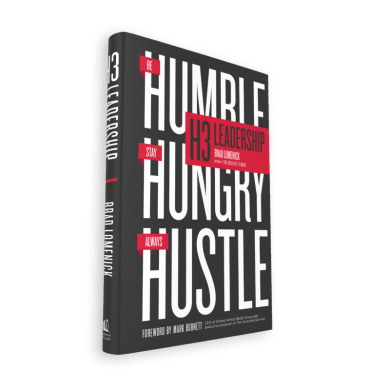
Ambitious leaders provide solutions, not just ideas. They constantly move toward completion. They honor others by showing up early and finishing on time. They always anticipate what needs to be done next and are always one step ahead, and they work on items they weren’t asked or told to do but know have to get done. They move the needle wherever they are placed and are always looking for ways to improve the process. They are disciplined in their learning and understand the power of becoming an expert, no matter what level or role they play in an organization. Ambitious leaders write down everything immediately, knowing they will probably forget if they don’t and that writing it down makes it a priority. They take initiative and remove things from leaders’ plates around them.
Brad Lomenick in H3 Leadership: Be Humble, Stay Hungry, Always Hustle

Seeing the Possibilities for Life On Mission
Life on mission emerges for the believer when we are able to see the possibilities of our relationship with God & our position in the world. Three beliefs that help me see the possibilities:
- God is all powerful – “with God all things are possible” Matthew 19:26
- God has placed me in this world for a purpose with the promise of His power & presence – “we are God’s handiwork, created in Christ Jesus to do good works, which God prepared in advance for us to do.” Ephesians 2:10
- I will meet people today in great need – “Jesus saw the crowds & had compassion on them.” Matthew 9:36
When these three collide, the possibilities for making a difference should be constant in our hearts & minds. Just add obedience.
- Do I believe that God is all powerful?
- Do I believe that god has placed me in this world on purpose?
- Who do I know that needs encouragement, witness, acts of kindness, rebuke, etc.?

How to Be Satisfied By Church
If you ask people about their church today, you might get a “BUT.”
- “The music is great, BUT…”
- “The pastor’s teaching is good, but…”
- “I like my Sunday School, class, BUT…”
A lot of dissatisfaction out there about church. A product of our consumer culture I guess. We’re taught to critique anything we buy & we know we have other choices if we’re not satisfied. Unfortunately, that’s what church has become, simply another service vying for our time & attention & in our culture, we have choices!
Well, I’m not trying to sell you anything, but I believe that you can be SATISFIED by YOUR CHURCH or any Biblically sound church with some attitude changes. Here’s three Biblical attitudes that will bring much satisfaction to your life at church:
1. “My church is incomplete without me.”
See yourself as a part of the whole body, & the church as incomplete without you. See Ephesians 4:7 & 1 Corinthians 12:8-12.
he has given each one of us a special gift[a] through the generosity of Christ.
The human body has many parts, but the many parts make up one whole body. So it is with the body of Christ.
2. “I’m a player, not a spectator.”
Be a player, not a spectator. We’re actually all playing for an audience of one. Our leaders are there, not to entertain us, but to EQUIP US FOR THE WORK OF THE MINISTRY. See Ephesians 4:11-12
Their responsibility is to equip God’s people to do his work and build up the church
3. “What can I give today?”
Don’t focus on what you can “get out of it.” It’s not what you “get out of it” but what you give to others that makes you & the church grow AND (watch this) determines if you GET SOMETHING out of it or not. See Ephesians 4:16.
He makes the whole body fit together perfectly. As each part does its own special work
In the Old Testament book of Exodus – chapter 18, Moses found himself leading a very large group of dissatisfied people. They had many needs & they looked to Moses to meet them all. Moses’ father-in-law came to town & gave Moses a different plan. Empower the people to use their gifts & abilities to solve the problems of the community. And I love what he told Moses about this plan in Exodus 18:23.
“If you do this, and God so directs you, you will be able to endure, and also all these people will be able to go home SATISFIED.”
When we all come together TO GIVE of what God’s given us, take OWNERSHIP of the mission, & drop the “but’s” no matter where you are, we’ll get the most out of our experience in & with the body of Christ.
Learn more about Getting something out of church by grabbing the audio for last weeks message at Bridge Church in Madisonville where we talked about the On Ramp of Ministry & Mission as a vital component of our Spiritual Growth.