
Resolved: Four Biblical Resolutions for 2019
The Bible is full of resolutions. Our reading of the Bible should be to see the gaps between ourselves and God’s will and close that gap with resolve. The difference between worldly resolution and Biblical resolution is that as believers we have the promise of God’s presence with us to empower and encourage us as we resolve to walk with him. So let’s be resolute in 2019. Here are four Biblical Resolutions in way of reminder and challenge.
1. Devote yourselves to Prayer… Colossians 4:2
Prayer works every time it is tried. God promises to hear and to answer the praying believer, who prays in faith (Matthew 7:7; James 1:5-8; 1 John 5:14-15). Resolve to be a person of prayer in 2019.
Ideas:
- Set your alarm for 10:02am as a reminder to pray for your church and for more laborers for God’s mission (see Luke 10:2).
- Get your church’s directory and pray for one page per day.
- Sign up for Daily Prayer List of the International Mission Board
- Sign up for BlessEveryHome.com and pray for your neighbors everyday
2. Every man mature in Christ – Colossians 1:28-29
The resolve of the apostle Paul was to move EVERY PERSON in his sphere of influence closer to Christ. What a resolution!? Our influence as believers is currently limited by our vision and our lips. Resolve to see every person in relation to eternity and communicate God’s Gospel truth in practical ways in 2019.
Ideas:
- Pick up or make invites to your church to hand out around town.
- Ask God for divine opportunities and commit to share the gospel on a daily or weekly basis.
- Make a list of lost friends, relatives, coworkers, and neighbors to pray for everyday.
- Pick up a book or study on sharing the faith and read to get equipped. Let me suggest: Turning Everyday Conversations into Gospel Conversations by Jimmy Scroggins, Sharing Jesus Without Freaking Out by Alvin Reid, or Tell Someone by Greg Laurie.
3. Exercise is of some value – 1 Timothy 4:8
In most of us, a new year brings a desire to make changes. Gym memberships increase by about 12% every January. While we do not all need to be Iron Men, we should recognize the secondary value (next to godliness) of maintaining and/or improving our physical condition as a steward of God and faithful witness until our last breath. Resolve to improve and/or maintain your physical condition for stewardship and witness in 2019.
Ideas:
- Walk. This is a great way to combine #1, #2, and #3. Walk your neighborhood and pray for each home and look for opportunities to build new relationships.
- Try a 21 Day Fast as a way to reset your prayer life and dietary life.
- Join a gym and/or fitness class as a way to get in better condition and build new relationships in the community.
4. We will tell the next generation – Psalm 78:4
The next generation is to be a priority for disciples of Christ (Deuteronomy 6:6-8; Psalm 78:1-4). Parents and Grandparents have a built in reminder of their duty and priority. But we mustn’t stop there. With Christianity in decline, we need all hands on deck to make sure every child hears of God’s love in Christ for them. Resolve to pass on your faith to someone younger than you in 2019.
Ideas:
- If you’re a parent, commit to a family meal time each week where you share a devotional and pray for and with one another.
- Sign up to volunteer in the children’s ministry of a local church.
- Look for opportunities to volunteer at a local school or mentoring program.
- Ask God to show you a child at your church or in your neighborhood that needs an encouraging word.
What are some other Biblical Resolutions that we can resolve to pursue in 2019?

Helping Kids in Transition
This year our church partnered with a couple of great organizations for Christmas On Mission Projects:
1. The Kids In Transition (KIT) Program through our local schools. KIT as the program is called helps teens who are in substandard or transitional housing. Another term is “couch surfer.” A teen without a permanent address. It also covers teens who find themselves in other situations such as teen pregnancy or fleeing from an abusive parent. We were able to fill a few wishes for some of the kids in this program. Find out more info HERE.
2. James Storehouse and Louisiana Dept of Child and Family Services. James Storehouse is a Non-Profit that mobilizes resources for foster children and families associated with foster care and adoption. Kim Bigler founded and directed the Storehouse with a lot of enthusiasm. They have many volunteer opportunities throughout the year. Bridge Church was able to provide a breakfast at their new facility on Hwy 21 in Covington for the staff of our local DCFS office.


The DCFS staff does amazing work for our community. This year alone, 192 kids were adopted through our local Covington office! Also, 107 kids were placed in a foster care home and 165 homes were certified as foster care providers. STILL MORE ARE NEEDED!
Incredible people doing hard work for the neediest among us. Praying for these and others on the front lines of need in our communities.

You Can Hope Again
One of the most significant and unsung verses in the Christmas Story and maybe in the New Testament is Luke 1:11.
An angel of the Lord appeared to him, standing to the right of the altar of incense.
Luke 1:11 Christian Standard Bible
This is the moment that God broke through after 400 years of silence, after allowing the rampaging and devastation and defeat of His chosen people, and after allowing Judaism to become a ritualistic shell of itself. God broke through. God spoke. God set in course the events that would bring salvation to all the world in the person and work of Jesus Christ.
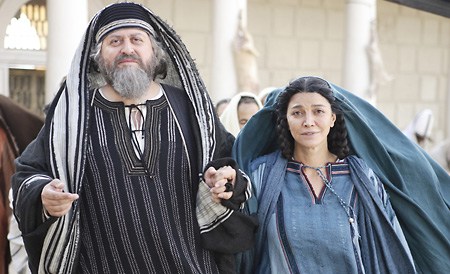
Zechariah and Elizabeth’s characters depicted in the movie The Nativity Story
The before and after of this verse goes like this: An aging Priest named Zechariah got the opportunity of a lifetime to offer incense in the Temple’s sanctuary. He and his wife Elizabeth, who was never able to have children, and now was well along in years, made arrangements to fulfill this obligation. As he offered incense, God reached down and spoke. Unexpected events, unexpected people involved, unexpected announcement that Elizabeth would have a baby. That baby would become the way-preparer for the Messiah, John the Baptist.
This is the moment where God initiated the keeping of His Promises and Securing the Hope of all who believe. This is the moment that those caught up in this story saw their Hope Restored. What does Restored Hope look like? For Zechariah and Elizabeth and that group of ordinaries that surrounded them on this day, it looked like this:
The Pathway to Hope Again:
1. Recognition that God’s Word is still true. The prophecy of the coming Messiah and the Way-Preparer IS TRUE! And in the coming days, 100’s of other prophecies would be fulfilled in the coming of Christ. For Zechariah, this was no longer just stale religious ritual, but a dynamic voice, capable of restoring hope and bringing change.
2. Recognition that God can still use even me. The sun was seemingly setting on Zechariah’s life and ministry, but God broke through and gave he and Elizabeth a place of prominence in the Gospel story. God is never finished. He gets the last word on our significance.
3. Recognition that God can still accomplish the impossible. Elizabeth’s barren womb and old age, would be no obstacle to God’s will and God’s promise being kept. Neither will any obstacle that we face in life and leadership. Nothing will be impossible with God (Luke 1:37) will be a core belief of the hope-filled believers.
Maybe this Christmas, you find yourself with lost hope or deferred hope (Proverbs 29:13). Ask God to breakthrough again with these three truths. You can Hope Again. His Word is True. He’s not finished with you. He’s still doing the impossible. Hope Again. Believe Again.
Father, restore our hope through demonstrating the truth of Your Word. Show us that we are your instruments until the day we die. Open our eyes to see the possibilities of your power and your promise.
Join Bridge Church, Sunday’s at 10am at Hollywood Theater in Covington to discover more great truths from the story of Christmas.

2018 Church Planting Update
Louisiana Baptists have planted 22 Churches so far in 2018.
- 6 in North Louisiana, 16 in South Louisiana
- 6 in New Orleans
- 13 non-Anglo. 8 African-American, 3 Hispanic, 1 Asian, 1 Multi-Ethnic
Since 2010:
- 234 Churches Planted
- 56 in north Louisiana, 178 in south Louisiana
- 61 in New Orleans
- 128 non-Anglo. 70 African-American, 31 Hispanic, 10 Asian, 17 Other
Our goals have been to plant 300 churches by 2020; to plant more in south Louisiana where 70% of the population lives; at least 20% of plants in New Orleans where 20% of our population lives; and to plant more non-Anglo churches, increasing the diversity in Louisiana Baptist life.
Highlights:
- Since 2010, Church Plants have reported 13,208 Professions of Faith and 3,536 Baptisms. Church Planting continues to be one of the best ways to evangelize communities.
- Since 2010, churches have been planted in 100 of Louisiana’s 304 cities and towns and 41 of Louisiana’s 64 Parishes.
- Now, RePlanting is ramping up, with 25% of last years new works being replants and 40% this year.
66 churches away from our 2020 goal of 300. With each new church comes new brothers and sisters in Christ, new fronts on meeting real needs in communities, and more glory for our great God as the gospel bears its fruit across Louisiana.
You can be a part:

Church Planting Objection: “We don’t need another small church…”
I’ve heard this one for years when church planting comes up among pastors. A couple of responses:
1. Who said we’re trying to plant small churches? That’s never the goal. The goal is to reach people for Christ. Church Planting is one of the means. God, the context, the partners, and a lot of other things often determines the size of the church. If you don’t want to see another small church, get involved and help us plant a big one!
2. This may say more about your vision and belief in God’s ability than the local church planting strategy. In every apple is an orchard. In every believer is a potential to reach more. In every group of believers, no matter how small is the potential for a movement. Let’s believe God for bigger things.
3. “We don’t need another small church…” Unless your lost and on your way to hell. Then you need a small church, medium size church, mega church, or whatever kind of church to come and get you and share the good news of God’s grace and salvation! Let’s not forget that this is about heaven and hell, not our own ego or discomfort.
4. And remember, God has no small churches and no big pastors. God doesn’t show favoritism (James 2:9). God doesn’t see as man sees (1 Samuel 16:7). The kingdom is upside down – to be great, be a servant; to be first, go last; to live, you’ve got to die. Can’t you imagine with me that the God that governs an upside down kingdom values and cheers on the small church as much as the big church?
Church Planting is a great means of evangelizing and discipling a community. Until every person is reached, let’s strive to do everything possible to reach them. Including planting small churches, big churches, and all kinds of other churches to see the kingdom come as earth as it is in heaven. And today, every church can get involved in church planting, church replanting, multi-site development. Pick your pleasure and lets reach people for Christ.

You are a Link in a Chain
“The Gospel came to you because it was heading to someone else. God never intended for your salvation to be an end, but a beginning. God saved you to be a conduit through whom His glorious, life changing gospel would flow to others. You are a link in a chain….”
Robby Gallaty, in Growing Up: Becoming a Disciple Who Makes Disciples

100 Cities, 41 Parishes
This month, Louisiana Baptists will mark new churches number 228 and 229, since 2010. The goal is 300 by 2020. We’ve passed the milestones of 10,000 new commitments to Christ, and celebrated 150 and 200 churches planted. Another interesting stat to watch for me has been the breadth of church planting in Louisiana. With the next two plants, we’ll mark the 100th city or town to have a new church planted in it since 2010. And keep in mind, Louisiana only has 304 incorporated cities and towns. Grateful for our church planters, partner church’s, and all who contribute to the Cooperative Program and State Missions Offerings to see churches planted across Louisiana.

We actually still have some significant towns without a Southern Baptist church in Louisiana, and a few with little or no evangelical presence. So our work continues…
And if you’re wondering WHY? Why plant churches in Louisiana, see my post entitled Recent Q&A: Why Plant Churches.

Organize Your Life for Generosity and Obedience
“You don’t have to be rich to tithe, but you do have to be organized.”
I’m convinced many people are just not organized enough to make a difference with their money and resources. Obedience to God seldom happens by accident. It requires conviction, courage, and a decision to do what’s right, before the opportunity comes. What decisions do Christians need to make in regard to money?
- Give it all to God. Understand that it’s all His anyway. He’s made you a steward or manager of it, for now. Hopefully, you are not Lord over your life. If you’ve allowed Christ to take the reigns in your life, has that extended to your checking account?
- Know what you have. Do you have a budget and a tool that helps you track income and outflow? Watching the balance and putting the breaks on when you’re close to broke, is not a plan. If you’re doing that, you’re most likely broke and don’t know it yet.
- Plan for obedient generosity. God calls us to sacrificial, regular, cheerful giving (Malachi 3:10; Luke 6:38; 1 Corinthians 16:2; 2 Corinthians 9:7). Pick a % of your income that is sacrificial, give it regularly (weekly, bi-monthly, monthly), and do it with a smile. God’s promised blessings WILL be know to you soon.
Here are a few tools that help us plan for generosity and obedience:
- YNAB – YouNeedaBudget.com. Great budgeting a tracking tool for income and expenses. Small annual fee. Everydollar.com, by Dave Ramsey, looks good as well. We were already sold on YNAB before that came out.
- Dave Ramsey Resources. Dave Ramsey’s books, web resources, and daily podcasts, helps me keep my mind renewed in regards to money and its pitfalls. Find at daveramsey.com.
- A few helpful blogs that I follow
- PTMoney.com – Phil Taylor is a Louisiana man. Now famous financial blogger and conference host.
- Mary Hunt’s blog, everydaycheapskate.com. Mary Hunt’s book on Debt Free Living was helpful to us in the early years of our marriage. Her blog is full of tips and tricks to save money on every day stuff of life.
What decisions, challenges, resources have you found helpful in regard to money and finances?

Devo: Trust God by Giving and Resting
Believing in God’s power to provide means trusting God enough to obey His precepts about Giving and Resting.
- Giving sacrificially, regularly, and cheerfully. Giving a % of your income to God.
- Setting aside one day in seven for rest and worship. Sabbath.
If I trust God, then I believe that I can do more with 6 days of work and God’s power than I can with 7 days of work in my power. I can do more with 90% of my income and God promises than I can with 100% of my income in my own power.
- Do I trust God enough to take a day off from work to recharge and reconnect with him? Or do I believe that it is my effort alone that makes my ends meet?
- Do I trust God enough to believe his promises toward the generous? or do I believe that what I have is mine and I deserve all of it?

6 Tips for the Bivocational PREACHER
I’ve spent most of my ministry in Church Planting, which has required a bivocational approach. I’ve had side hustles as a fireman and a commercial janitor, and the part-time and now full-time rolls as denominational strategist. For the Bivocational Preacher, time is always a challenge. Here are a few tips I’ve learned from 20 years of Bivocational Preaching:
1. Read through the Bible systematically and make outlines
Your devotional time should be separate from your sermon preparation. However, your devotional time should FEED your sermon preparation. As you follow Jesus, by spending time in His word and prayer, journal your thoughts, outline the texts that jump out at you, and develop a system where you’ll remember where that outline and those thoughts were for when you come to that passage in your preaching.
I love the story of the old preacher that was asked by the young preacher, “How long did it take you to prepare that sermon?” The old preacher said, “About 35 years.”
The older I get, the more my preaching benefits from a systematic reading through the Bible every year.
2. Get a handle on a few solid and simple tools
Sermon prep tools are plentiful. Bible software, commentaries, websites, etc. Most preachers love study, so we can get bogged down with so many tools. As a bivocational pastor I’ve had to cut through my love for the bells and whistles and pull together fewer and simpler tools for each sermon and series. Usually two commentaries, a free online interlinear tool, a Bible Handbook and Dictionary, and my devotional feeds do the trick for me.
This also helps me with one of my goals in preaching. I don’t want anyone to walk away from a sermon I preach and say, “I could never do that.” Simple tools that you can pass along to others for a small costs keeps the preaching ministry of the church reproducible.
3. Have a system for recording quotes, illustrations, and ideas
The morning paper for most of us has moved online. Preachers need a system for collecting data, articles, and quotes that we come across throughout our online lives. D.L. Moody did this with newspapers and books, amassing a collection of quips and illustrations that fathoms the mind. There are numerous online clipping tools and places for storing ideas. I like the Evernote Webclipper. It allows you to create categories and tags for easy location by topic later. I also follow hundreds of blogs and feeds daily in Feedly. Feedly allows you to save articles by categories for easy location by topic later as well. I also subscribe to Preaching Today for $69 per year, which includes an archive of illustrations from the news and history. There are other subscription based services that can be utilized as well.
4. Start preparing early
Monday morning is key to a prepared sermon. If I don’t have at least a rough outline by the end of the day Monday, I’m behind on the sermon the rest of the week. Ideally you can get two – four weeks out. And I recommend preaching series of sermons, where a team can be utilized in planning and the big ideas for the series along with the major tools to be utilized are planned out months in advance.
Smoked meat is the best tasting of all. The key to delicious smoked meat is TIME. Like that, I like to get my sermon outlines done far enough in advance (2-4 weeks) to give them time to fill with flavor and soak in thoroughly. A great Sunday for me is actually, a sermon that soaked for at least two weeks and delivered in the power of the Holy Spirit, and then heading home to pull some delicious beef, pork, or turkey out of the smoker. Yes!
5. Commit 30 minutes to 1 hour everyday
When you’re bivocational, often time does not allow for 4-6 hours of preparation at once. I try to budget 30 minutes to 1 hour each day for a “Sermon Look.” Take a look at your outlines, pray over them, consider any current events or news or quotes to include. For me, this mean getting up extra early or staying at the computer for an extra 30 minutes to an hour. I also like to include discussing the passage with my wife and kids, and maybe a few trusted friends, throughout the week to get their perspective and help me in thinking through communication of the truths to real people.
6. Depend on God’s Power
It’s usually when I’m least prepared and when I feel the delivery was the poorest, that someone comes up and says, “This message changed my life!” What?!?! This always reminds me, that it’s God’s work to use his messengers how he sees fit. All the preparation in the world can’t overcome the spiritual war we’re facing when we stand and proclaim God’s word. We need his power, his presence. To depend on ourselves is to fail in this task.
What other tips and tricks do you know that can help us Bivocational Preachers?


 Lane Corley