Category Archives: Louisiana Baptists

Multiply I-20
 Twelve Louisiana parishes touch I-20 & is home to 16% of our states population. Two of Louisiana’s nine Metropolitan Statistical areas are on I-20 – Shreveport-Bossier & Monroe-West Monroe. About 83% of the population of I-20 live in these two areas. This area is also home to around 30,000 college students each year, in four great universities – La Tech (12,014 students), Grambling University (4,553 students), University of Louisiana-Monroe (8,800 students), LSU-Shreveport (4,383 students). This part of Louisiana is more true Bible belt than south Louisiana, with evangelical populations near 50% across the I-20 corridor. But many churches in this area are in decline & in need of change to reach younger generations. Church Planting & church revitalization strategies are greatly needed moving forward. Here’s some data for us to get the strategy wheels turning:
- Population of I-20 Corridor is 737,504. Up 1% since 2010. Fastest growing parishes were Bossier (7% increase), Lincoln – where Louisiana Tech is located (up 2%), & Ouachita – West Monroe & Monroe (Up 2%). The other 9 parishes are projecting drops in population from 1%-6%.
- There are 364 SBC churches in the parishes that touch I-20 for a church to population ratio of 1/2,026.
- 47,989 residents worship in an SBC Church in 2015. Only 6.5% of the population. Worship attendance dropped by 7% since 2010. Only three of the 9 associations across I-20 experienced an increase in worship attendance since 2010 – Madison, Concord-Union, & Webster-Claiborne.
- Only 4.4% of the population attended Bible Study in an SBC Church. 32,604 residents. Bible Study attendance dropped by 10% since 2010. Only one of the nine associations along I-20 experienced an increase in Bible Study attendance since 2010 – Madison.
Current Louisiana Baptists Planters along I-20:
- Cleto Perez – Iglesia Bautista Nueva Vida – Arcadia
- Miguel Barrios – Filadelfia Baptist Mission – Bernice
- Barnabas Son – Monroe Korean Baptist Church – West Monroe
- Richard Thomas – Gethsemane Baptist Church – Shreveport
- Carranza Johns – Hip Hope Church – Shreveport
- Trandy Wade – New Life Journey Baptist Church – Bossier City
- Ivory Jackson – North Star Baptist Church – Shreveport
- Roy Thomas – St. James Baptist Church – Shreveport
- Greg Shyne – United Outreach Church – Shreveport
- Daniel Hernandez – Broadmoor Hispanic Mission – Shreveport
- Miguel Guillen – First Hispanic Church, Haughton
- Mt. Kham Nang – First Zo Baptist Church – Bossier City


How to Plant a Church in a MICROpolitan Area: Christ Church Opelousas
Louisiana has 9 METROpolitan areas and 9 MICROpolitan areas. The only difference, according to the Census Bureau is proximity to a large city.
“Micropolitan cities do not have the economic or political importance of large cities, but are nevertheless significant centers of population and production, drawing workers and shoppers from a wide local area.”
These are some of my favorite places in Louisiana – Natchitoches, Ruston, Bogalusa, Morgan City, DeRidder, Fort Polk, Bastrop, Jennings (actually not a favorite place b/c they knocked my team out of the High School baseball playoffs my Sr. year. Yea, I’m bitter. Lol!) And the largest of these is the Opelousas-Eunice Micropolitan Area. It’s also the least churched of these nine as well, with Morgan City close behind.
 How do you plant a church in a Micropolitan area? Well, Christ Church Opelousas is doing great job at showing us the way. Stuart Amidon is the church planter and in their 30th month of existence they have over 80 in worship attendance and are looking at expanding their capacity and making other things happen to prepare for the next wave of growth. What’s the story? What lessons can we learn from Christ Church Opelousas?
1. Keep a Positive Outlook
Stuart has a very positive, hopeful attitude. Slow growth can be discouraging and frustrating at times for church planters in small towns. Managing expectations with faith and a smile is essential for leading a church at this level, because the people see how everything effects you personally. Positive attitude inspired by a close relationship with a sovereign God is a must for church planting wherever you are.
2. Reach out to the Downcast
Christ Church Opelousas meets in the chapel of a rehab center in Opelousas, so much of their core group were people at the bottom working their way up. Church Planting works best in the well cultivated soil of people that know they need Christ and other people. Christ Church has developed out of that soil, so life change along with grace and mercy are front and center.
3. Plan on a Bivocational Approach
Stuart serves a local school. Planting in small towns such as Opelousas may require a bivocational approach. Don’t resist it. Much good comes from being in the community and one of the community, in the workforce. Bivocational ministry also forces multiplication of leaders as the pastor is not there everyday to take care of all the work of the church. And the sooner multiplication takes place the faster the church plants capacity for growth can expand.
4. Get Involved in a Good Network
Christ Church Opelousas is part of a network of Christ Churches that work in small communities across Acadiana. Stuart also participates in our Multiply Louisiana network meetings as able. Research has shown the validity of church planting networks. In the Church Plant Survivability and Health Study realeased in 2007, by the North American Mission Board, a survey found that church plant survivability increased by 135% when a planter met with a group of church planting peers regularly. Another survey of 600 church planters revealed that first year attendance was over 50 percent greater in the churches planted by those participating in a peer network. (see my post on The Importance of a Church Planting Peer Network). I like to say, one of the best things that planting a church has done for me is drive away my independence. To plant in a small town you will need others!
I’m excited about Christ Church Opelousas. Pray for them as they continue to reach out to their community. Keep up with Christ Church Opelousas on Facebook.

2016 Louisiana Church Planting Update
75% of 2016 is in the can. Here’s a report of this years Church Planting efforts among Louisiana Baptist Churches:

- We’re at 29 Church Plants for the year. Just 1 away from our annual goal of 30. We should finish the year with 34-36. Making 2016 another record year for church planting in Louisiana.
- 2 in North Louisiana, 27 in South Louisiana.
- 13 in New Orleans, 7 on the I-12, 3 in Baton Rouge, 2 in Lake Charles, 2 in Central LA, 1 in Lafayette, 1 in Houma/Thibodaux.
- 12 Anglo, 11 African-American, 3 Multi-Ethnic, 2 Hispanic, 1 Asian.
- 7 Multi-Site Developments, 6 Re-Plants
- $1,023,117 in Cooperative Funding invested in Church Planting supplements so far in 2016.
- $220,000 in Georgia Barnette State Missions Offering Grants invested in Church Plants so far in 2016.
- 1,004 New Commitments to Christ & 292 Baptisms reported by our Church Planters so far this year.
Grateful for the work God is doing through our church plants & our together giving through Cooperative Program & State & National Missions Offerings.
Check out some other things happening with Church Planting in Louisiana in our October E-Newsletter.

150 New Churches
Today we celebrate a significant milestone for Louisiana Baptists: 150 churches planted since 2010. Our goal is 300 by 2020, so this puts us at the half way mark. Proud of our planters & their families who have risked much for the Gospel in some hard to reach Louisiana communities. Grateful for sponsor / sending churches that have given of themselves to help new works start. Also grateful for Southern Baptist churches who have given generously to the Cooperative Program & state & national mission offerings to help provide resources & training for these 150 church plants. We look forward with great anticipation to the next 150. Join me in praying today for laborers, partners, & planters for the next 150 new churches & beyond!
Here’s a breakdown of the 150 that shows a bit of the impact of church planting in our state:
- The 150 churches were planted in 75 Different Towns or Cities,
- 21 of the 32 Baptist Associations in Louisiana were involved in church planting since 2010.
- Church Plants engaged 13 different people groups in Louisiana since 2010.
- The 150 churches included 31 in North Louisiana (21%) & 119 (79%) in South Louisiana where the majority of population is.
- The 150 church plants include 58 Anglo (39%), 49 African-American (33%), 25 Hispanic (17%), 8 Asian (5%), 10 Multi-Ethnic by design.
- 17 of the 150 (11%) churches planted were Multi-Site Campus Multiplication of other healthy congregations.
- 20 of the 150 (13%) churches planted were RePlants located on Baptist properties that had been or were very near closure.
- 12 of the 150 (8%) closed after 1 year.
- 129 of the 150 (86%) received cooperative funding through the Louisiana Baptist Convention.
- The 150 church plants have baptized at least 2,535 new believers. .
Grateful for the work God is doing through our church plants & our together giving through Cooperative Program & State & National Missions Offerings.
Too Many Churches?
Every now & then, someone comments to me that we are planting too many churches in Louisiana. My answer:
- Church to Population Ratio. South Louisiana is well above national levels of church to population ratio with some communities, like the Lafayette area, near 1 church to every 10,000 residents. Our state goal is to get every association to our state average of 1 church to every 2,850 residents. Many north Louisiana communities are well below that. Church planting helps us close this gap.
- Percentage of the population actually attending churches are sinking across our state. This reflects the fact that many churches are in decline &/or churches are not growing as fast as their populations. Church Planting is needed to help close this gap, create more capacity for evangelism, & reach every people group & population segment in our community.
- 3%. Bill Easum has said that denominations & networks must plant 3% of their total population annually just to keep from being in decline. For us as Louisiana Baptists, with 1,600 churches, that would mean having a goal of 48 new churches each year. At that point our goal of 30 is quite conservative & reflects a priority to reach other areas of our nation with much lower levels of evangelical population.
- Saturating Our Communities with the Gospel. Our Southern Baptist strategy & that of other Evangelical partners, has always been a SATURATION strategy. We’re committed to doing ALL we can to get the gospel to EVERY person in our communities. Church plants are evangelistic by nature & by necessity. Existing churches tend to grow less evangelistic over time. We need church plants in every community to stay on the evangelistic edge & saturate every corner of our state with the Gospel.
Check out these resources to help you get started on your church planting journey:
- Does My Community Need a New Church? The Right Questions & Key Indicators
- 10 Biblical & Practical Ways to Get Involved in Church Planting
- Every Church Can Encourage Church Planting and Multiplication
- Every Church Can Be a Church Planting Partner
- Your Church Can Be a Parent to a New Church or Campus
- 5 Things You MUST Do Before Your Plant a Church

Your Church As a Greenhouse
 I enjoy gardening. Even though I’m not very good at it. Why? I don’t always have the time to do what’s necessary to grow and multiply plants to their fullest extent. The best gardeners know how and put in the time to create the right conditions for growth and multiplication. The very best gardeners will start with a greenhouse to nurse the plants in early stages before they are ever put in the ground. A greenhouse is a tool where you can create the perfect conditions for multiplication & growth of plants at all different stages and with various needs.
I enjoy gardening in part because of the many parallels it has to church planting and ministry. I’ve began to see church as a greenhouse – a tool to create the right conditions for multiplication & growth OF DISCIPLES. Here are five truths I’m learning on church as a GREENHOUSE:
1. Disciples must be nurtured.
Like plants, like a garden, like a greenhouse, disciples need time and attention. One of the greatest books on discipleship has in its title a reminder we constantly need – Disciples Are Made, Not Born. While we are not completely responsible for the growth of a disciple, part of our commission from Jesus requires time and attention and energy and prayer, etc., etc., etc. One of the greatest disciple makers, the apostle Paul, said it like this in Colossians 1:28-29,
“We proclaim Him, warning and teaching everyone with all wisdom, so that we may present everyone mature in Christ. I labor for this, striving with His strength that works powerfully in me.”
If we’re going to make disciples, we must expect to give much time and attention to people from sharing the gospel, teaching basic truths, responding to questions, correcting, forgiving, etc., etc.
2. A Disciple’s needs change over time.
A greenhouse or a garden is organized based on maturity and needs of the plants. Expectation are based upon time and stage of growth. Just like this, as churches, we need to provide a variety of opportunities for growth for people at different stages of maturity. And we need to teach our leaders what you can expect from people as they grow. The best tool I’ve seen that helps with this is Jim Putman’s great book Real Life Discipleship and the Real Life Discipleship Training Manual. Putman guides readers to understand where people are spiritually based upon what they say, and then how to respond and what to provide for them at that stage. (See my post Things Spiritual Infants Say for a run down).
3. Disciples will eventually need to be sent out from the greenhouse to multiply themselves.
The Greenhouse is not the final destination for a plant, nor is the Sunday worship service the climax of maturity for the disciple. Just like plants are meant to be outside, producing fruit and multiplying, disciples should be trained, equipped, and released into this world for maximum fruitfulness and to multiply the gospel in their sphere of influence.
4. Not all disciples will respond to the conditions you create.
A hard reality to face for the gardener, and much harder for the disciple maker is the truth that some plants and some people just won’t respond to the conditions you create. It hurts when a disciple doesn’t respond to God’s word. It hurts when a disciple leaves your church, but maybe they needed conditions you couldn’t provide at the time. Jesus even said that perhaps only 25% of disciples would become fruitful (Matthew 13). It’s important to remember that we’re responsible for our faithfulness, not everyones response.
5. The church is the perfect tool to create the conditions for multiplication & growth of Disciples.
The church, with all its imperfections, does provide a perfect environment for growth of disciples. A church offers opportunities to learn from those walking with God for years, opportunities to get involved and serve in various capacities, opportunities to have relationship wins and losses. These and other conditions help us grow. A lack of desire to learn, serve, love, and forgive REVEALS a lot about where we are spiritually and our potential for fruitfulness, maturity, and multiplication.
Does your church function as a Greenhouse? How are plants maturing? Are you providing opportunities for people at different stages of growth? Are you training your leaders to know what to expect as people grow? Are you moving people out to multiply in their world? Are you spending time with people that just refuse to grow & may need different conditions or to be let go?
Greenhouse: Basic Training for Church Multiplication
 I’m humbled & excited to be involved with training church planters in Louisiana & our latest training is now called Greenhouse: Basic for Multiplying Disciples, Leaders, Groups, & Churches. Next one is right around the corner, September 15-16 at Acadian Baptist Center in Eunice, LA. It’s free. You can join us & work on your GREENHOUSE. Register HERE.


Disaster Relief Leadership: My Week with Incident Command
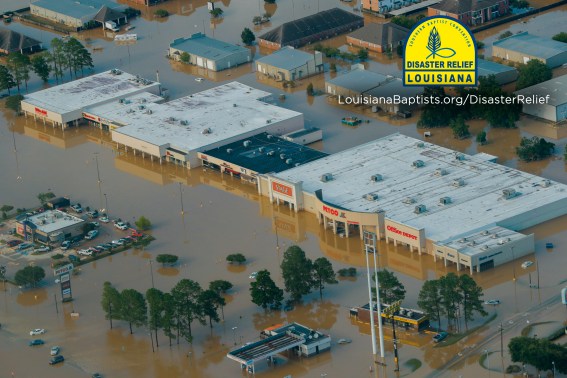
What an incredible week in Louisiana! Flash floods, roof top rescues, shelters, gutted homes, & now months of recovery efforts ahead of us. I ended last week thinking that I was going into a couple of weeks of heavy promotion for our Multiply Louisiana Conference & I’d keep pushing toward 40 church plants for this year in Louisiana, along with helping my kids get settled into new routines in school & prepping for a big fall with my church. But with the 1,000 year flood that hit over the weekend, I’ve had the opportunity this last week to help Southern Baptist setup Incident Command Operations for one of the worst disasters in Louisiana history. It’s given me the opportunity to see a different side of SBC Disaster Relief operations. I’ve been on chainsaw crews, mud out crews, Assessment teams, & chaplain teams, & I knew about Incident Command, with little knowledge of what went on. Still don’t know much, but here’s a few observation & takeaways from shadowing Incident Command this week:
1. Just like everywhere else, it’s led by volunteers
Incident commanders are trained & equipped a little differently. A communications trailer, laptops, 3-5 phone lines. All managed by volunteers. DR staff from NAMB & the state convention assist them, but they are IN COMMAND of the situation. And remember, these are men & women that are members of churches just like yours & they have given up 1-2 weeks of their time to help us recover.
2. They build a support system for volunteers responding to disaster
 The genius of SBC Disaster response is that when a certified mud out or chainsaw team responds, they can expect a place to stay, a place to shower, a place to get laundry done, & a place to get meals. But this system has to be built through local churches & other volunteers coming in first from the local area, then from surrounding states. That’s part of the job of Incident Commanders. They can’t tell people what to do. They must ask & wait on people to respond with a yes.
3. The work load is overwhelming
Brand new phone lines are setup & made available & immediately these phones start ringing. For this disaster we have a Help Line for the public, Help Line for volunteer teams, & a Help Line for Local Churches. While those lines are constantly ringing, maps are being drawn up, collaboration is happening, scribble notes are everywhere. It’s a maddening adrenaline rush! Lol!
4. They are most of the time on the defensive
It’s never enough & never fast enough the first week of a disaster. And the fluidity of the situation is such that information given out on one phone call is changed by the next phone call. And “I need to call that guy back & tell him that” gets interrupted by the next phone call, that HAS to be responded too. I hardly broke a sweat, but was 10x more exhausted every night than my chainsaw crew days. Lol! The Incident Commanders are trained to expect stress. And they are trained to be the bad guy & the bozo sometimes, which I witnessed & felt this week.
5. The first week is frustrating, but ESSENTIAL
After a week of frustration, I can say that our incident commanders have built a web that will support a long term volunteer response across Louisiana. We are responding to a disaster that includes at least 29 parishes, including Louisiana’s most populated (East Baton Rouge) & fastest growing (Livingston & Ascension). The Incident Commanders have a lot of support to provide. I feel very frustrated tonight, because I’ve already heard local pastors criticizing & saying things like, “the SBC Disaster Relief has been slow &….” I may have said the same thing when I was 6 days in trying to recover from Katrina, Rita, Gustav, & Isaac. But I’ll never say it again! Because I’ve seen the Incident Commanders work & I’ve seen the result. It just takes time to build the system that will support sustained response.
As of Friday, we had 14 State Conventions on the ground or en route, & others are mobilizing & recruiting. Last Spring, 30 out of 42 State Conventions responded! REMEMBER, these are volunteers, who are preparing to put their lives on hold for 1-2 weeks to come to an uncertain environment! Could you do that in 1 week?! Maybe you could, but lets not criticize them for being slow, when they’re preparing to come here on their own time & their own dime to serve! And let’s remember that we’re not the only disaster. California & Colorado Baptist are feeding thousands of people affected by forest fires in the west. West Virginia & Washington are still recovering from flooding. And there are others. When our people are back at work, these teams will still be coming in & working our fields. Let’s be grateful. This system works! These are incredible people working on our behalf! I’m looking forward to seeing the fruits of this week of planning & preparing by our Incident Commanders.
ANOTHER BIG TAKEAWAY: “Under promise, over deliver” is a great leadership axiom. In leadership, its easy to over promise. In Disaster Leadership it’s EXTREMELY easy to overpromise, because of the fluidity of information, but also, because the things that seem easy to get are now hard to get because of the disaster. I fell into that trap this week. Big lessons learned. This is one of those weeks that I’ll be looking back on for leadership lessons for a long time to come.

BASIC MUD-OUT GUIDE FOR HOME OWNERS
Helpful info for homeowner’s who have flooded – PDF Version – mudout guide for homeowners
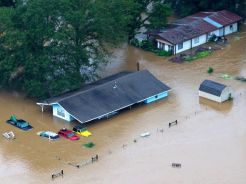 The removal of wet debris from a flooded home is called mud-out because everything flooded is saturated with muddy water. The objective is to get the house cleared of all wet debris to discourage the growth of mold and to allow the structure to dry out as quickly as possible so reconstruction can begin. The following sequence of actions is suggested for your consideration:
1. Look for hazards such as broken gas lines, structural damage and damaged electric systems. Other potential hazards may include contamination by chemical spills and overflowing of sewage systems. Watch for snakes and insects that may be found in unexpected places.
2. Be aware of personal health and physical limitations. People with respiratory or heart problems should approach mud-out work with great caution. Furthermore, flood conditions bring increased risk of tetanus and hepatitis. Wear protective clothing such as boots, coveralls, hardhat, gloves and facemask. A fiber face respirator with N-95 rating is normally adequate for dust and molds, but not for gas or chemical fumes.
3. Open all doors and windows and use fans to help circulate air through the house. Try to prevent any additional damage to the home. If the roof has suffered damage, temporary plastic roof covering may be needed. Remember, the home can normally be restored to its previous or better condition.
4. Prevent health hazards by removing perishable foods and any chemicals or medicine to safe areas where animals or children will not get to it.
5. If the flood water was high enough to get the walls and insulation wet:
a. Remove all damaged furniture and wet debris from the house. Separate it on the curb by type, as appliances, furniture, food, chemicals and dry wall (sheetrock). Put insulation and miscellaneous items in plastic bags. Please be aware that many of your things can be saved if properly cleaned and restored.
b. Remove the carpets and pads. These can be cut into manageable pieces with a box knife for safe removal. Some carpet cleaning companies can clean and restore carpets but the wet carpet pad has to be replaced.
c. Remove the baseboard, window and door trim where the dry wall and insulation is wet and must be taken out. Drill 1” holes in the bottom of the wall between each stud to get air circulation.
d. The dry wall and insulation should normally be removed about one foot above the high water level. Moisture Meters can be used to check the condition of the dry wall and insulation.
e. Remove any wet items from fixtures or cabinets. Open all doors to cabinets. If the water level was only several inches, drill a 1” hole in the bottom of each cabinet so an air flow can me maintained. Leave permanent fixtures and cabinets for repair or removal by professional craftsmen. Dry wall and insulation behind or on the opposite wall of a fixture should be removed to allow the dry wall behind the fixture to dry.
f. If the flood water only reached the floor level but did not get the dry-wall and insulation wet you may only need to roll the carpet and remove the carpet pad, as some carpet cleaners can clean and dry the carpet and replace the pad. Adequate ventilation will be needed to remove excessive moisture. See item c.
6. When an area is drying, do not rewet it with a hose or power washer. Let the area dry out and then sweep up the remaining debris. Spray with a fungicide such as Shockwave. If it is not available, a mixture of one half cup of bleach per one gallon of water may be applied where the site is still wet and mold is growing, this may not affect black mold.
7. Allow the house to dry out for several weeks before putting in new dry wall and insulation. The time required for adequate drying will depend on temperature, humidity and how well ventilated the structure is.

A Few Nerd Facts from our Latest Louisiana Church Planting Reports
A few nerd facts from our latest Louisiana Church Planting Report:
> Nine of our current church plants are RE-plants, in closed church properties. Now more than 20 of these around the state.
> 22 Hispanic Church Plants in Louisiana have reported almost 300 new commitments to Christ this year!
> 25 African-American Church Plants in LA have reported 200+ new commitments to Christ in ’16. 2/3 of all plants since ’13 have been non-anglo.
> Sharing facilities is a great way for a church to support church planting. 192 new commitments to Christ in 20 LA plants currently meeting in shared space.
> 19% of @LaBaptists churchplants are in rural areas. Great group of planters! Bivocational, relational, deeply involved in their communities. Unsung heroes for sure!
> 172 new commitments to Christ reported this yr by New Orleans Church Plants. NOLA = 25% of plants & near 50% of @LaBaptists planting budget.
Very proud of all our planters & partners laboring for the Gospel across the Bayou State!
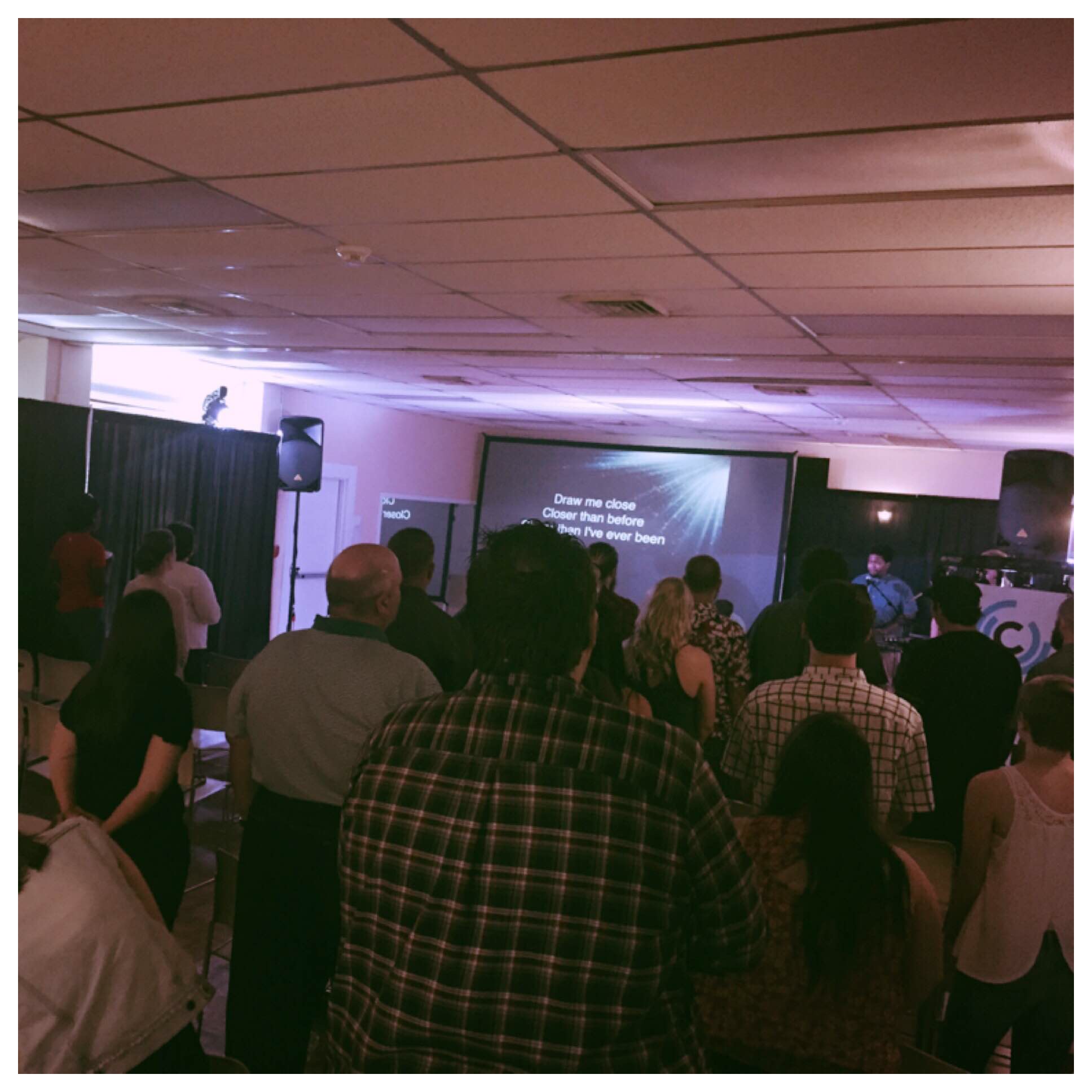
The Circle Church Alexandria, Planter Vincent Smith
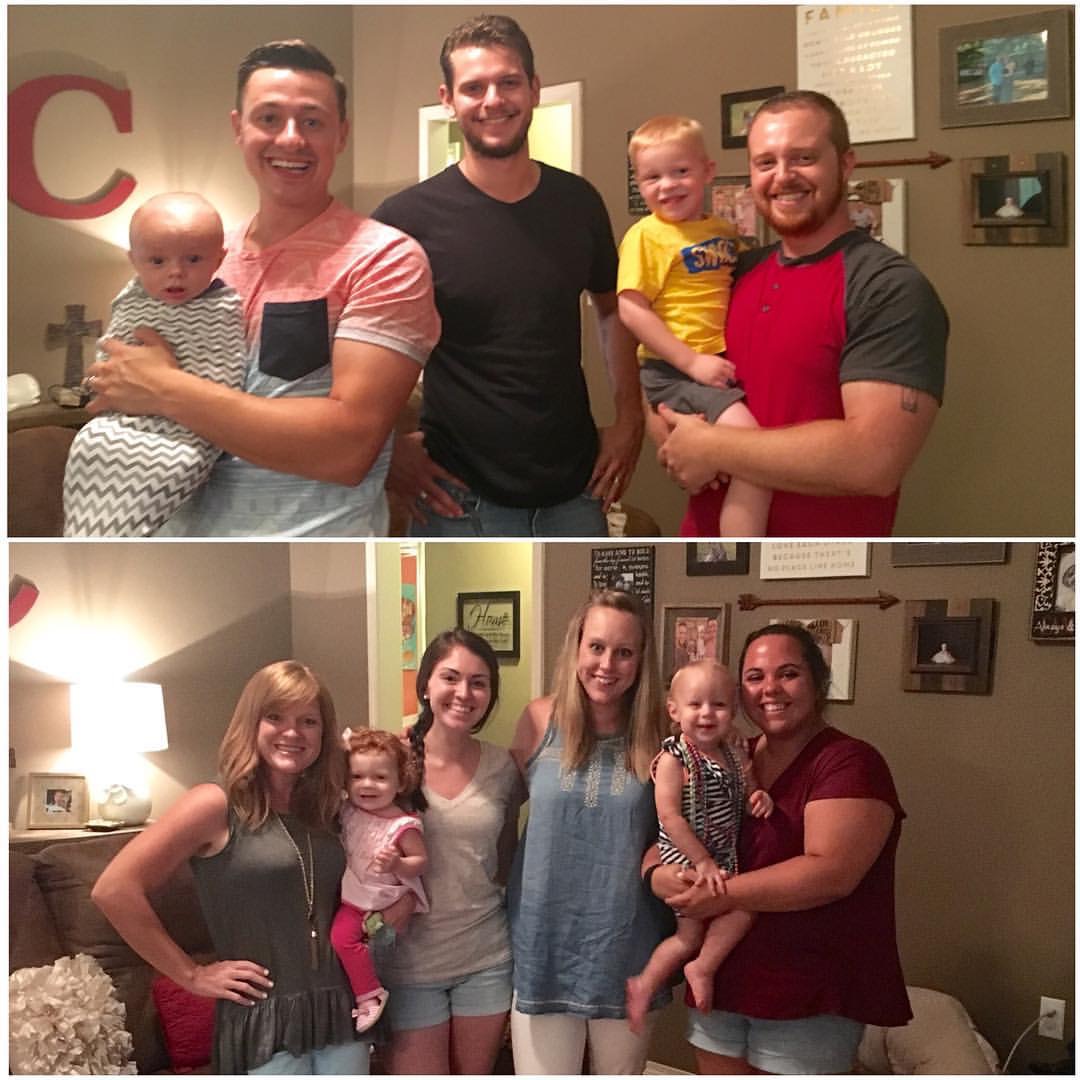
The Field Church, Mandeville Core Group coming together. Planters Sam Cirinioni & Chad Wiles

Replant St. Rose Community Church, Planter Brandon Langley

Westbank Baptist Church Marerro, Planter Ryan Melson

Multiply I-12
 The I-12 Corridor includes Livingston, Tangipahoa, St. Tammany Parish, St. Helena, & Washington Parishes. Three Baptist Associations cover this area- Northshore Baptist Association (Hammond/Ponchatoula, Covington/Mandeville, Slidell) & Eastern Louisiana Baptist Association (Denham Spring, Walker area), Baptist Associations of SE LA (Franklinton, Bogalusa, Amite). It’s been one of the fastest growing in Louisiana over the last few years. Estimated population of these five parishes combined is now 584,048. Population has grown an estimated 7% over the last 7 years. Some great work happening on Louisiana’s I-12 Corridor through Church Planting. Still more is needed. Here’s some of the latest data:
- Population of Northshore Baptist Association area: 367,799 (7% increase since 2010).
- 1 church for every 4,485 residents on the Northshore.
- Only 3.1 % of the population of NSBA attends worship in a SBC Church.
- Only 1.8% of the population of NSBA attends Bible Study or small group in a SBC Church.
- Churches have grown by 2.3% over the last five years, but not as fast as the population growth of 7%.
- Evangelical Population of the I-12 Corridor: 25%
- 270,000+ unaffiliated with any denomination or church (via the arda.com).
- 1 church for every 2,995 residents in Livingston Parish.
- Only 4.8% of the population of Eastern LA Association attend worship in a SBC church.
- Only 2.8% of the population of Eastern LA Association area attend Bible Study in a SBC church.
Planters, Partners needed.
Pray for our current planters in this area:
- Miguel Rodriguez, Nueva Vida en Cristo, Bogalusa
- Miguel Flores-Olivera, Iglesia Bautista El Camino, Denham Springs
- Joshua Spinks, The Way Church of Livingston, Denham Springs
- Jeff Smith, Genesis Church, Walker
- Louis Husser, Boots N Saddles Cowboy Church, Folsom
- Richard Hanson, Celebration Church, Mandeville
- Matthew C. Smith, Connect Church, Covington
- Randy Ray, River Rd. Fellowship, Hammond
- Sam Cirrincione, The Field Church, Mandeville
- Derek Kitterlin, New Life Community Church, Covington
- Elltore Austin, Still Water, Hammond
- Ramon Rodriguez, Fuente de Agua Viva, Albany
- Marvin Mercado, Iglesia Agua Viva, Pearl River
- Ramon Rodriguez, Vida Nueva, Ponchatoula
- Larry Lucas Jr., Faith Church, Franklinton

Multiply Acadiana
The Greater Lafayette area has been called Acadiana due to the influence of French Cajun culture. In 1965, a flag was even issued to give identity to the area & people. Beautiful area, beautiful people. And a great opportunity for evangelism for would be church planters & partners. Here’s some quick missiological data:
>> Population of ACADIANA (Acadia, Evangeline, Gulf Coast, Bayou Associations): 675,207 
>> Only 1.8% attend a SBC church
>> Evangelical population only 9%
>> 229,049 unaffiliated with any church (they’re not all Catholic)
>> Population of EVANGELINE ASSOCIATION (Lafayette area) – 404,977
>> Only .9% of the population or 3,806 attend Bible Study in a SBC church.
>> Only 1.6% or 6,649 attend Worship in a SBC church.
>> 46 SBC churches – 1 church to every 8,803 persons. Our goal is 1 to 2,850. NAMB suggests 1 to 2,000.
>> Lafayette Parish population: 221,578. 20 SBC Churches. Church to Population Ratio: 1/11,079.
Planters, Partners needed.
Pray for our current planters in Acadiana:
- Stuart Amidon, Christ Church Opelousas;
- Louis Charrier, New Life Oppelousas;
- Ernest Davis, Olivet Christian Fellowship, Lafayette;
- Kent Duhon, Freedom Biker Church Lafayette;
- Scott Guillory, Christ Church Abbeville;
- Darrell Guy, Unity 1 Baptist Church, Franklin;
- Melvin Mendoza, El Revuevo Lafayette & Iglesia Nueva Vida New Iberia;
- Luis Romero, Iglesia Nueva Vida Abbeville & Mowata;
- Aaron Shamp, Redeemer City Church, Lafayette;
- Dennis Smith, Berean Baptist, Crowley.
Also, had the opportunity to meet new Evangeline Baptist Association Director of Missions, David Carlton. Dr. Carlton spent 18 years serving in Africa with the International Mission Board. Looking forward to working with him & his staff to reach Acadiana. Check them out online HERE.
Other Acadiana Director of Missions:
- Alan Knuckles, Acadia-Louisiana-Mt. Olive Association. Alan’ associations bleed over into Acadiana & Central Louisiana. Several communities in his area with no evangelical churches. Prayers, planters, partners needed.
- Steven Kelly, Gulf Coast Baptist Association (Morgan City area). Gulf-Coast is a brand new solo association. Strategy for this area coming soon.


 Lane Corley