Category Archives: Church Planting
What Does Missional Look Like?
The call to mission may cause you to memorize the names of everyone on your street; take new co-workers out for lunch; throw parties to connect friends who don’t know each other; go out of your way to ask people, “How are things going?” You might intentionally give some money to help people or support church, civic, or global causes that meet practical needs. You might feel the call to give time to volunteer. You might even participate in local or global missions.
Worth Reading: Church in the Making
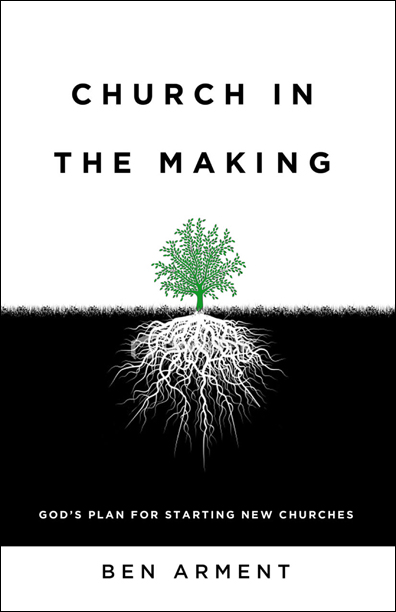 “Why do we continue sending planters out to the field by themselves with no momentum, very little support, and the odds stacked against them?” So ask Ben Arment in his new book Church in Making: What Makes or Breaks A New Church Before it Starts. And this is the big question that many veteran church planters and there families have found themselves asking after seasons of discouragement and disillusionment. This book is written from the perspective of one who has been there and worked through what it takes to build momentum, gather support, and overcome obstacles. We may not like many of the answers. There is need for cultivation, it’s sometimes necessary to pull the plug, the best planters are locals and not big shots that parachute into town, ability to build a social network is a necessity. I hope every church planting strategists will read this book for solid ideas about prepping the ground and knowing what planters on the field are going through. For church planters, the questions for discussion after each section would be great for core development meetings. Well worth reading. Plan on keeping this book close to the desk for a few years.
You’ll also do yourself a favor by following the author’s blog.
Here’s a few of my favorite quotes:
- “Just like farming, there are two activities for church planters: cultivating and planting. If you do the right thing in the wrong season, you get zero results.”
- “If you dive headlong into planting a church on tough soil, you’ll get discouraged quickly and burn out.”
- “behind every great church is a cultivated community.”
- “there’s nothing more destructive to a church planter’s well-being than starting a church with no momentum.”
- “Buzz covers a multitude of sins.”
- “Church planting is the fine art of emptying ourselves for people who reject us and forgiving them for the sake of the gospel.”
- “As church planters we have to be careful to plant the church our community needs, not the church in our heads.”
- “The minute your congregation decides to exist for itself, the church is dead.”
- “It’s easy to sacrifice vision when the money is running low and you could generate revenue by becoming more things to more people.”
- “By putting personality ahead of purpose, we make our churches difficult to reproduce, let alone sustain.”
How Can My Church Get Involved in Church Planting and Multiplication?
 Reaching North America for Christ is too big a task for one church to handle. New Church Multiplication is one of the best ways for us to work the North American fields to the edges. And every church can get involved in multiplication of new Churches. How? The sky is the limit. There is no right or wrong way to support church planting. The question is, what are you willing to do? How big of a commitment are you willing to make?
Here are three levels of relationship that excludes no church from involvement. I offer a few suggestions that are not meant to be an exhaustive list under each level.
It’s All About Relationships
Continuing our Close Encounters series at Bridge Church. Talked this week about the importance of relationships in Jesus’ ministry and the need for relational approaches to reaching our friends for Christ. In the book Lost and Found: The Younger Unchurched and Churches that Reach Them by Ed Stetzer, Richie Stanley, and Jason Hayes, they demostrate this need with statistical data. A few statistics:
- 17% in todays world would go to church if seeking spiritual guidance. The church is no longer the place to go to find answers about spirituality.
- 90% believe they can have a good relationship with God without being involved in a church.
- 91% have at least one Christian among their close friends.
- 90% said they would be willing to listen to someone share his or her beliefs.
- 60% said they would be willing to study the Bible if a friend ask them.
- 48% would be willing attend a small group of people to learn more about the Bible and Jesus.
So people do not consider church for answers, but they have connections with Christians in our churches and would even be willing to open their lives to listen to friends. So releasing and empowering Christians to reach their network of friends off of our campuses should be a major part of our strategy. Neil Cole in his book Church 3.0 comments about this research with this question: “Why is it that when we consider ways to reach out to the lost we always plan events rather than using the natural relationships God has already given us?” Could this be a solution to our churches budget crunch? Less expensive productions, more releasing people to form organic relationships that will bring others to a close encounter with Christ.
Current Church Planting Bibliography
More than occasionally I’m asked by people interested in Church planting, “Hey, what should I be reading?” Here’s my current top ten list of favorites in no particular order. Most of these are in the category of “I wish I’d read that before I planted a church.”
- Church in the Making: What Makes or Breaks a New Church Before It Starts by Ben Arment. Honest book about the difficulty of planting a church. Discussion questions after each section would be great for Core Group Training.
- Deliberate Simplicity: How the Church Does More by Doing Less by Dave Browing. Great book to help with focus and vision. Here’s a brief review I wrote a few years back.
- Planting Missional Churches by Ed Stetzer. The textbook.
- Viral Churches: Helping Church Planters Become Movement Makers by Ed Stetzer and Warren Bird. Great book for churches wanting to sponsor churches or plant multiple churches and campuses. Research based. Great reference guide to what’s up out there in Church Planting.
- The Multiplying Church by Bob Roberts. From an experienced sender. The chapter on Starting a Church Planting Training Center at Your Church would be worth reading for every sponsor church pastor. My thoughts here.
- Church 3.0: Upgrades for the Future of the Church by Neil Cole. Challenging questions and answers for the church going forward into the future. Can’t get this book off my desk right now.
- Breaking the Missional Code: Your Church Can Become a Missionary in Your Community by Ed Stetzer and David Putman. “Don’t plant the church in your head. Plant it in the community.” One of my fav Ed Stetzer quotes. This book helps us do that.
- It’s Not Personal: Surviving and Thriving on the Journey of Church Planting by Brian & Amy Bloye. Reading right now. Incredibly honest look at the life of the church planter.
- Exponential: How You and Your Friends Can Start a Missional Movement by Dave & Jon Ferguson. Great text book for starting at every level. Includes great chapters on multisite and sending out church planters, which is a core competency of the Ferguson’s church.
- Missional Renaissance: Changing the Scorecard for the Church by Reggie McNeal. Is it going to be about how many, how much, how often? I hope not. This book will help you get the right scorecard.
Other books that have been foundational for our current church plant: The Externally Focused Church by Eric Swanson and Rick Rusaw, The Tangible Kingdom: Creating Incarnational Community by Hugh Halter and Matt Smay, Total Church: A Radical Reshaping Around Gospel and Community by Steve Timmis.
What would be your recommendations?
The Church Has Left the Building
 This weekend marks Bridge Church’s 4th Faith in Action Sunday as a church. The idea is to have as our natural rhythm spending one Sunday per quarter serving the community in intentional ways. Our projects thus far have included kids activities and block parties at a local trailer park, building handicap ramps/porches for elderly and disadvantaged residents, serving at Nursing homes, visiting and bringing care baskets to area ICU waiting rooms, prayer walking, cooking for low income housing residents, trimming trees around a local trailer park, cleaning up yards, etc. Click here for a video of one of our past FIA’s.
This Sunday, we’ll meet at the West St. Tammany YMCA for breakfast at 9am and then break out to put our faith in action.
Worth Reading: Live Sent by Jason Dukes
 There is a hunger among young Christian leaders for something more. Not necessarily more or bigger crowds or church buildings. But for more and deeper community. For authentic relationships in and outside of the church. For a greater impact on people that are far from God. And for a return to defining church as a WHO, not a WHAT. It will be OK with us if that results in big crowds and buildings, but not at the expense of community, authenticity, kingdom impact. Jason Dukes, in his book Live Sent: You Are A Letter, expresses what I feel so many are looking for today. As a Church Planter and network leader (check out www.reproducingchurches.com), Jason is leading a charge for the church to give ourselves away intentionally. That’s how he defines living sent. The imagery of living as a letter sent by God to the world is simple and key to understanding who we are as followers of Christ. As Jason says, “Sunday mornings cannot be viewed as just ‘fueling stations’ any longer. They must be viewed as POST OFFICES, gathering and sorting mail in order to send out those letters into daily culture.” An essential message for the 21st Century church that wants to make a deep impact in the lives of people. Great question: Is our lives and churches like the “draft” folder in our email inbox? Saved but not sent. “We must go beyond just gathering. We must gather to send.” The book outlines a great process for every Christian and leader to use to assess where they are spiritually. A few of the topics: rethinking church as a who not a what, knowing the value of every Christian to God’s mission, what hinders us from being sent, contextualizing through relationships, getting rid of our safety addiction. Also, Live Sent is filled with stories of real people doing just that. Even includes the story of a brother from my home state, Rob Wilton with Vintage Church, Uptown New Orleans. As a Church Planter or Pastor who desires to have an impact, this book will help chart the course.
Here are a few of my other favorite quotes:
- “He did not go to the cross because we were lovable. He went to the cross because He loves us, and it is His love for us that makes us lovable. It is His pursuing love that makes us valuable.”
- “The most crippling issue hindering us from ‘being the church’ is our insecurity to think we need more than what Jesus did…”
- “The health of a local church is actually not based on the number who ‘attend’ but rather the way in which people love one another and are walking relationally in life.”
- “The story of the church is far greater than what happens on Sunday mornings.”
- “Which address means more to God? The address of the church building? or the address of the world?”
- “If we are to see disciples made, we must engage people in genuine friendship. Multiplication cannot be programmed. It happens. It blossoms.”
- “church leaders must be willing to measure success not by how many they can draw and manage, but by how many they can release…”
You can follow Jason on Twitter. Also, follow Reproducing Churches the network he helps orchestrate along the Gulf Coast. Also, Jason blogs at JasonCDukes.com.
An Observation: Why does multisite work?
“Multisite church is not church planting.” Many seem to be warming up to the idea of multisite ministry, but there are holdouts who continue to object using the above phrase. Wherever you stand, you have to admit that it appears to be working in a lot of places. Many reasons for this, but one in particular that comes to my mind as a strategists in rural/suburban North America: OWNERSHIP. When a church sends out its name and logo, its pastors face on a screen, its significant financial investment, and its vision for people to be saved and influenced for Christ, failure effects everyone, so it’s not an option.
Working in the area of church planting over the last 10 years, what I’ve observed is usually there is only one person that owns it all: THE PLANTER. If it succeeds, he’ll be written about, applauded, and used to promote offerings. If it fails, we’ll forget it ever happened and hope he and his family land on their feet. No skin off our backs.
Don’t get me wrong, I believe the planter must be out in front of everyone else in ownership of a vision, but if significant obstacles are faced and momentum doesn’t come easy, he may find himself alone. As Church leaders, can we really say we own the needs of the lost in our community if failure of a church plant or sister church would be pain free and perfectly acceptable? Can we say that we are fighting a good fight if we shield ourselves from the risk associated with penetrating the kingdom of darkness through church planting and reaching the unchurched?
I’m praying for the courage of the Apostle Paul. Drug out of town, stoned, left for dead, a failure, he GETS UP and goes back to finish the task. Why? OWNERSHIP.
Romans 1:14-16 (ESV) – “I am under obligation … I am eager … I am not ashamed of the gospel.”
Leadership is Lacking when…
Love this list from Dave & Jon Ferguson’s new book Exponential: How You and Your Friends Can Start a Missional Church Movement. Take the test…
- I wait for someone to tell me what to do rather than taking the initiative myself.
- I spend too much time talking about how things should be different.
- I blame the context, surroundings, or other people for my current situation.
- I am more concerned about being cool or accepted than doing the right thing.
- I seek consensus rather than casting vision for a preferable future.
- I am not taking any significant risks.
- I accept the status quo as the way it’s always been and always will be.
- I start protecting my reputation instead of opening myself up to opposition.
- I procrastinate to avoid making a tough call.
- I talk to others about the problem rather than taking it to the person responsible.
- I don’t feel like my butt is on the line for anything significant.
- I ask for way too many opinions before taking action.
Amen and Ouch!
Praying for the Native American Awakening
Several Louisiana churches have gotten plugged in with an Awakening happening among Native Americans. I’m looking forward to partnering with Woodhaven Baptist Church in Tickfaw to plant a church among Native Americans in Macy, Nebraska. Today is a big day for the ministry as the tribal leaders will be deciding what to do with the church building that the core group has been using. Praying they decide to leave it in the hands of our church in the area. Please pray with us…


 Lane Corley