Category Archives: Church Planting
“Church is a way of being in the world, not some place I go on Sunday” #Exponential 2011 Notes
Spent a few days learning with 4,000 Church Planting Leaders at the Exponential Conf. A few notes from one of the Main Sessions with Michael Frost and Reggie McNeal:
Michael Frost:
- Missional means understanding we should go. Incarnational means loving those you are going to.
- Missional is like getting married. Being incarnational is like romance.
- Incarnational Practices:
- Listening to the people to whom we’ve been sent, as a posture. Asking as Jesus did, “What do you want from me?”
- Readiness to serve.
- Be loyal to your city or neighborhood. – No one is more transient than American ministers.
- Incarnational Actions: Eat in local cafes. Shop locally. Meet with local community leaders. Say yes to every invitation.
- Different domains in society: Political, Arts, Education, etc. The church decided to start another domain instead of releasing its people into the domains they are already in.The church is already deployed across all the domains of culture.
- Those who get incarnational ministry understand church as network not a thing, church as a verb, church is a way of being in the world, not some place I go on Sunday.
- Millions are looking for church, but many more millions cannot or will not accommodate their life rhythms to get involved in our domain of church. We must go to them.
- What gets celebrated, gets done. What you make a big deal about, gets done.
- Mission Shift: 1) Change the scorecard. 2) Change your language. Change church to a verb
What would a Church Planting Movement look like in North America? How can we get there?
 #Exponential 2011 Notes: Had the privilege of sitting in on a Church Planting Movements Panel led by Ed Stetzer with some of the best thinkers in the world on the topic:
- Steve Addison, author of Movements that Change the World.
- David Watson
- George Patterson, author of Church Multiplication Guide
- Felicity Dale, author of An Army of Ordinary People and The Rabbit and the Elephant: Why Small is the New Big
- David Garrison, author of Church Planting Movements
A few notes:
#Exponential 2011 Notes: Neil Cole
Spent a few days learning with 4,000 Church Planting Leaders at the Exponential Conf. A few notes from one of the Main Sessions with Neil Cole:
- If we’re going to reach the world, we’re going to have to learn to multiply.
- The silver bullet of church multiplication = “Christ in you, the hope of glory” Colossians 1:27. The power to start a movement is within every Christian.
- Exponential growth always starts slow and small but builds momentum over time. We’re often seduced to want to start big and fast. We stop doing what multiplies and start doing what adds, because we lose patience.
- Movements are most vulnerable at the start. Why? (1) Seduction of addition, (2) development of leadership dependency issues instead of empowering disciples, (3) misplaced faith – instead of in Christ’s power we put faith in our strategies and plans.
- Don’t plant churches, plant Jesus. Church doesn’t change lives, Jesus does.
- Leadership dependency kills movements.
#Exponential 2011 Notes: Dave Ferguson, Alan Hirsch, Francis Chan
Spent a few days learning with 4,000 Church Planting Leaders at the Exponential Conf. A few notes from one of the Main Sessions: Dave Ferguson, Alan Hirsch, and Francis Chan:
Feruson and Hirsch:
- Times are changing: Church attendance is below 20% of the population of America. Those claiming “no religious affiliation” has doubled over the last 10 years.
- Potentially, 60% of the population are alienated from our current church models and strategies. All are eggs are in the attractional church basket.Many are not coming to us, we must go to them.
- Einstein on problem solving: Current problems will not be solved with the same kind of thinking that created the problems.
- We have been shaped by a certain way of thinking about church. Our thinking must broaden.
- Problem: It’s impossible for a man to learn what he thinks he already knows.
- Leadership frees people up or enslaves them. Leader job is to help people see themselves as God intends them to be.
- The people in your pews have incredible dreams, we must unleash them.
Francis Chan, Main Session #1: Incredible message about defying current expectations with real faith.
- Many expectations of leadership and church are not burdens that God puts on us.
- When you’re in them, crazy things make sense. Even when you see gaps between scripture and current practice, we start thinking, “Maybe, I’m nuts” “Surely everyone else is right”
- How can you be casual about something you really believe in?
- Realities: Church is supposed to be a family and every believer is to be a disciple maker. Today, what we do is meant to appease people who don’t want to be a family of disciple makers. Result: No light to the world.
- It makes no sense to bring people together into a room for worship, who have no intent on being disciples.
- Where do we get what we do in church from the New Testament?
- God will use you if you’re willing to be lonely and misunderstood.
- The moment you’re not willing to be lonely or misunderstood, you have nothing to say.
Measuring Change
@Habitatstw has built 80 homes in an area neighborhood and 911 calls are down 53% in that neighborhood since the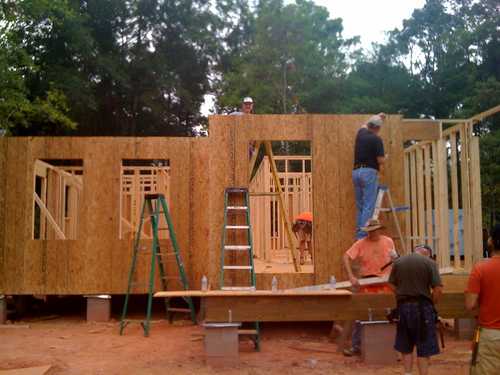 projectbegan. Great measurement of the transformation that Habitat can bring to an area. What metrics can we use to communicate the impact of our ministries? Will our current metrics (how many? how much? how often?) bring about such change in our communities? Reggie McNeal’s latest book Missional Renaissance: Changing the Scorecard for the Church and Stetzer and Rainer’s Transformational Church: Creating a New Scorecard for Congregations have me thinking differently about success and change.
Part of the issue is Habitat had to build 80 homes with years of labor and sweat and blood to get to that point. We want change we can see quickly and don’t have to wait for. Focusing on change and not quick results will mean long term commitment. I’m in. For my church and for Habitat of West St. Tammany.
Northshore Probe: Multi-Housing on the Northshore
As part of an area-wide PROBE (People, Residents, Opportunities, Barriers to the Gospel, and Evangelism Avenues) we conducted a region wide study of multi-housing residents on the Northshore. Thankful for Gary Dennis for his research on this project. Get the full report on Multi-Housing on the Northshore from our 2011 Probe here.
The purpose of this study was to identify major needs and outreach opportunities to people living in Multi-Housing facilities along the I-12 corridor from Slidell to Albany, and, to suggest possible strategies for doing outreach among this people group. We sought to answer the following questions:
- Where do people live in multi-housing units/complexes?
- What kinds of multi-housing units/complexes do people live in?
- What kinds of people live in the different multi-housing units/complexes? (socioeconomic & ethnicity)
- How many people live in multi-housing units/complexes?
- What particular needs exist among those in each multi-housing unit/complex?
- What kinds of strategies might be needed to minister in and to those in the various multi-housing units/complexes on the Northshore?
Assessing the Need for New Churches
A common question I’m asked as a church planter and strategist: “Why do we need new churches when we have so many already?”
Stated in other, more direct ways:
- “We’ve got that area covered already, there’s no need for a new church.”
- “Planting a new church will make Pastors in the area feel unappreciated or like they’re not doing their job.”
- “Why plant a new church when my church needs so much help?”
- “Do we really need another ‘little’ church in this area?”
- “Won’t a new church just take resources from other churches.”
These can be legitimate concerns, when brought with a kingdom mind set, and these concerns should be addressed by strategists and planters in the planning process. I’d really like to work through each of these concerns individually at some point but now I’m asking, what are the right questions and the key indicators of the need for new churches or ministries in the seemingly overchurched south?
Jesus’ Church Planting Strategy
Could it really be this simple?
if you began a movement now the same way Jesus got things going in his day, it would mean telling everyone you meet about Jesus, watching who responds with keen interest, and then selecting a few people who are most open and investing lots of time in them. You would start to meet this group of seekers in times of discussion over a meal. You would ask one of them to read a few short verses from the words of Jesus, another to lead a discussion about what Jesus meant and how his teaching applied to their lives…
You would encourage them to tell their family and friends what they were learning about Jesus. You would meet in their homes, not yours. You would want as many of their friends and family to sit in on the discussions as possible. When you would come together as a group around a meal, you would model a facilitative style of leadership that got everyone involved, carefully taking a back seat so you could encourage their development. You would be pleased as they quickly took ownership of what was happening.
From Floyd McLung’s book You See Bones I See An Army.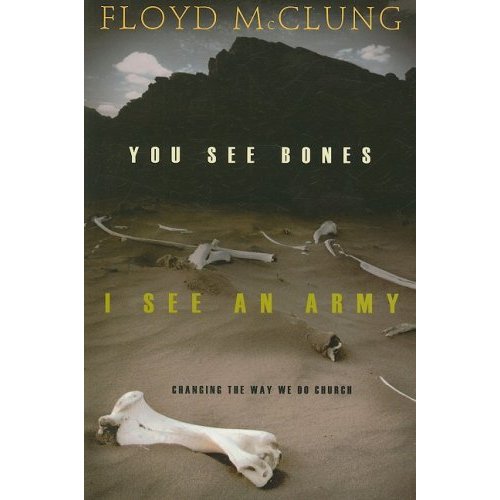
Oversimplification? Maybe, but refreshing. Great book about simple strategies to make disciples.
ONE DAY Learning Cluster for Church Planters
 Our Spring Church Planting Network Meeting will be in the form of a Mini-Conference at New Orleans Baptist Theological Seminary. March 26, 9am-12noon. Click here to register. For Church Planters, Sponsors, Wannabe Church Planters & sponsors, Church Planting Enthusiasts, etc. Content will also be good for anyone in church leadership. Craig Ratliff, with Celebration Church will be lead the sessions. Topics: 1. Vision: Having and maintaining vision (early vision, long term vision, staying on course) 2. Planning: How to plan for continual grown and “Splash” growth? More info here. More info on the importance of Church Planting Networks here.


 Lane Corley