Author Archives: Lane Corley
“No Entrance” and “No Exit”
“Despite our efforts to keep him out – God intrudes. The life of Jesus is bracketed by two impossibilities: “a virgin’s womb and an empty tomb”. Jesus entered our world through a door marked,”No Entrance” and left through a door marked “No Exit.”
– Peter Larson
How Do You See Christmas?
So much about life and truth and Christmas is determined by your perspective.
In the world’s eyes…
- a peasant girl, probably raped by Roman soldiers
- a poor carpenter, dumb enough to believe her story about an angel
- a slave registering his family with the state for purposes of taxation
- an insignificant village with little to offer the empire
- a family that couldn’t even afford a room
- a baby that didn’t have a proper delivery
- a baby that would grow up poor and enslaved
- a group of shepherds, not even worth asking their name
- a meaningless event in a meaningless town
In God’s eyes…
- a young girl endowed with grace and conceived by the Spirit
- a righteous man willing to obey God at great risk to his own reputation
- a census that would fulfill prophecy
- a baby, God taking on human likeness (God with meat)
- a baby that becoming a man would change the world and the eternal destiny of millions

Pic from the movie The Nativity Story.
Persistent Modification
Always think of this great list from Will Mancini as I look toward a new year and new endeavors:
What can I:
- combine?
- subtract?
- double?
- adapt?
- reduce?
- reinvent?
- cage?
- tweak?
- add?
- eliminate?
- amplify?
- modify?
- cut?
- accelerate?
- concentrate?
- stop?
From Church Uniqe: How Missional Leaders Cast Vision, Capture Culture, and Create Movement. Get the Visual Summary free here.
“I was in prison and you came to me”
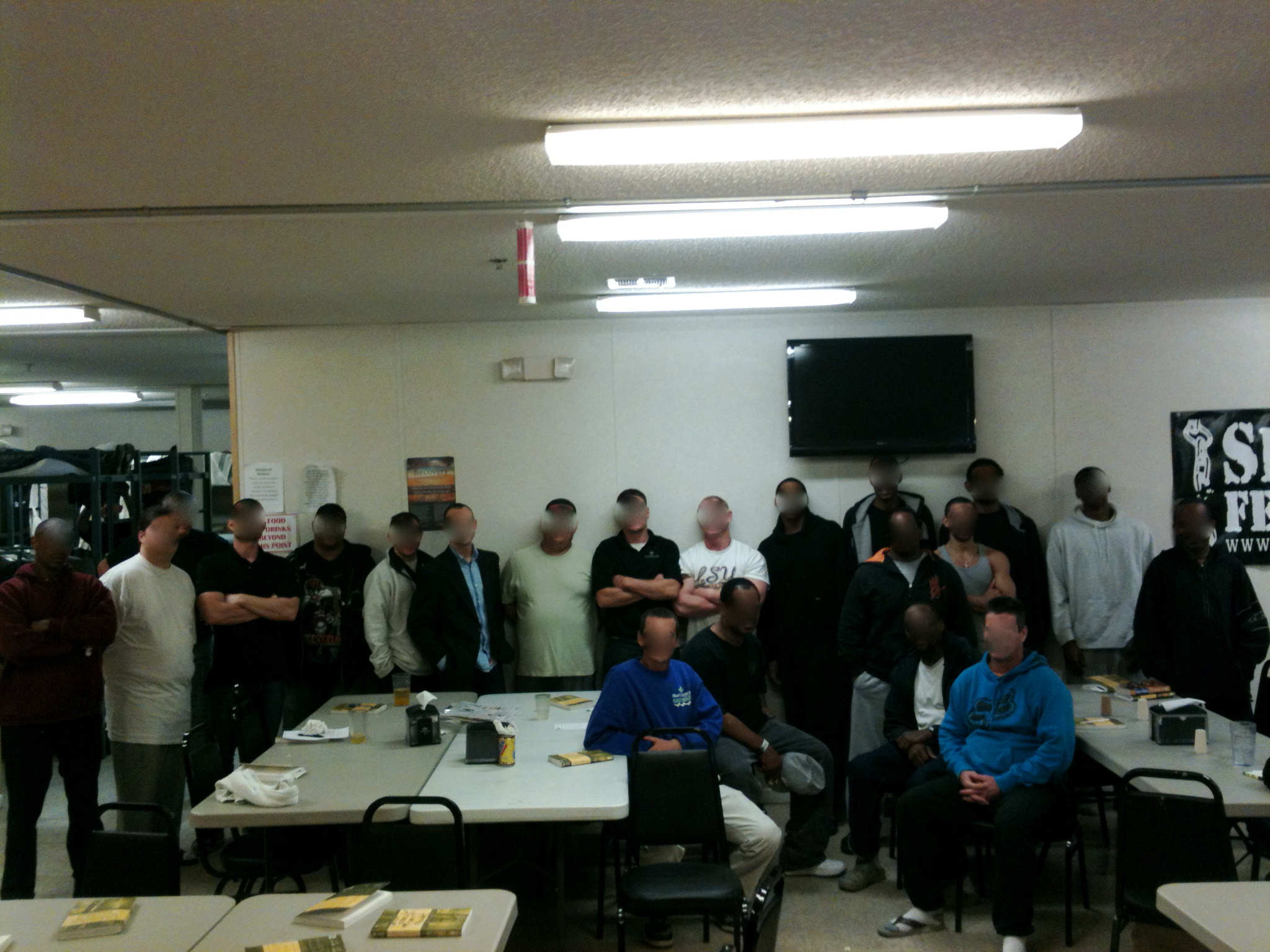
Finished up another round of Celebrate Recovery at our local jail last week. Very proud of the 16 men who are graduating from our Re-entry program called Project 180 and the guys who volunteer their time each week to facilitate and encourage. This has been an incredible experience for me personally and for our church as we’ve sought to be present in and bring light to some of our communities dark places. So many stories that are being transformed by God. So many stories still in need of intervention. From some of this year’s Project 180 participants:
- “I’m 50 years old and I’ve never completed anything. This year I’ve completed two courses through Project 180 and Bridge Church.
- “I thank God for not only second chances, but many chances. And I would like to take this opportunity to get my life on track so that I can be a positive influence to my kids and grandkids. I look forward to hearing the words “Daddy” and “Grandpa.” And to being able to fulfill what those words really mean.”
- from a mother of an inmate, “I’ve had 3 out of 4 sons die before the age of 18 due to drugs, alcohol, and violence. Thanks for helping my 4th son rise above.”
- from a sister of an inmate, “Thank you for helping my brother feel like a human being again.”
- “after your classes and getting to know ya’ll a little bit, I realize you truly love not only Christ Jesus, but even a man like me. You guys have helped me and other see that despite our current situation and circumstances we can learn a new way to live. Thank you for your honesty and for caring about us.”
Contact me if you’d like to get involved. We have a worship gathering at our local jail every Sunday at 9AM. Celebrate Recovery is Thursday, 7pm-9pm. There are other opportunities to teach and encourage. In 2012, we’d love to get an ongoing Financial Planning, Parenting, and Healthy Relationship courses going. As well as continue with quarterly Block parties and weekly worship gatherings.
Partnering w/the Non-Profit World
Getting ready for a day of meetings with one of the largest networks of relationships in our community. Nope, not going to an denominational or church meeting, but to hang out with a local non-profit that I’ve been privileged to work with over the past few years. Lots of great reasons for churches to partner with non-profit organizations in our communities. In his great book, Barefoot Church, Brandon Hatmaker list several great ones:
- Nonprofits typically have a great reputation in the community. “While nonprofits are often the most well-connected organizations in the city, churches remain some of the most isolated voices in our community.” Getting involved can help open doors for greater influence and greater impact for the gospel.
- Nonprofits are experts in their field of work.
- Partnering with nonprofits offers a new posture for the church. A few years ago I attended a volunteer roundtable hosted by the Lt. Governor of our state, and as the only pastor in the room I sunk in my chair as leaders of non-profits asked why churches didn’t get more involved in the community. They saw the potential for impact for and with the church before I did. And don’t assume that these partners are against us sharing our message. Most expect it and desire faith engagement.
- Nonprofit partnership is an easily reproducible strategy. If you’re looking for opps to engage the community, the nonprofit world is a easy “plug and play” arena. We as leaders need only to assimilate opportunities to serve, communicate the process, and empower people to go.
- Nonprofits need volunteers more often than they need money. Hatmaker notes that “lack of resources is the most common excuse churches make not to serve the poor.” While they’d certainly appreciate a financial donation, a working relationship does not hinge on it. Often the greatest need is people.
- Serving with nonprofits provides a platform to serve selflessly. Serving with a nonprofit is an opportunity to shine the spotlight on something happening for the good of our community. Our culture sees churches as self-absorbed (I asked one non-profit leader how a church could help him and he said honestly and without malice based on his experience personally and professionally, “I didn’t know churches helped people”).
Hatmaker also lists six steps to effective partnerships:
- Start with a common redemptive purpose. There are definitely nonprofits that are doing much of what God’s word calls us to do in relation to justice and bringing hope. Start there.
- Prioritize developing relationships. There will be worldview issues that collide when engaging outside the church. And we’ll have a better platform for engaging these as we build nonagenda-oriented relationships with community leaders.
- Trust their leadership. If you can’t trust their leadership, then move on to a different non-profit. But I’ve found nonprofit leaders from Fire Depts to Food Banks to be hard working, trustworthy, and eager to have the church as a partner.
- Lose your agenda. We’re coming to serve them in a common redemptive purpose. Focus on serving them.
- Give away the credit. “If you are willing to partner with local nonprofits who have spent years building credibility in different areas of service, take a backseat, and don’t seek a name through this.”
- Commit to be available. The best way to build credibility with community leaders is through availability and follow through.
Check your local government website. They should have a list of nonprofits in the area. If you’re in St. Tammany it’s here. You can also sign up to receive a monthly update to this list with specific opportunities called The Loop.
Check out this church in Austin, TX that assimilates opps to serve through nonprofits in their city. Here is their Christmas list.
What nonprofit are you working with? Have you learned any lessons in this regard?
Another topic for another day is starting a nonprofit alongside the ministry of the church.
Pick up Barefoot Church: Serving the Least in a Consumer Culture by Brandon Hatmaker for more great ideas and inspiration for incarnational ministry.
Recognizing Pride
Pride is easy to recognize in others, but tough to recognize in ourselves. It’s a matter of what’s in your heart. That can be determined most often by what’s coming out your mouth (Luke 6:45). Even that is hard to diagnose by yourself sometimes. Ask a friend. As someone said, “Pride is the only disease in the world that makes everyone sick except the person who has it.”
How can I judge if pride is in my own heart? C.S Lewis said, “the more pride we have, the more other peoples pride irritates us.”
A few questions to help recognize pride:
1) What happens in you when someone does something good?
2) What happens in you when someone does something bad?
3) What happens in you when someone encourages you?
4) What happens in you when someone corrects you?
5) What happens when someone successful walks in?
6) What happens when someone unsuccessful walks in?
7) What happens in you when you do something good?
8) What happens in you when you do something bad?
Being a Christian is an IDENTITY, not just an ACTIVITY…
a LIFESTYLE, not just a wknd EVENT. Don’t check it off the TO DO list, LIVE IT!
Christianity is first and formost about being, not doing. These are closely related b/c who we are is going to determine what we do, how we spend, where we go, etc. Our being impacts everything. But to get these reversed, making it about what I do is a tragic mistake. If we define ourselves by what we do security and significance may come and go with success or failure, people may be judged by their value to us instead of their innate worth as God’s creation, the tyranny of legalism can set in causing frustration at our own or others inability to measure up to a standard, busyness/adding God as one more thing on my schedule can lead to regret and guilt and frustration and and inconsistency that will lead to just giving up.
The real work of Christianity has already been done by Christ. His work was to provide a solution for man’s separation from God b/c of sin. It’s done! We can’t add to it or take away from it. Religion says DO, Christianity says DONE. Because of his work we can BE something different. Jesus said to the fishermen, “Follow me and I will make you fishers of men” Matthew 4:19. It was a call to a new identity and to have Christ MAKE them something they weren’t.
Do you approach Christianity from a DO mentality or as an IDENTITY? Can you be defined by WHO YOU ARE in Christ? or are you striving to do enough? Has your checklist produced joy, peace, transformation? Let go of the list and allow Christ to make you into a new creation. You can then live and become and act from the overflow of who you are.
Serving on Sunday, part two
A trend in church life is congregations taking a Sunday and scattering throughout the community to serve. Most are doing it once a year. A few, like the church I’m part of, are doing it once per quarter. I’ve heard of at least one church doing it once a month. This week I saw an article about Rick Warren’s southern California mega-church Saddleback, taking a weekend called Good Neighbor day. I don’t think this is for every congregation and I don’t know that the congregation I lead will do it forever, but I think that a Faith in Action Sunday can be a powerful tool of cultivation in church and community.
A few weeks back I mentioned three reasons why to do it from the book Barefoot Church: Serving the Least in A Consumer Culture by Brandon Hatmaker. Here is a bit of the reasoning and strategy behind Bridge Church’s quarterly FIA Sunday’s.
- The end goal of faith-filled disciples and missionaries. The Great Commission’s call is to make disciples. As a second journey church planter I begin to ask myself and others: “If I really wanted to make a disciple what would I do?” and “What was the greatest tool for spiritual growth in your life?” The answer was most often, ” Relationships and serving.” I was often disappointed when people didn’t recall my beautifully illiterated sermon as causing a spiritual growth spirt, but pointed to relationships with other Christians and ministry/mission opportunities as the greatest catalyst for growth. So, we begin to pray about how we could structure for relationships and mission, which led us to the idea of taking four Sunday’s a year for Faith in Action. Let me say: this is not a church growth gimic and definitely NOT a good strategy for church growth. If you’re goal is more attenders, DON’T do it, but the goal of producing faith-filled disciples who see themselves as missionaries caused us to rethink strategy and structure for serving a bit radically and non-traditionally.
- The other 60%. Alan Hirsch and Dave Ferguson write in their book On the Verge, that around 60% of the population is outside of the church’s reach. That the majority of churches are fishing out of the same pond which includes about 40% of the population. I’ve found this to be a trend in the area where I live and serve. A segment of our population is not attracted by or will most likely not be influenced by our current forms of church. What can we do to reach these people? One answer: Go to them. And as one part of an incarnational strategy of engagement in the hardest to reach areas, we seek to take church to them four Sunday’s per year. Somebody once said that to reach people nobody is reaching you need to do things nobody is doing. In our community we have some amazing churches offering professional worship music, incredible preaching by some unbelievable communicators and men of God, and a full service ministry menu for every day of the week. So we’ve got that covered. Our niche is to be the ground troops moving into difficult areas, bringing the gospel and making disciples/missionaries as we go. Faith in action Sunday serves as a great tool in this regard.
I’ve written about some reason NOT to do this here. In the next two posts on this subject, I’ll take on some of the frequently asked questions and criticisms for Serving on Sunday, like:
- It subverts the importance of preaching the Word of God.
- It hurts church growth by making things awkward and uncomfortable for newcomers, visitors, and the disconnected.
- “We can’t go a Sunday w/o taking an offering.”
- It promotes a liberal agenda of social action.
- “I can’t imagine how we would find enough for everyone to do around our community.”
- Some good ones offered here by Kevin DeYoung.
Then lay out a plan for putting together a Faith in Action Weekend, whether it’s on Sunday or not.
WDJD? 7 Core Practices of Life In Christ-On Mission-4Others:
- Listen to God / Connection to the Father – Mark 1:35; John 5:19; 14:10
- Be Intentional with People / Incarnation-Proximity to the needs of people – John 1:14; 20:21
- Put Your Faith in Action / Responsiveness to the needs of people – Matthew 5:16; 1 Thess 5:15; 1 John 3:17-18
- Give it Away / Radical Generosity – Philippians 2:3-8
- Tell the Story / Message Clarity – Matthew 4:17, 19; John 10:10
- Go Viral / Simplicity-Reproducibility – Matthew 13:34; 28:18-20; 2 Corinthians 11:3
- Live Sent / Sending-Multiplication – Matthew 9:35-10:5; John 20:21; Acts 13:1-5
Reflecting on World AIDS Day
This afternoon I passed a road-side Fruit Stand in my community and remembered the booming road side business I saw in Zimbabwe, Africa a few years ago: coffins/caskets. Praying today for a country where the life expectancy is 42 and 25% of the population is made up of orphans, due in large part to the World AIDS crisis. Glad to see the numbers going the other way, but remembering names and faces of friends, brother and sisters that are VERY close to this crisis. A few personal pics:

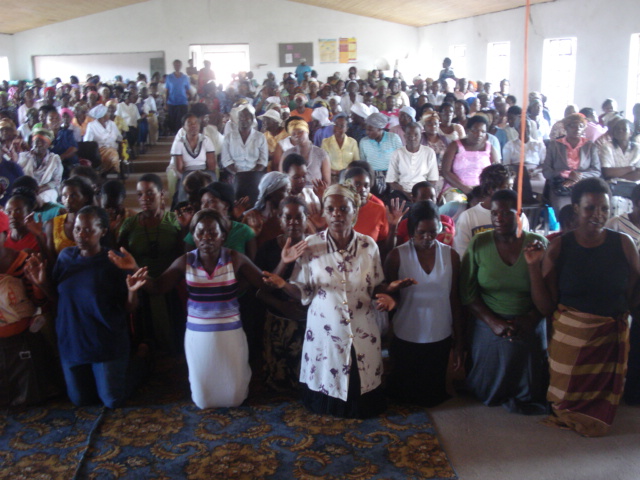
Widows gathered for prayer at Mbare Christian Fellowship in Harrare.

Kids at a Zim Orphanage receiving gifts from our community.
See my pasts post about work and partners in Zimbabwe.


 Lane Corley