Author Archives: Lane Corley

Planting in Unreached Avoyelles, Realistic Church Planting Expectations, and Other Things from this Week
1. Replanting on the Northshore
Last week I reported that there are 18 ongoing Re-Starts or Re-Plants going on in Louisiana. Met this week with leader of one of the latest going on in the Covington area. Derek Kitterlin is replanting Pilgrim’s Rest Baptist Church near Barker’s Corner. FBC Mandeville is providing sponsorship. A Re-Plant is one in which a church dies to become something new. Usually includes a building, but not always. New identity & organization is birthed. Systems are restored that lead to evangelism & discipleship. We’re seeing great success across Louisiana with up to 1,000% turnarounds in attendance on sites that were struggling. Attendance is already doubled at the site of the former Pilgrim’s Rest. Looking forward to seeing how this develops. Another great turnaround in the works!
2. Planting in Unreached Avoyelles
Got to meet this week with church planters in Avoyelles Parish. Avoyelles is one of Louisiana’s poorest parishes. It also had several towns that have NEVER had a SBC church. That is changing now!
- Life Point Church was planted in 2007 in Marksville. They’ve since moved to Mansura & have spawned a mini-church planting movement.
- Point-of-Life Church is being planted by Norris Landry in Plaucheville. So many great stories already coming out of this work. Bro. Norris retired to plant a church. I tell him, he flunked retirement J. Land has been purchased already. Despite some mild persecution by the local Catholic church, the work goes forward.
- Bayou Life Church is being planted by Louis Charrier in Cottonport. Louis has planted 19 churches in Louisiana. Great work going on in one of Louisiana’s largest towns without a SBC Church.
- Grace Point Church is being planted in Simmesport by Jacob Crawford. Simmesport is a key stop between Baton Rouge & Central Louisiana. It also has a ferry into the Angola State Penitentiary. Looking forward to seeing this work develop.
- James Baptist Church is being planted in Bunkie by Reginald Arvie. This is a partnership between one of Louisiana’s oldest churches, St. James Bayou Chicot, started by Joseph Willis in the early 1800’s, & one of Louisiana’s newest churches, Life Point Mansura. Great story!
3. Church Planting FAQ: How Am I Doing Really?
Most weeks I meet with church planters whose works are not meeting expectations. Their own expectation &/or that of the sponsor church(es). We’re establishing some standards for average & median attendance & giving in church plants at certain points in development in Louisiana to help planters & partners manage expectations. And Lifeway has provided a helpful study called The State of Church Planting that gives Average & Median attendance figures among other data. Here’s some of the numbers:
- Average Attendance in Church Plants in Louisiana – 49.8
- Median Attendance in Church Plants in Louisiana – 35.5
- Lifeway’s Average Attendance for Church Plants Year 1 – 51, Year 2 – 74
- Lifeway’s Median Attendance for Church Plants Year 1 – 30, Year 2 – 45
This is usually encouraging to planters who expect to be at 200 by the end of year two. Very seldom happens that way. Probably less than 5% of the time. However, it is important for works to be on a growth trajectory. I wrote two post with these conversations in mind this month:
4. A few reports from the Missions & Ministry Office this week:
- 13 new churches planted so far in 2013. 6 in New Orleans. 7 Non-Anglo. All 13 in South Louisiana. 20 in development for 2016. 137 new churches planted since 2010.
- 76 baptisms, 336 new commitments to Christ reported Jan-Mar 2016 by church plants in Louisiana.
- Since 2010 – 1,804 baptisms & 9,532 new commitments to Christ. Hopefully we’ll pass 2,000 baptisms & 10,000 new commitments to Christ this year.
- New Orleans – Since 2012 when Send New Orleans launched – 27 new churches started, 348 baptisms, 1,352 New Commitments to Christ. $972,508 in Cooperated Funding provided from Louisiana Baptists Missions & Ministry office for Church Planting in New Orleans.
5. Tangible Kingdom Primer Small Group Study
Taking our third tour through the Tangible Kingdom Primer with a Small Group on Thursday nights this Spring. TK always challenges us to develop & create opportunities for sojourners to experience the kingdom. Some of the things that have birthed out of these groups:
- Guy with mad Billiard skills committed to use them for outreach to other billiard lovers.
- Guy with poker skills committed to invite friends over once a month to play poker & talk about life & God.
- Mother with music background felt led to begin singing in the Community Choir.
- Family decided to begin monthly Block Parties for kids in their neighborhood.
- Highly recommend the TK Primer to help get groups postured outward, primer on missional living, & to open eyes to opportunities that God given gifs, abilities, provisions have provide for us.
Check out a few previous posts on the TK Primer:
- Tangible Kingdom Primer
- The Tangible Kingdom: Posturing Toward Others
- What is Community?
- Go…
- Outcome Didn’t Matter, Faithfulness Did
- What Does Missional Look Like?
6. Great Moments
A Father baptizes his daughter at Bridge Church on Sunday. Love these moments. Greg Chester actually baptized three of his kids: Grace (pictured), Joshua, & Caleb. These pics never get old.

7. How Many Sacks is Your Church?
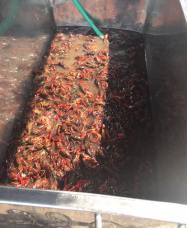 Someone proposed a new way to track the growth of Louisiana church plants: How many sacks of Crawfish does it take to feed the crowd? Bridge Church has grown from 2 to 8 sacks now! How many sacks are you?
On the Blog This Week:

Priorities: Build Your Life Around ___ vs. Trying to Squeeze It In
Am I trying to squeeze in what I should be building my life around?
- Establishing solid devotional habits. Time with God.
- Eye to Eye, Face to Face time with my kids.
- Eye to Eye, Face to Face time with my spouse.
- Caring for those who can’t care for themselves.
- Sharing the Gospel of Christ with others.
- Mentoring & discipling others in the faith.
- Opening my home to strangers & those searching for God.
- Giving sacrificially, regularly, & cheerfully.
- Gathering with other believers for worship & encouragement.
- Using my spiritual gift to serve others.
- Serving a friend or neighbor with a need.
The statement “I never got around to it” should be left to the trivial, temporal things of this life, not those things that could make a ripple in eternity. Let’s build life around eternal things. Try to squeeze in the rest.
For Churches:
- Adopting & praying for unreached people groups.
- Starting & sponsoring new churches.
- Starting new groups for new people.
- Providing opportunities for leadership to new people.
- Finding & reaching out to unreached people & population segments in your community.
- Encouraging missionaries, first responders, community servants.
- Feeding, clothing, visiting ministries to the community.

74% of Louisiana’s Population is Urban?
 Gearing up for a little research project on Louisiana’s ten largest cities. I’ve heard the stat, 80% of people now live in cities or urban areas in the U.S., so I wanted to see where Louisiana fit into that. I was thinking New Orleans, Baton Rouge, maybe Shreveport would be our urban areas. Well, according to the Census Bureau, part of that 80% would also include residents of Bogalusa, Livonia, & Sunset. The Census Bureau now defines urban in two ways:
- UA – Urbanized Areas which has 50,000 or more people.
- UC – Urban Clusters which are areas with 2,500 – 50,000 people. That’s right! 2,500 people!
I actually found the document that list all of these from Louisiana (download it here). The list includes Winnfield & Jena (where I grew up wearing camo to school!), Oakdale, Springhill, & a lot of other small towns most would consider rural! It’s actually harder to notice a Louisiana town NOT listed than it is otherwise.
Louisiana has 11 Urbanized Areas with 50,000+ – Alexandria, Baton Rouge, Hammond, Houma, Lafayette, Lake Charles, Mandeville/Covington, Monroe/West Monroe, New Orleans, Shreveport, Slidell – & 64 Urban Clusters with 2,500-50,000 residents. 3.3 million of Louisiana’s 4.5 million in population live in one of these 75 areas.
The United States has 486 Urbanized areas with about 309 million residents or 71% of the population & 3,087 Urban Clusters with about 29 million residents or 9.5% of the population. So, 71% of the population live in areas with 50,000 or more residents. 80% of the population lives in areas with 2,500 or more residents.
Now, the point of expanding population density in the U.S. is still well noted. The population in Urbanized Areas grew by 2.9% in the last census cycle & Urban Cluster population declined by 1.2%. However, when you hear a report on America’s expanding urban population & how many people are moving to the cities, read deeply & see if they’re using these Census Bureau definitions. If so, just remember that for the Census Bureau, counting people moving into the cities, may mean they’re moving to Bunkie Louisiana, population 4,092.
Data on SBC Impact on Louisiana’s largest cities still forthcoming.

Why Portable Church? Advantages and Objections
Portable Church has MANY advantages. I’ve come to love being portable. Here’s why:
1. Energy
Energy can be directed outside the walls, because the walls are not ours. In portable situations, the church is usually not responsible for cleaning, managing accounts, & making repairs. We’re able to direct the skills of the people more to the needs of the community.
2. Affordability
The cost of buildings are growing exponentially. In many, not all, communities, being portable is better financially for new & transitioning churches. Often the cost of a building straps congregations with debt & too small a seating capacity for maximizing growth for the future.
3. Community Engagement
A Lifeway research study called The State of Church Planting showed that new churches that meet in public places experience 42%-49% greater attendance than others. Unchurched people are comfortable attending gatherings in theaters, gyms, banquet rooms, hotels. And the benefit to non-profit locations that churches can gather in is great. Churches we’ve planted have met in a Apartment Complex, Fire Station, YMCA, & Museum. Community agencies and organizations can greatly benefit from rent payed & the church can see that being there is an investment in the community.
4. Culture
Portable church allows for the ministry to be built on what is most important, especially in critical early years. When you are portable, people attend church due to relationships & mission. The building & space are less likely to become “tails that wag the dog.”
Common Objections:
-
Isn’t that a lot of work?
Yes. It takes work to setup. But that work involves people rubbing shoulders & elbows together weekly. In my experience setting up church on Sunday’s brings people together. In my opinion, one of the reasons portable churches meeting in public places have 42%-49% greater attendance is because of the work that requires mobilizing people every weekend. Relationships + Responsibility = a Reason to Return. Churches with few mobilization opportunities limit their capacity for growth. Portable church set up expands mobilization potential.
-
Doesn’t a building signify that you’re a real church?
Maybe so. But do you really want a building to define your church? Church should be defined by its disciples, their love for one another, & the churches ministry in the community. Studies & my own experience shows that portable church can enhance these things.
-
Won’t people get burned out?
People tend to get burned out in any situation. The work of the leader is to provide good systems, regular encouragement, & changes of pace to allow people to manage seasons of their lives. And portable churches can setup with great creativity & simplicity limiting the workload, but still involving greater numbers of people in the ministry of the church.
 Now, churches do reach a critical mass in attendance & finances where ownership & construction may make sense. And God often provides a building at the right time for the growth of His church. HOWEVER, there’s no need to be afraid of portable church. If your thinking about starting a church that may need to be portable or you’re thinking of staying portable, use these questions as a guide:
- Can I find an affordable, portable space that will help me direct energy outside the walls?
- Can I find an affordable, portable space that will help me with engaging community leaders & spheres of influence?
- Will portable church help establish the culture & vision of this new church for this community?
- Am I ready to establish teams & mobilize people?
Find some other great thoughts about Portable Church from Geoff Surratt in my earlier post On Church Buildings and Portable Church.

Church Planting Story: Hope Church of Waldheim
 Was back at Hope Church of Waldheim tonight for a men’s gathering. Heather & I moved to Covington in 2001, to be a part of starting a church in the community of Waldheim. So many great memories in this community. And so many hard lessons. Church planting in Waldheim brought me to the end of myself many times, as church planting will usually do. Wrote about the journey in the post Overheard as a North American Church Planter.
Timeline: Started in October 2001 as a Home Bible Study. Began weekly worship gatherings in October 2002. Worshipped in an unairconditioned Fire Station for 2 years. Moved into a former cafe/truck stop in 2005. Survived Hurricane Katrina in 2005. 55 baptisms in first five years. 1,000’s came on volunteer missions trips from Texas, Louisiana, Alabama, Kentucky, Mississippi, & South Carolina to serve this community through Hope Church between 2002 & 2008. Grateful to have been a small part of the story of this church that will hopefully be a light to the unchurched in the Waldheim community & beyond for generations to come.
Found an old partner presentation to share with the men’s group:

Acadiana Church Planting, Replanting on I-12, Disaster Relief Update, and Other Things from This Week
1. Replanting on I-12
Met with leader of three ongoing Re-Planting projects in Livingston Parish this week.
- The Way Church in Denham Springs was gifted Calvary Baptist Church property. 900% increase in worship service attendance on site in about two years! Planters Scott Cheatham & Josh Spinks.
- Genesis Church in Walker was gifted Agape Baptist. 300% increase in attendance on site since last October! Pray for Planter Jeff Smith.
- The Way Church has been gifted Beech Ridge Baptist. They’ll be launching Bible Studies this Summer & Worship Services in the Fall. Pray for Planter Cameron Gober.
These are three of about 17 ongoing Re-Plant or Multi-site mergers across Louisiana, that have led to 100’s of additional worshippers across our state as healthy systems are put in place to make facilities again fruitful for reaching people. For those having these conversations check out these post:
- When We Can’t Go On: Scenarios for Churches in Need of Radical Revitalization
- Real Life Scenarios of Church Revitalizaiton: Merger & Multisite (The Way & First West Fairbanks)
- From 15 to 175! Another Successful Revitalization (Fellowship Church Airline)
- Church Revitalization Story: The Grove
2. Acadiana Church Planting
Met this week with Lafayette area church planters. Acadiana’s church to population ratio, % of population attending church, evangelical population puts it second to New Orleans as the most in need of new churches. Thinking about planting, consider Acadiana.

3. Louisiana Baptist Missions & Ministry Staff meeting on Wednesday
Heard a great report on the SBC response to the Louisiana Floods.
- 18,000 homes were flooded in Louisiana.
- 3,000+ cleanup / mudout projects have been completed by Southern Baptist Disaster Relief workers from 30 out of 42 of SBC State Conventions.
- Still ongoing projects in Haughton, Vinton, & North Monroe.
And then the rebuilding starts. Grateful to be a part of a tribe that responds so generously to crisis.
4. I-20 Church Planting
Working with a couple of new works in development in the Monroe/West Monroe area. This area has long been a major player in the tech industry with Century Link, one of Louisiana’s top private sector employers. Now IBM is creating 400 jobs in the region as well. 65% of SBC churches are in North Louisiana, where 30% of our population lives, so it’s not a huge priority in terms of church planting, but new churches are always needed in every community to reach new generations of people & saturate regions with the Gospel. Check out my post Does My Community Need a New Church: The Right Questions & Key Indicators to ask the right questions about your community in terms of the need for new churches.
5. Emotionally Healthy Spirituality
Finished an incredible book, Emotionally Healthy Spirituality by Peter Scazzero this week. I actually started reading The Emotionally Healthy Leader & decided I needed to go back & reach the first one before going further with EHL. Love Hate relationship with this book right now. Tended to meddle. LOL. In a good way. I’ll be processing this book for awhile. Already working on my church going through EHS this summer.
6. Northshore Church Planting
Met with Northshore Baptist Association leaders this week about ongoing work in their region. Five churches being planted this year with four more in development. If all these come to fruition that will mean 25 churches planted since 2000. Great strategy development over the years with Directors of Missions Reggie Ogea & Lonnie Wascom. I’ve been on the ground floor with the strategy development as a Church Planter in this region. Summarized the strategy they’ve used in the post Starting an Associational Church Planting Movement.
7. Vince Smith on Ideas Out Loud
Vince is one of our Central Louisiana Church Planters. He’s planting The Circle Church which just launched in January at Alexandria Senior High School (ASH) & is doing great. He recorded a podcast this week with Justin Bufkin & Matt Tullos with some great insights on the church planting journey, transitioning from church staff to lead pastor, & the importance of a church planting network. Check it out HERE.

8. My community has been rocked this week by two young men committing suicide. It’s led to some soul searching & good conversations in our home about life & death & evangelism. My son Jack will be a freshman at Mandeville High next year. St. Tammany is known as an affluent area, but leads our state in suicides most years. Pray for these families & our community.
9. Another Successful New Orleans Vision Tour
My colleague George Ross, North American Mission Board Send City Strategist for New Orleans, hosted another great group of potential church planting partners for a vision tour in New Orleans this week. These happens about three times each year. Next one is scheduled for September. George has done an incredible job connecting partners to plants in New Orleans. 21% of the population of Louisiana lives in New Orleans. 17 churches have been planted since 2010. History making work going on by our planters there. Keep up with happening with Send New Orleans HERE. Check out profiles of New Orleans Church Planters HERE.
10. Bridge Church this Weekend!
Looking forward to Bridge Church‘s Annual Outdoor Worship & Crawfish Boil on the beautiful Tchefuncte River in Madisonville this Sunday!

Best Articles I captured in Feedly this week:
- Five Ideas to Prepare Your Small Group Ministry For Summer | SmallGroups.com
- 10 Deadly Church Planting Mistakes | Malphurs Group
- 10 Things You Get When People Follow You Out of Obligation or Admiration | Leadership Freak
- Church Outreach: What Has Worked and What Hasn’t | Rainer on Leadership
- 5 Best Apps for Ministry Productivity | Louisiana Baptists

Sustainability and Church Planting
 Church planting is a risky endeavor that requires sacrifice, faith, & hard work. The goal should be to bring new people into the kingdom & to do it for years to come. Most church planters who start from scratch begin with support raised from denomination, other churches, & personal relationships. The church planter usually feels an internal clock ticking for the day when this support will begin to diminish. My denomination usually supplies 2-3 years of financial support. Sponsor churches will usually commit 3-5 years. Individual partners may stay on longer, but to be sustainable, the church plant is expected to & will have to make disciples who support the work of their church. A recent audit of failed church plants in my state, found that 50% of them just ran out of time before becoming financially self-sustainable. The outside support ran out before the disciples reached could carry the budget of the church. So how does a new church begin with the end in mind in relation to finances? Here are some helpful questions / exercises that a planter or planting team can work on to help count the cost & plant for financial self-sustainability:
1. If my vision is realized in 5 years, how much will it cost?
or a better question may be, How much will it cost annually to bring new people into the kingdom in this community? The work here is first to design a strategy that will actually reach the unchurched in the community, instead of just looking at what’s been successful in other places or by other people. Then, if the strategy & need is for the church to have things like full-time staff & a building of its own, go ahead & plan for those realities now. You will most likely need a budget of at least $120,000 per year to afford small doses of those two common realities.
2. Does this vision fit my context?
or, How long will it take to become financially self-sustainable in this particular community? or How many people will I need to reach to become financially self-sustainable in this community?
So this exercise is to look at economic realities in the community to begin to diagnose reasonable expectations of financial viability from within. In Louisiana, we’ve used a figure of $800 per year per person in average attendance that can be expected from the congregation as a way to project financial viability. So, average attendance, multiplied by $800 will usually put you in the ball park of what your annual budget will be. So if I will need $120,000 per year, divide that by $800 & that tells me that I’ll need to reach 150 people to be around financial self-sustainability. But the economic realities in some communities may not support that figure. For some, $400 per person per year may be more realistic. Talking to local pastors & looking at average incomes in the area will help with this exercise. We know all things are possible with God, but now you’re counting the cost of a potential church plant in this community. Questions are: Do I believe this can happen here? Am I willing to lead my family & people reached to get there? Do I need to be bi-vocational to start a church here?
3. How many years will I need financial support from the outside?
Outside support is great & needed, but most church plants will not be able to depend upon it beyond five years. These exercises may tell you that you will need to because of the realities on the ground. Plan for that by spending more time & energy on raising outside support. Developing partners that will be OK with long term sponsorship of your work. Or raise large amounts of capital on the front end for the new work. With more churches looking to support church planting directly, the good news is that this is possible today. But we also must be cognizant of the danger of getting top heavy – depending upon an amount of outside support that the congregation will never be able to sustain on its own. This scenario has meant for some plants, losing staff & making major course corrections in years 4 to 6, which could prove fatal to the work or put much pressure on the planter family or sending church.
4. How will I teach new people reached by the new church about Biblical Stewardship & Giving?
The sooner you begin discipling people & teaching them the principles of Biblical Stewardship the better. If you really do reach new people, you will have to lead them down the road to Biblical giving. Today, people are experiencing mountains of debt, high costs of living, & more taxes, so it may take longer than in previous generations. So don’t wait to start healthy financial systems in your new church that teach people to steward their money for the work of God’s kingdom.
5. How can I create a reproducible model that can produce disciples, leaders, & churches for years to come?
And one major consideration for the future of church planting is that new churches learn to create reproducible models that can plant churches that deliver the gospel to different communities for generations to come. If it costs you $2 million dollars over five years to launch a church that has reached 150 people, who are now strapped with debt on the new building that took hours of volunteer labor to build & seats 175 (not an uncommon scenario), it may be a tough sale when you start talking about doing it again. Making reproducibility a core value at the beginning will call for simplicity, creativity, & people based not funding based strategies. These things require more patience, but will lead to less stress & pressure for the church planter & plant in years 4 through 6.
What do reproducible models look like? Most of the time in the west, it’s about strategies that keep cost down. Scenarios like:
- Plants led by bi-vocational staff, at least initially.
- Keeping gatherings smaller, but adding locations to grow.
- Commitment to longer term portability may work in some communities.
- Starting a non-profit to raise money through grant writing & corporate donations for ministries to the communities.
I love the axiom, “Begin with the end in mind.” Jesus commended counting the cost (Luke 14:25-34). These questions may seem unspiritual, but are necessary part of planning for delivering the Gospel to generations in your given context.
 Make the Effort. What will I have to do?
“Reproducing Churches Stay Lean and Mean”
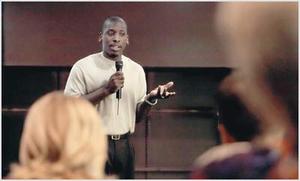 Church Planters & Compassion Ministry leaders in the Greater Baton Rouge area are getting a treat this weekend, learning from Tulsa, OK, Church Planter Kujanga Jackson. Kujanga & his wife Kimberly planted New Beginnings Church in North Tulsa. NBC is the incredible story of how God birthed a Multi-Ethnic church near the spot of the largest race riots in US History. And NBC has in 10 years, planted 6 other churches & started a non-profit called TOUCH which reaches into 6 major schools & many low income multi-housing developments. The thing I love about this story is that NBC is in one of the poorest communities in Tulsa, but has found a way to be a self-sustaining AND multiplying church. Utilizing the non-religious non profit TOUCH for fund raising, for ministries, & employment of staff, the church doesn’t have to shoulder the financial load of ministries in a community with high unemployment & low incomes. Self-sustaining, reproducing, impacting the community. That’s what we desire of all our churches. Look forward to having Kujanga back in the future!
A few other big takeaways from our time with Kujanga:
- To be a reproducing church you must stay lean & mean. Each time New Beginnings reaches 120 in attendance, they know they are pregnant & begin preparing to send out.
- For transient, low income communities, link strategy to local schools.
- On Multi-Housing Ministry: What you use to draw’em is what you’ll have to use to keep’em.
- Counter entitlement thinking in communities by making them a part of the process, allowing them to participate in planning & implementing events & ministries in their communities.
- What is a Mature Multi-Housing Ministry? The residents involved in the process of making their community better. The church as a link for resources.

Fruitfulness = Character and Capacity
“the gospel is bearing fruit and growing throughout the whole world–just as it has been doing among you since the day you heard it”
Colossians 1:6
Fruitfulness is the result of the gospel’s work in people & the church. Jesus desires fruitfulness from his people (John 15:16). How do you define fruitfulness? Two words come to mind: Character and Capacity.
1. Character – Jesus’ work in our lives is inside out. From within he hones & shapes our character to bear the fruits of godliness. Galatians 5:22-23 lists some of these – “love, joy, peace, patience, goodness, kindness, self-control.”
2. Capacity – This speaks to our desire & ability to bring others into the kingdom. When we cut open a fruit or vegetable, we’re reminded that God placed the ability to make more into every living thing. Every living thing is a package of seeds designed to produce more. Our capacity may be different based upon our personal giftedness, soil conditions around us, & our own obedience, but Jesus’ work in us, should produce in us a desire & ability to share the Gospel with others.
Fruitful Christians grow in character & capacity. Show Jesus by the fruit of a godly life & share Jesus with others to grow the kingdom.
Bridge Church is currently studying the New Testament book of Colossians in a series called Focus. We meet on Sunday mornings, 10:30am at the Maritime Museum in Madisonville. Join us this Sunday as we talk about expanding our personal capacity for fruitfulness.


 Lane Corley