Blog Archives

Church Plants and Volunteer Mission Teams, Part 1
Mission Trips can be powerful tools for the growth of individuals and churches. As a church planter, I have considered every mission team as a force multiplier, multiplying the impact of our church’s outreach in the community. However, they can also be a drain on a church plant and/or planter if proper planning, communication, and strategy development haven’t gone into the trip.
In the next two posts, I want to talk about some tips for producing win-wins out of Mission Trips to help local church plants. Today, rules of thumb for Church Planters. Tomorrow, rules of thumb for churches going on a trip to help a church plant.
Five Rules of Thumb for Church Planters Working with Volunteer Mission Teams:
1. Invite Others to join you on your mission to reach that community.
If God has called you to plant a church, He’s most likely called others as well. He wants to call people from outside your context to join His mission of reaching your community. Start with churches that you have relationships with and invite them to consider supporting you through prayer, financially, OR by taking a mission trip to help you with outreach. There may be times when you help them, more than they help you. That’s part of having a kingdom view of your church plant’s place in history.
2. Ask for a Pre-Visit from a leader.
By far, the most productive mission teams always send an advance team to plan and prepare. That may look like a 1-2 person team several months before or a small team several days before the rest. As you’re planning for outside mission teams, always ask for an advance team of some kind to prepare the way. And the larger the group, the more necessary this will be.
3. Stay away from back-to-back groups. Unless you have Full-Time Staff.
As a church planter, time for the important work of rest and follow-up is always squeezed. You’ll need a week to recover and follow up properly between teams. Unless you have a full-time staff taking care of details. Then plan for at least 3-5 days between teams.
4. Set your calendar and strategy early.
Set your calendar early, so that when mission groups call, you know what times you have available and can receive teams and you know what you need to do to grow your church at this stage in history. This will save you from an exhausting spring or summer that leaves you feeling that you didn’t accomplish anything toward the planting of your church.
5. Plan for follow-up.
Part of a great mission trip experience for a church is seeing the impact they had on you and your mission. Send thank you notes, send pics of the trip or the results if they’ve promoted an event for you that they didn’t get to stay in town for. Send videos as you grow, so that they can feel like they’re a continued part. And invite them back.
Some of our best friends and partners in ministry are people who came on a mission trip to help our church plant. Some of them are now planting churches themselves. The investment in each other and the relationship built between the planter, plant, and church during mission trips is unique. Follow these rules of thumb for a great experience.
Tomorrow we’ll turn to some things churches taking a trip to help a church plant will need to remember to have the greatest impact.
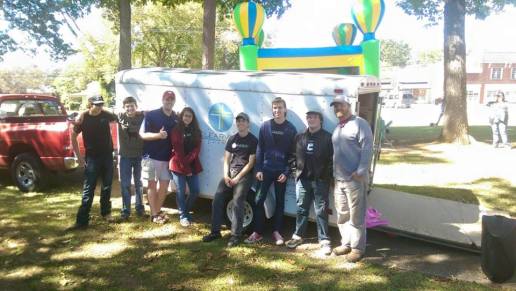
Mission team from Georgia that helped our church plant with Block parties during the summer of 2014.

Your Church as a Greenhouse
 I enjoy gardening. Even though I’m not very good at it. Why? I don’t always have the time to do what’s necessary to grow and multiply plants to their fullest extent. The best gardeners know how and put in the time to create the right conditions for growth and multiplication. The very best gardeners will start with a greenhouse to nurse the plants in early stages before they are ever put in the ground. A greenhouse is a tool where you can create the perfect conditions for multiplication & growth of plants at all different stages and with various needs.
I enjoy gardening in part because of the many parallels it has to church planting and ministry. I’ve began to see church as a greenhouse – a tool to create the right conditions for multiplication & growth OF DISCIPLES. Here are five truths I’m learning on church as a GREENHOUSE:
1. Disciples must be nurtured.
Like plants, like a garden, like a greenhouse, disciples need time and attention. One of the greatest books on discipleship has in its title a reminder we constantly need – Disciples Are Made, Not Born. While we are not completely responsible for the growth of a disciple, part of our commission from Jesus requires time and attention and energy and prayer, etc., etc., etc. One of the greatest disciple makers, the apostle Paul, said it like this in Colossians 1:28-29,
“We proclaim Him, warning and teaching everyone with all wisdom, so that we may present everyone mature in Christ. I labor for this, striving with His strength that works powerfully in me.”
If we’re going to make disciples, we must expect to give much time and attention to people from sharing the gospel, teaching basic truths, responding to questions, correcting, forgiving, etc., etc.
2. A Disciple’s needs change over time.
A greenhouse or a garden is organized based on maturity and needs of the plants. Expectation are based upon time and stage of growth. Just like this, as churches, we need to provide a variety of opportunities for growth for people at different stages of maturity. And we need to teach our leaders what you can expect from people as they grow. The best tool I’ve seen that helps with this is Jim Putman’s great book Real Life Discipleship and the Real Life Discipleship Training Manual. Putman guides readers to understand where people are spiritually based upon what they say, and then how to respond and what to provide for them at that stage. (See my post Things Spiritual Infants Say for a run down).
3. Disciples will eventually need to be sent out from the greenhouse to multiply themselves.
The Greenhouse is not the final destination for a plant, nor is the Sunday worship service the climax of maturity for the disciple. Just like plants are meant to be outside, producing fruit and multiplying, disciples should be trained, equipped, and released into this world for maximum fruitfulness and to multiply the gospel in their sphere of influence.
4. Not all disciples will respond to the conditions you create.
A hard reality to face for the gardener, and much harder for the disciple maker is the truth that some plants and some people just won’t respond to the conditions you create. It hurts when a disciple doesn’t respond to God’s word. It hurts when a disciple leaves your church, but maybe they needed conditions you couldn’t provide at the time. Jesus even said that perhaps only 25% of disciples would become fruitful (Matthew 13). It’s important to remember that we’re responsible for our faithfulness, not everyones response.
5. The church is the perfect tool to create the conditions for multiplication & growth of Disciples.
The church, with all its imperfections, does provide a perfect environment for growth of disciples. A church offers opportunities to learn from those walking with God for years, opportunities to get involved and serve in various capacities, opportunities to have relationship wins and losses. These and other conditions help us grow. A lack of desire to learn, serve, love, and forgive REVEALS a lot about where we are spiritually and our potential for fruitfulness, maturity, and multiplication.
Does your church function as a Greenhouse? How are plants maturing? Are you providing opportunities for people at different stages of growth? Are you training your leaders to know what to expect as people grow? Are you moving people out to multiply in their world? Are you spending time with people that just refuse to grow & may need different conditions or to be let go?
Greenhouse: Basic Training for Church Multiplication
I’m humbled & excited to be involved with training church planters in Louisiana & our latest training is now called Greenhouse: Basic for Multiplying Disciples, Leaders, Groups, & Churches. Next one is right around the corner, Feb 22-23 at Wholly Ground Coffee House & Concert Venue. It’s free. You can join us & work on your GREENHOUSE. Register Here.

On Failed Church Plants: How Many Are There? and Why?
Fifteen. That’s the number of “failed” church plants we’ve recorded in Louisiana since 2010. 15 out of 124 churches planted. I tracked this number down, because it’s one of the regular remarks I hear from people wanting to question or disparage the role of church planting in the ministry of the church.
- “Don’t most church plants not make it anyway?”
- “History tells us that most church plants won’t be around in 10 years.”
- “I’ve heard 80% of church plants fail.” (Don’t know where this number came from, but it has to have joined the ranks of most quoted bad stats).
So that means we have an 88% “success” rate in church planting in Louisiana since 2010. The North American Mission Board has reported a 68% success rate across North America. (not an 80% failure rate! Please quit saying 80% of church plants fail!)
As a church planter, I hate using these words – “failed” & “success.” Here’s why?
- You can’t fail in attempting something great for God. If you’re sharing the gospel, you might not get immediate results, but you plant seeds for the future. The word of God never returns void. In the context of church planting, that might mean you run out of time on financial sustainability, but you can look back & see seeds planted, people that were lifted, & deep lessons learned that led to spiritual growth & character development in the life of a planter & team. I don’t think God would call that a failure.
- Defining success in church planting can be muddy waters. Successful Church Planting is evangelism that leads to the birth of a new congregation. Is it success, then, if a church plant stays open, but reaches very few new people through evangelism? Is it success, if a church plant grows at the expense of other churches in town? Is it success, if a church plant doesn’t impact the community around it through evangelism & people in the immediate area don’t even know it exists? Questions like these lead me to look back at my list of 15 & see a few churches that made the tough decision to close, but may have been more “successful” than some of the 109 that are still open. Self-sustainability is an important factor in church planting, but evangelism & reaching new people, should ultimately define our true success.
Why do Church Plants Fail?
Looking back at our list of 15, & a factoring in a few others that I’ve been involved with prior to 2010, here are the reasons for their failures:
- Character & Calling issues. 4 out of the 15 I mention closed because of moral failure or a deficiency in character in the church planter.
- Wrong Context & Culture. Another 4 in our list, can be chalked up to the church’s strategy & focus or the church planter himself not being a good fit for the context & culture.
- Ran out of Time. The other 7 just simply ran out of time before achieving critical mass or financial sustainability. Lots of factors could go with this one, including work ethic issues of the church planter (which may go back to character & calling), lack of partner development, lack of evangelism & team building, difficulty of the soil in the area (which may go back to context), etc.
These are all things that we can counter with good solid assessments of planters & partner churches on the front end, good equipping & networking opportunities for planters & their teams, & by building great partnerships to come around each new plant.
In Louisiana, we offer these opportunities as part of our Church Planting Networks. Connect with our Facebook Group to keep up with opportunities. Our Greenhouse Training coming up this Spring is specifically designed to help a church planter in Louisiana design systems & strategy to get to self-sustaining status in 5 years.
Church Planting is a risky thing. Not failing every now & then may be a sign that we’re not pushing into the absolute hardest to reach areas. The great axiom is “Failure is never final, it’s only feedback.” If a church plant doesn’t make it, it usually leaves behind some changed people & we can say it’s cultivated the ground for something in the future.
Check out these resources to help you or your church to get started on your church planting journey:
- 5 Things You MUST do Before You Start a Church
- 5 Things You MUST do During the First Year of a New Church
- 10 Biblical & Practical Ways to Get Involved in Church Planting
- Every Church Can Encourage Church Planting and Multiplication
- Every Church Can Be a Church Planting Partner
- Your Church Can Be a Parent to a New Church or Campus

82% of Churches are Below 125 in attendance – How do we breakthrough?
 Only 10% of our current church plants in Louisiana have broken the 125 Growth Barrier. Actually, 82% of all evangelical churches in Louisiana are under 125 in attendance. Here’s a great podcast on how to break through at NewChurches.com.
https://newchurches.com/episode-23-break-through-the-125-growth-barrier/
- “Getting past the 125 barrier requires a systems mindset.”
- “To break the 125 barrier, you need 5-10 leaders, and 4-5 leaders of leaders.”
- “Protect your time with the leaders and the lost.”
- “What are the things that only you can uniquely do?”
- “Why do must churches stay small? Largely because most pastors don’t know how to build systems, structures, and processes that are not contingent upon them. Most pastors can care for people, but don’t build systems of care. Most pastors can develop leaders individually, but lack the skill to implement a process of leadership development. When a pastor can’t build systems and structures that support ministry, the only people who are cared for or empowered to lead are those who are “near” the pastor or those very close to the pastor. This limits the size of the church to the size of the pastor.” – Darrin Patrick

The 501(c)(3) Question in Church Planting
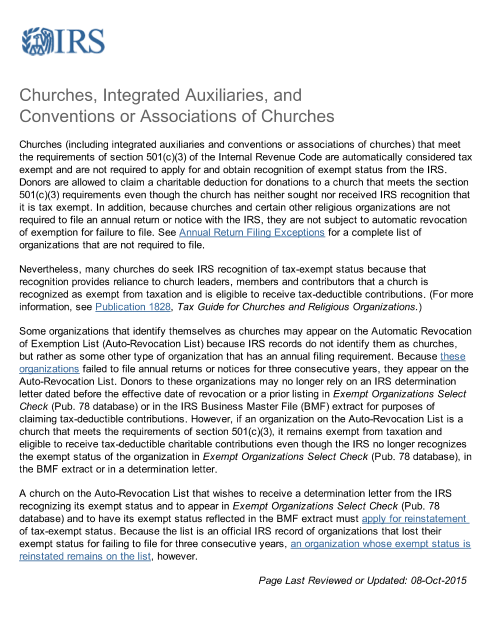
An increasingly popular FAQ in church planting in Louisiana is “Do I have to apply for a 501(c)(3) covering?” The answer I’ve always received from people smarter than me is “No.” And I’ve taught this in church planter training events every chance I’ve gotten. However recently, banks have been asking for this determination before allowing a new church to open an account. This is tough, because it can take months to get approved for a solo 501(c)(3) status. But finally, a CPA friend has tracked down the exact IRS statue on this question! Yes!!! 
Get the entire doc: Churches, Integrated Auxiliaries, and Conventions or Associations of Churches
So the answer is “NO!” You do not have to have it! Church Planter, print this off & carry it with you to the bank, give it to the banker, & open that account!
Now, as a Louisiana Baptist Church or Mission you can obtain a letter identifying you as an auxillary. But it shouldn’t be a requirement for you to do business as a church.
For a couple of more helps in this area, see my Posts 7 Steps to Establishing Your Church as a Legal Organization & Handling Money in a New Church.

Church Planting Makes a Difference
Since 2010, 124 new churches planted in Louisiana with 8,987 new commitments to Christ reported in the first 36 month of these churches. That’s 72 new commitments to Christ per church plant.
How could 72 new commitments to Christ impact your community?


And that doesn’t account for a now lifetime partner in fighting community issues like addiction & hunger, a new partner in global missions, total evangelism as new believers get involved in new testament relationships & serving. Church Planting makes a difference.
Missiologist Peter Wagner said, “Planting new churches is the most effective evangelistic methodology known under heaven.”
Tim Keller says, “The continual planting of new congregations is the most crucial strategy for the growth of the body of Christ.” (get his great article Why Plant Churches).
Keep exploring the question “Does My Community Need a New Church?” HERE.
Check out these resources to help you get started:
- 10 Biblical & Practical Ways to Get Involved in Church Planting
- Every Church Can Encourage Church Planting and Multiplication
- Every Church Can Be a Church Planting Partner
- Your Church Can Be a Parent to a New Church or Campus

Connecting Dots, Defining Impact – Church Planting Highlights from the Louisiana Baptist Annual Meeting
Enjoyed a great couple of days of networking in Bossier City with the Louisiana Baptists Annual Meeting. The big highlight for me personally, was hearing my good friend Kirk Jones, Pastor of Fellowship Church in Prairieville, preach the Convention Sermon. Fellowship started from scratch in a Prairieville Fire Station in 2002. Since then 440 people have been saved & baptized at Fellowship & 700+ gather for worship each week on two campuses in hard to reach Ascension Parish.
Kirk took time to connect some dots & show the impact of the Southern Baptist Cooperative Program on his life. Kirk & I are the same age, so I saw myself in this exercise he led us through. From his local church having a Missions education program for boys called Royal Ambassadors, to the Annual Youth Evangelism Conference held each year to inspire teens to be on mission, then through Baptist Collegiate Ministries during college & Seminary training at SBC seminaries, & then deployment as church planter through the North American Mission Board & Louisiana Baptist Convention. Now 440+ new brothers & sisters in Christ & a healthy, multiplying church that is now a partner through the Cooperative Program & SBC Missions offerings. There are not many in our generation connecting these dots today. Thanks to Kirk for the great reminder. It’s not perfect. It’s not the only way to do it. But the Cooperative Program works.
A few other highlights:
- Annual Church Planting Network Luncheon – We have some amazing folks planting churches in Louisiana & the Annual Meeting is the one time each year that we can get a majority of them in one room for lunch & to say thanks.
- We had 48 of our 77 planters on stage for our Annual Report Monday night. It was cool to see the diversity & depth of church planting in the state in one big group.
- Our Mission Support Committee, which oversees the work of the Missions & Ministry Team, met & approved funding for 110 church planting & compassion ministry projects around Louisiana for 2016. Grateful for the Cooperative Program, Georgia Barnette State Missions Offering, and Annie Armstrong Offering for North American Missions that makes this possible.
- Greg Shyne, church planter for United Outreach in Shreveport received recognition for Outstanding Bivocational Ministry from the Louisiana Bivocational Pastors Fellowship. We’ve seen & embraced a big upswing in bivocationalism in church planting over the last few years in Louisiana. Love it!
- The Louisiana Baptist Pastors Conference was also great with H.B. Charles, Frank Cox, Phillip Robertson, Brad Jurkovich & others giving us some great encouragement to pursue the call.

Kirk Jones, Planter/Pastor of Fellowship Church in Prairieville, LA preaching the Convention Sermon at the Louisiana Baptist Annual Meeting at FBC Bossier City.

Annual Church Planter Network Luncheon. Currently 77 church planting projects in years 1-3 in Louisiana.

Great to have a big group of our current Louisiana Church Planters on stage with us for our Annual Church Planting Report, Monday night.
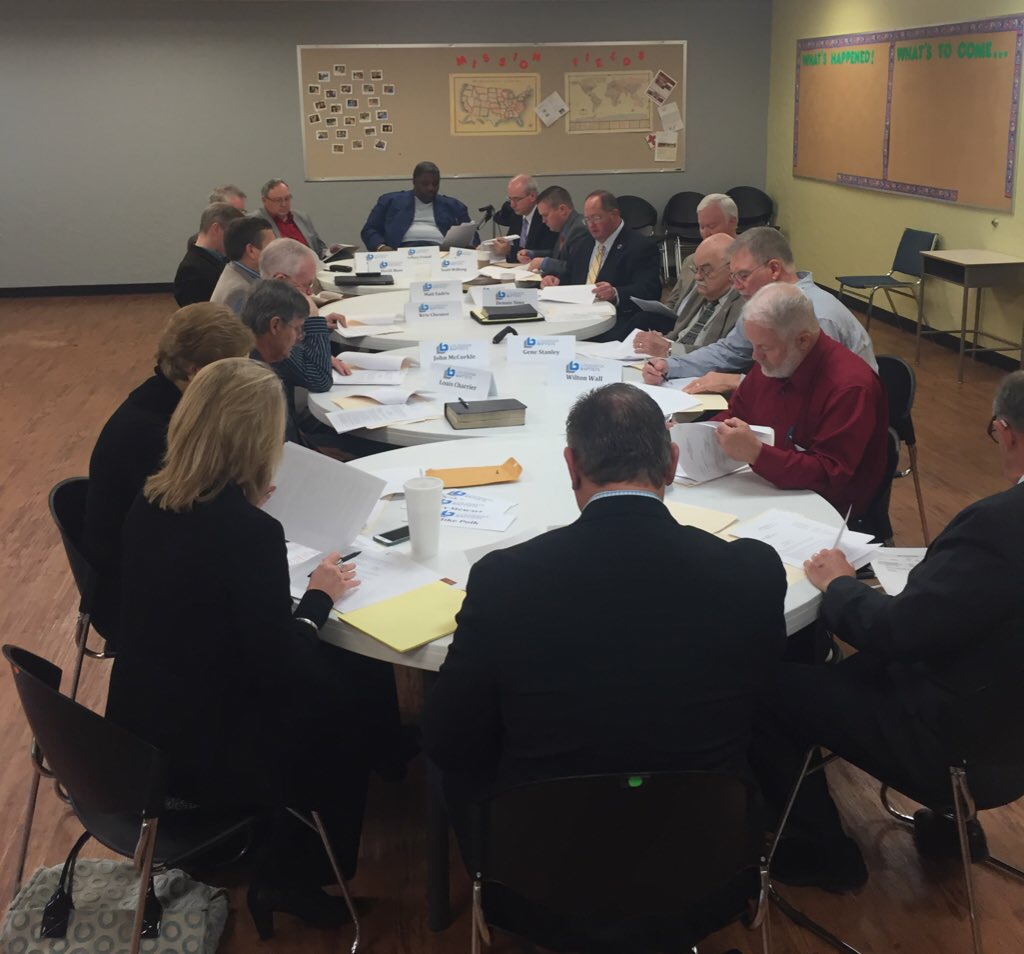
The Missions Support Committee is made up of leaders from Louisiana Baptist churches & oversees the work of the Missions & Ministry Team. They approved funding for 110 church planting & compassion ministry projects for next year across Louisiana.

Congrats to Shreveport church planter Greg Shyne, Bivo Pastor of the Year.

“The power of preaching is in its content, not its function.” – HB Charles closed out the Pastors Conference. Great to finally get to hear him in person.

Church Planting = Water for the Thirsty and A City for the Hungry #devo
 Two of my favorite images of church planting are found in Psalm 107:35-38.
35 He turns a desert into a pool of water,
dry land into springs of water.
36 He causes the hungry to settle there,
and they establish a city where they can live.37 They sow fields and plant vineyards
that yield a fruitful harvest.
38 He blesses them, and they multiply greatly;
He does not let their livestock decrease.
In every city & community there are a dry desert places that need the living water of God’s presence. In every city & community God wants to gather the hungry people for the sake of establishing a fruitful multiplying community. This gives great purpose to the work of the church planter & church planting team: FINDING DRY, DESERT, PARCHED PLACES IN THE COMMUNITY. Settle there & establish a place for hungry people to gather, grow, & multiply.
Questions for planters:
- Are we planting for the purpose of seeing God water the dry places? or are we planting in places that are well watered?
- Are we establishing a place for the hungry or the already full?
- Are we ready to sweat & experience the difficulty of desert life as we plant in dry places?
- Are we ready to lay brick #1 in a million as we build a city for the hungry?

Church Planter Fit
SUNDAY 11082015
- 1x pull trailer
- 4x unload equipment
- 4x hang signs
- 125x setup chairs
- 4x make coffee
- 125x shoulders (shaking hands)
- 4x 30 yard sprint (chasing kids)
- Repeat backwards
(And I guarantee this workout for 10,000 Fitbit steps before noon on Sunday.)
Who’s ready? There’s a church plant near you that can get you on the schedule ASAP.

Inspired by Crossfit.com.

ASAP in Church Planting: What should I do first? #churchplantingfaq
 When starting a new church or anything else, getting off to a good start is very important. A great question I’ve been asked several times this year – “What should I do first?” I wrote about what to do BEFORE starting a church and what to do in THE FIRST YEAR of a new church. But what should I be most concerned about in the very beginning, the first quarter, of a new church planting project. Looking back at my three first quarters of church planting projects, here’s what I’d do before I ever start to think about finding a building, getting a 501(c)3, or hiring a worship leader.
1. Gather partners.
Before getting on the field, you should have been developing a network of partners for prayer, financial support, etc. Establishing good communication patterns at the very beginning is essential. Every Monday email, closed Facebook group, hard copy E-newsletter, discipline on reporting if you’re partnering with an organization that requires a monthly report. Get in a rhythm of sharing with your partners early. And continue to work your plan to develop & establish good partnerships.
2. Meet some new people.
Establish yourself as a people person immediately. Build some relationships, get to know your neighbors, stick your nose in some conversations at a coffee shop, & share the gospel. If you get into month 3 or 4 & you don’t have some relationships on the field, the walls will start closing in & the loneliness will begin to stifle you. And these relationships will hopefully give you some soundbites to communicate needs to your partners & some potential core team members as well. I used Dan Morgan’s KISS method as a strategy for meeting new people: Know a name, get Involved, Share your Story, Share the Gospel.
3. Gather at least one circle.
Three keys to church planting: Gather, Gather, Gather. To grow the church, you’ll need to effectively gather CIRCLES (small groups), ROWS (worship gatherings), CROWDS (special events). Right now, focus on gathering one circle by inviting some of the people you meet to a Bible Study. You may be blessed to have a launch team from a sending church to help you form a circle. If so, work hard to keep that circle open to the unchurched. Or start a second circle for the unchurched. The more circles the first year, the better.
4. Meet with a coach/mentor.
Most church planters have read widely before getting on the field. You’ve got a ton of ideas. You’ve kept up with what others are doing. You need to establish some relationships with people that can help you focus on the best courses of action right now. A good coach or mentor will hold you accountable, help you process & sort through plans & ideas, & give you honest feedback. Eventually, you’ll have a team inside your church that can help with some of this, but now you need trusted advisors on the outside that believe in you, love you, & want to see your church succeed. In my experience, the closer to the field your working that they are, the better. Don’t wait until you need some advice. You need it now whether you know it or not. Establish a pattern of meeting with someone in the first month.
5. Establish patterns of devotion & rest.
One hour each day, one day each week, one weekend per month, two weeks per year. Plan out when you’re going to spend time with God, what will be your day off, date nights, vacations. Running past your devotional life & seasons of refreshing will lead to a quick flame out for most church planters.
So, a good checklist for the first 3-6 months of church planting:
- How many partners do I have? Have I communicated with them effectively?
- How many names do I know in the community?
- How many circles have I started?
- Who is my coach or mentor(s)? And when do we meet?
- Have I rested well this quarter?


 Lane Corley