Exponential: The Largest Gathering of Church Planters on the Planet
Great first day at Exponential. Worshiped with over 3,100 church planters and team members, heard messages from Mark Batterson and Louie Giglio, attended breakouts on Social Media in ministry with Kem Meyer and Reproducing Vision with Will Mancini, and got to hang out with Florida Church Planters at the ReproducingChurches.com Network Dinner with Jason Dukes. I’ll share some takeaways at the end of the conference.
Best Freebies so far: Besides the coffee, of course, Zondervan gave away over 2,000 copies of Dave Ferguson‘s new book Exponential: How You and Your Friends Can Start a Missional Church Movement. Almost bought it last week. Thanks Zondervan!
Looking forward to hearing from Ken Blanchard, Matt Chandler, Reggie McNeal, Ed Stetzer, and Alan Hirsch tomorrow.
“… the gap holding back most believers is not the gap between what they know and what they don’t know. It’s the gap between what they know and what they’re living. Many Christians are trafficking in unlived truth. They are educated beyond their obedience.”
Dave Browning in Deliberate Simplicity: How the Church Does More by Doing Less
Making Disciples Can Be Messy
“Preaching to a crowd is safe, but mentoring someone is costly and messy and can hurt your heart” Pete Charpentier
Could this be why our default position of ministry today is planning and paying for big events and hoping that maybe, just maybe people will get in a relationship? One on one discipling can be less than “cost-effective” when it comes to todays score card for ministry success (which is how many? how much? how often?).
My heart is hurting a bit this morning because some I’ve invested in have recently made destructive choices, some are experiencing hardship, some are seeds falling by the road or among thorns. I think I understand in a small way what Paul said to the Galatians who were pursuing a false gospel: “I am again in the anguish of childbirth until Christ is formed in you!” 4:19. This morning, I am also full of joy because others are making progress and growing and tracking with God’s will. I am also humbled to think about those who mentored and discipled me with patience and love and shaped me into what I am today.
I believe one of the greatest questions for leaders is: “Who are you currently mentoring?”
Recently, Pete Charpentier, Pastor at Woodland Park Baptist Church in Hammond, challenged one of our monthly Pastors conferences with the need for one-on-one mentoring in ministry. He gave me permission to share his insights which have stuck with me the past few weeks. Here they are:
Utilizing Social Networking for Ministry
 — This was originally presented at a Conference for Ministry Assistants. Download the PDF version here —-
The Gospel of Jesus Christ is big news. It’s a message to be declared, proclaimed, announced, and distributed to as many people as we can as often as we can. God’s work among His people is also news and a story that needs to be told. The tools that churches have relied upon to announce their message and distribute their stories are the pulpit, newsletters, letters and post cards, phone trees, scrolling power point announcements, and email. As a Pastor, my church utilized each of these tools and still I heard regularly from people in my church – “I didn’t know anything about that.” Communication is definitely one of our biggest challenges. Also challenging is the fact that a generation is here that is abandoning paper and phone lines for wireless messaging and social networking. It’s time for the church to take communication to another level and engage the world in the fastest growing means of messaging that we have today and utilize the world of Social Media.
Why?
So you’re not a computer geek, you don’t enjoy video games, you hate hype and fads. These are some of the reasons given for not engaging in the popular social networking domains. Here are four reasons why you should put all excuses away and just do it:
1) It’s where the people are. In February, Facebook announced that it now has 400 million users and some estimates show that growing by as much as 35,000 a day! There are 3.5 billion pieces of content uploaded to Facebook each week. Facebook now supports 65 languages. Twitter boasts 75 million users and growing. Currently there are 50 million tweets everyday, about 600 tweets per second. These interfaces are growing and people are using them more and more each day. If we’ve got a message that we want to get out to as many people as possible it seems that we’d want to get it where the people are and social media seems to be that place.
2) Message saturation is possible. Recently I asked a group of Church Secretaries and Administrative Assistants if the teenagers in their church are reading the church’s publications. 100% expressed uncertainty. We recognize that a hard copy newsletter does not reach all of our audience. Utilizing social media will allow you to get the exact same information to them in a way that does attract their attention. It is possible to saturate your message throughout the different age-grades and audiences in your church today like never before.
3) It’s Free. The most compelling reason for utilizing the fastest growing communication tools today is the cost. It’s completely free! At every level of social networking, free is an option that gets you out to where millions of people are interacting every second of everyday.
4) You Might Have Fun. Why has Facebook grown so fast? It’s enjoyable. People like having info at their fingertips in real time. They like talking about themselves and connecting with people. They will enjoy connecting with your church and discovering what it’s all about as well. And it’s ok to have fun while we proclaim His message and tell our story.
TOOLS OF THE TRADE
With so many different social networking sites popping up, here are three types that can definitely help ministries communicate their message in this new age. I’m sharing personal discoveries and what I’ve learned over the last few years as I’ve waded into these waters, so I’m certain my knowledge is far from exhaustive, but here goes:
Good Friday Quotes
 “We can cut ourselves, or throw our children in the sacred river, or give a million dollars to the United Way, or serve in a soup kitchen on Thanksgiving, or perform a hundred forms of penance and self-injury, and the result will be the same: the stain remains…The only answer in these modern times, as in all other times, is the blood of Christ.” – JOHN PIPER
“The concept of substitution lies at the heart of both sin and salvation. For the essence of sin is man substituting himself for God, while the essence of salvation is God substituting himself for man.” – JOHN STOTT
“When Satan attacks you, command him in the Name of Jesus to bend his neck. On the back of it you’ll find there’s a nail scarred foot print!” – E. STANLEY JONES
“Jesus paid it all, all to Him I owe, sin had left a crimson stain, He washed it white as snow.” – ELVINA HALL
“Apart from the cross, condemnation is normal. Without Jesus, we all deserve to be condemned and punished for sin. But here’s the good news: ‘There is therefore now no condemnation for those who are in Christ Jesus’ (Romans 8:1).” – C.J. MAHANEY
“The debt was so great, that while man alone owed it, only God could pay it.” – ANSELM
“…He made you alive with Him and forgave us all our trespasses. He erased the certificate of debt, with its obligations, that was against us and opposed to us, and has taken it out of the way by nailing it to the cross. He disarmed the rulers and authorities and disgraced them publicly; He triumphed over them by Him.” – Colossians 2:13-15 (Holman Christian Standard Bible)
Boldness vs. Blessing
Where did the early church get their boldness? They actually asked for it, instead of protection, provision, and blessing (Acts 4:29). Even in the face of threats and public humiliation. Our prayers reveal what we believe about God and our hearts priorities. Praying for protection and provision in the face of danger makes sense, unless God has commanded you to be witnesses and promised to be with you every step of the way (Matthew 28:19-20). Praying for protection and provision makes sense if your believe that God’s goal for your life is happiness, safety, and peace instead of holiness and fruitfulness (1 Thess. 4:3-8, John 15:16). I thank God for his protection and provision in my life, but I hope I have the kind of faith that seeks boldness and courage when its threatened.
Through the Eyes of a Three Year Old
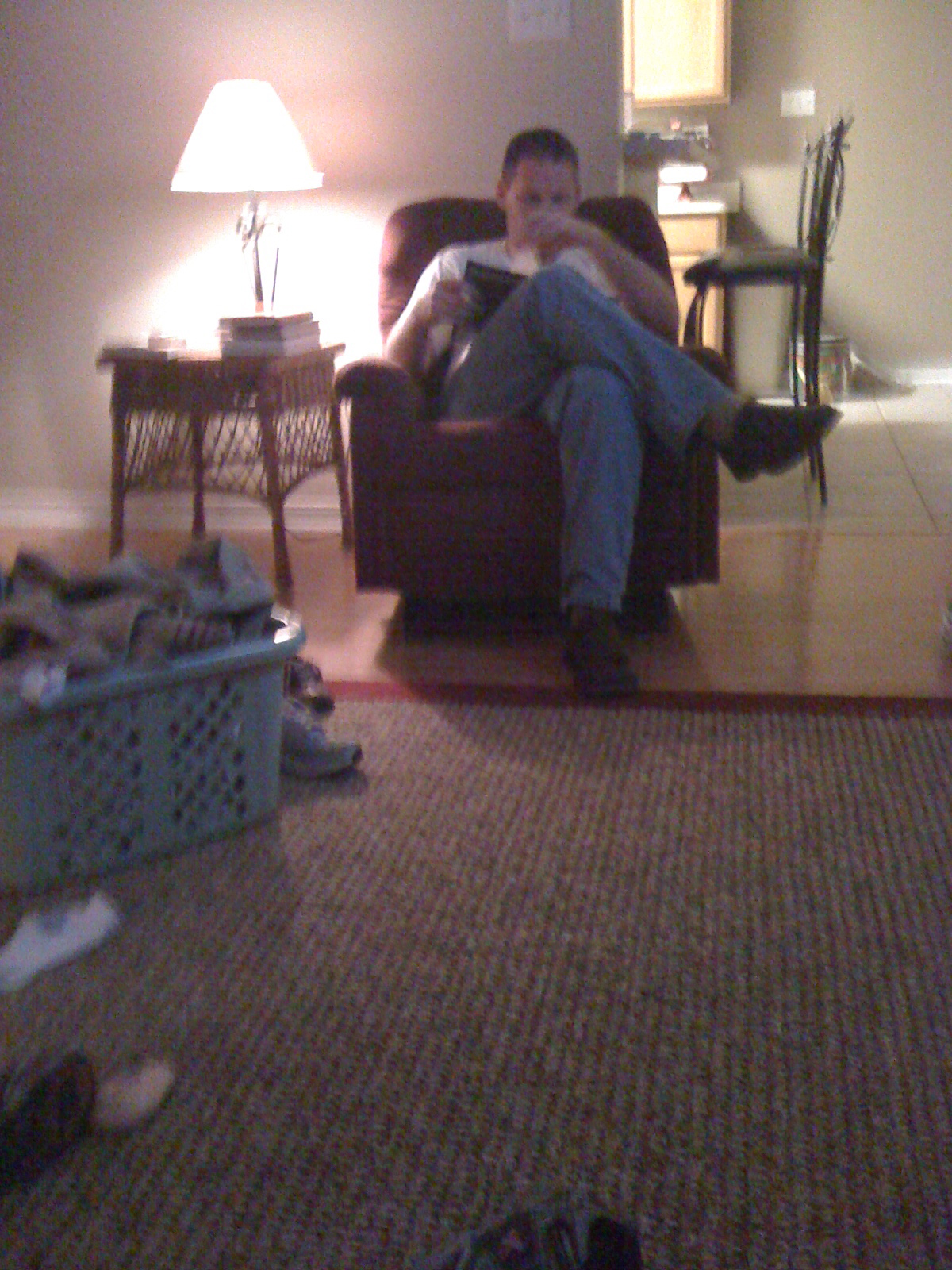
Hudson, our three year old has discovered our camera and the camera feature on my IPhone (which he can work better than I). He’s compiled quite a portfolio that’s a lot of fun to scan. These pictures have hit me pretty hard. I’m reminded that his little eyes are on me and he is learning by what he see in me everyday. Seeing myself in his pictures has given me a different perspective and has me asking some questions as a Dad:
- Does he see my eyes enough?
- Am I too often looking at the phone, computer, TV?
- What do my habits communicate to him?
- Does he see me loving his Mom enough?
- How can I shape my little man be my actions?





Saint Patrick – Slave, Shepherd, Priest, Apostolic Church Planter, Movement Maker
 My family name was most likely originally Curlee or O’Curlee, until changed to Corley many generations back. The Curlee name found its way from western Scotland and Ireland to New Orleans, and other parts of America, in the 1630’s, and then in droves after the potato blights of the 1800’s. From there, I’m guessing, a few caught on with saw mill companies and made it to beautiful Central Louisiana and settled as Corley’s. On my family’s land in Grant Parish, you can actually still make out the rows in the woods from when it was all one big potato farm. Being a “history buff,” this knowledge about my family name planted in me an interest in Saint Patrick. Here’s some interesting info I found out about:
- Patrick actually isn’t a Saint, as he was never officially canonized by the Roman Catholic Church, but he is celebrated with a feast day and widely venerated by the church.
- Also, he was not Irish, but an Englishman from Roman Britain. Patrick was born in AD 390, to a middle class Christian family. Though his grandfather was a pastor and both parents devoutly religious, Patrick says that “he knew not the true God” as a rebellious teenager.
- At age 16, pirates raided his home town and carried him away to Ireland. He was sold as a slave to an Irish warlord and forced to become a shepherd.
At this point in history, Ireland was radically pagan and extremely violent. The Roman Catholic Church had given up on converting the territories and even discouraged people from traveling there. Maps of the day would label areas such as Ireland with the words “MONSTERS LIVE HERE.” In a lot of ways the people were monsters. They were illiterate, except for the language of war and bloodshed. They had no cities and little organizational infrastructure. There were around 150 clans who were constantly at war with one another. They valued getting drunk, fighting, sexual perversion, and torture. Their enemies were terrified of them because of their obscene ways of fighting. They called their battle formation the warp-spasm. Basically, they painted themselves, got drunk, stripped naked, and rushed screaming at their opponents like they were demon-possessed (they very well may have been). Even Roman Soldiers, who had conquered the world and were known for their brutality, were shocked and frightened by the Irish. The Irish religion was paganism and mysticism, led by druids and pagan priestesses who performed human sacrifices, sex rituals, claimed to be able to control the elements, and preyed on the fears of the people.
This is the world that Patrick found himself in. As a shepherd he endured total isolation in the rain and snow, never having shelter, much food, or descent clothing. It was during this time that Patrick turned to prayer and the God he knew little about. After six years, God spoke to Patrick and told him to escape because a ship was waiting on him. He walked 200 miles without being caught, found a ship and miraculously made it home, just as God told him he would.
Upon returning home Patrick enrolled in seminary and was eventually commissioned as a Priest by the Roman Catholic Church. When he was in his 40’s, God spoke to him again and commanded him to return to Ireland to preach the gospel and plant churches for the pagans that had enslaved him years before. So, Patrick sold all he had and sailed back to Ireland ready to give his life for the sake of the Gospel.
In Ireland, Patrick began using methods completely unique to his time and that would bring much opposition from the Roman Catholic Church.
- Like modern church planters and missionaries, Patrick sought to use his knowledge of the people and Irish culture to gain open doors to communicate the Gospel.
- He used things such as the three leaf clover to teach doctrine and adopted their styles of music and art in compelling people to put their faith in Jesus Christ.
- If enough new converts were present in a village he would lead them to build a simple church that did not resemble Roman architecture and then hand over the church to pastors that he had trained so that he could then move on and repeat the process.
Patrick allowed the Gospel, not Roman civilization, to change Ireland. Thomas Cahill, in his book How the Irish Saved Civilization, says it like this, “Patrick’s gift to the Irish was his Christianity – the first de-Romanized Christianity in human history…a Christianity that completely inculturated itself into the Irish scene.” A Christian, not Roman-Irish, culture formed and as these “transformed warrior children of Patrick’s heart lay down their swords of battle, flung away the knives of sacrifice, and cast aside the chains of slavery, they very much remained Irishmen and Irishwomen.”
In the span of 30 years, Patrick saw between 30 and 40 of the 150 tribal clans become Christian. He trained over 1,000 pastors, planted 700 churches, and God used him to bring the peace of Christ to one of the most violent territories in the world.
What lessons can we learn from Saint Patrick?
1) Our goal for people – In Patrick’s day, winning people to Christ meant winning people to Roman culture. It seems Patrick was content to allow the Gospel to transform Irish culture instead of forcing Roman culture upon them with the Gospel thrown in. As a church we must always remember that our goal is not to make people like us, but through the Gospel, like Christ.
2) Fearless, sacrificial faith – Patrick sold all his possessions and gave his life to people who had once enslaved him and who would think nothing of doing a quick “warp-spasm” on him and take his life. He was wholeheartedly surrendered to the task of seeing the Irish people come to Christ. It was that kind of faith that the Irish needed to see. Cahill says “his refusal to be afraid of them…his steadfast loyalty and supernatural generosity” spoke volumes to the Irish people. Today, our culture needs to see people that are fearlessly and sacrificially committed to Christ in that way. Does that describe your faith? If so, get ready to be used of God to do amazing things.
Faith-In-Action Needed
“The light that shines the farthest, shines brightest at home” – this is one of my all time favorite missions quotes from J. Oswald Sanders. It reminds me of the inherent hypocrisy of saying how mission minded we are while driving past deep needs of people groups in our community. For our church, regular Faith In Action weekends where we get intentional about ministry to the neediest and sharing the good news has opened my eyes to this truth even more. Without neglecting the needs of the world, we must take time to look around us. Here are a few of our upcoming Faith in Action Projects:
Nestled in the heart of Madisonville, LA, one of the wealthiest areas on the Northshore, is this family that has no running water and open holes in the floor. Next week we’ll spend time cleaning up this property, pressure washing, painting, addressing quality of life issues, and being a blessing to the family however we can.

Near to this address is the household of a disabled/handicap (due to polio) single parent with three kids. That’s right. There are no steps on the porch and the head of household is disabled. We will be taking time to bless this family through cleaning the property, pressure washing the house, etc.

The dishwasher of an elderly, widowed trailer park resident burst and leaked all over the floor. Long-term results are open holes in the floor and water damaged cabinets. We hope to repair, replace, and be a blessing to this household next week.

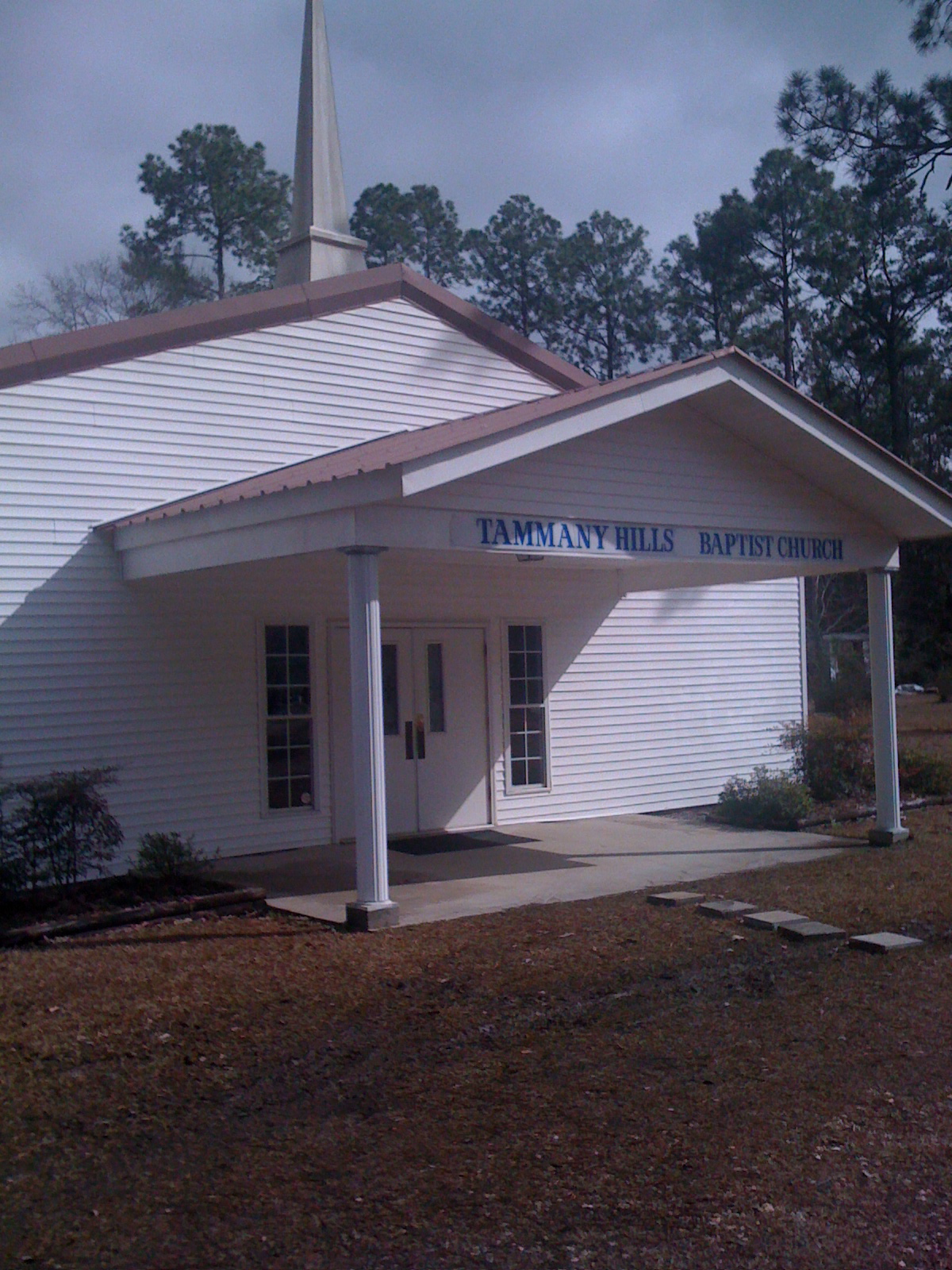
Tammany Hills Baptist Church has been in decline for years. Our Association of churches has worked with them on a track torevitalization and she is coming to life! Next week we’ll be helping with a door to door campaign to invite 2,000 neighborhood residents to church and let them know that we are praying for them. We’ll also tackle some handyman projects around the church.
“This is all social work stuff. What about sharing the Gospel?” We’ll be touching each household around these homes as we bring change to the physical structures. Through servanthood and being the good news, we can expect opportunity to share the Good news. Excited about the possibilities of shining bright in this world and very bright close to home.


 Lane Corley