Category Archives: Leadership
4 C’s of Spiritual Leadership
Short list to see how we’re doing as Christian leaders and to see if one is ready for Christian leaders. 4 C’s taken from Mike Breen‘s Missional Community Field Guideon who can lead a Missional Community. Questions are from our Bridge Church team briefing today as we “spurred one another on to love and good deeds” (Hebrews 10:24). Take the test:
- Character: Am I following through with my promises? Am I being as honest as I can about my abilities? Am I living out of a commitment to Christ? Am I overcoming sin & insecurities through Christ? I am accountability to ________ & ________ & ________. How can we hone our character?
- Competency: Am I able to consistently stay on ministry objectives? What is a win for me? What am I learning through the outcomes of my endeavors? Am I living out of a clear sense of mission & vision? I’m motivated by ____________. How can we become more competent in our roles?
- Chemistry: Am I working out of my greatest strengths? Am I working with the place & people that I’m best suited to influence? Am I able to serve the Lord with gladness and maintain joy in my work? Am I working out my unique calling & gifting? I feel I am at my best when ___________. I feel our team is strongest when ___________. How can we strengthen our chemistry?
- Capacity: Am I a leader worth following? Can I say to those around me, “follow me as I follow Christ?” What is the measure of my influence? I’m currently investing in _________ & _________ & _________. How can we improve our capacity for fruit bearing & growth? Is there room in my life for generosity in relationships? Am I able and willing to give and give up for the sake of others?
“Opportunity is missed by most people b/c it is dressed in overalls and looks like work” ~Thomas Edison
- Talent is cheaper than table salt. What separates the talented individual from the successful one is a lot of hard work. ~Stephen King
- Few people are successful unless a lot of other people want them to be. ~Charles Brower
- Opportunity is missed by most people because it is dressed in overalls and looks like work. ~Thomas Edison
- If you want to increase your success rate, double your failure rate. ~Thomas Watson
- I don’t fear the man who practiced 10,000 kicks one time. I fear the man who has practiced one kick 10,000 times. ~Bruce Lee
- Life’s real failure is when you do not realize how close you were to success when you gave up. ~Thomas Edison
- One person with passion is better than forty people merely interested ~E.M. Forster
- There are 3 stages to every great work of God: First it’s impossible, Then it’s difficult, Then it’s done. ~J. Hudson Taylor
- The cost of being wrong is less than the cost of doing nothing. ~Seth Godin
- You can’t build a reputation on what you’re going to do. ~Henry Ford
- Success is going from failure to failure without loss of enthusiasm. ~Abraham Lincoln
- Every artist was first an amateur. ~Ralph Waldo Emerson
- Whenever you see a successful business, someone once made a courageous decision. ~Peter Drucker
- Success is the sum of small efforts, repeated day in and day out. ~Robert Collier
- I never worry about action; only inaction. ~Winston Churchill
- The opposite of a leader isn’t a follower. The opposite of a leader is a pessimist. ~Marcus Buckingham
- Thinking big without thinking long is a recipe for disappointment. ~Mark Batterson
Are You Plateaued?
Few leaders finish well. Maybe as few as one in three. And this was true of the leaders described in the Bible as well. Whether you’re leading a family, a church, a team, or a business, it is difficult and God’s wisdom is needed if we are to do what it takes to finish well. How can we keep from plateauing and burning out as leaders?
Just finished Neil Cole’s latest book, Journey’s to Significance: Charting a Leadership Course from the Life of Paul. In the
last chapter he describes a plateaued leader who’s on the way to burn out or worse:
He says plateaued leaders…
- Avoid relationships of personal accountability. How many degrees of separation are there from you and other leaders?
- Have infrequent personal application of God’s word. Are you mastering a subject or following and pursuing a King?
- Have seen joy, peace, and love replaced with envy and resentment. Is your character being shaped by Christ or by the opinions and actions of others?
- Frequently look for greener pastures in other places. Are you too focused on the circumstances around you to bring transformation to the place God has called you?
- More easily find fault in others than in themselves. Do you give others as much grace as you give yourself?
- Are burned out from lots of activity that has been substituted for intimacy with Christ. Are you exhausted from thinking more effort and more activity will bring you more blessings from God?
- Compromise ethical principles once held dear. Are you taking liberties that you once would not, because of entitlement?
- Stay within safe areas of expertise rather than branching out into new learning endeavors. Does the idea of learning something new make you afraid or proud?
- Are teachers and experts more than learners. Are you easily offended when instruction and advice comes from others?
- Have reduced the Christian life to the rut of a routine. Can your Christian walk be described as a few do’s and many don’ts?
- Perspective. They are focusing their energies on consistency over the course of their lives.
- Renewal. They take time to refresh and renew and rest and reconnect with God.
- Discipline. “Finishing well over the course of a lifetime is not accidental but intentional” ~ Cole.
- Learning. They maintain a learning posture throughout their lives.
- Mentoring. They mentor others and are mentored themselves.
- They maintain a personal vibrant relationship with God right up to the end.
- They maintain a learning posture and can learn from various kinds of sources.
- They manifest Christ-likeness in character as evidenced by the fruit of the Spirit in their lives.
- Truth is lived out in their lives so that convictions and promises of God are seen to be real.
- They leave behind one or more ultimate contributions.
- They walk with a growing awareness of a sense of destiny and see some or all of it fulfilled.
Discipleship and Choice
American Christianity has become about choices. Early service, late service, contemporary music, traditional music, small groups, Sunday School, big church, little church. And these choices are for the most part self-focused – “I’m looking for a great kids ministry” or “I like a small church” or “I like the early service” or “I like an older pastor.” Not that any of these things are bad and we must commend ministries in the west for making church life and the word of God as accessible for everyone as we can get it. The question is, How does this square with the New Testament picture of a disciple or follower of Christ? Read the New Testament and THE CHOICE was often RISK or SECURITY, DEATH or LIFE. I know the environment was different, w/o the freedoms and technology that we enjoy today, but did Jesus intend Christianity to be free from risk and sacrifice. Jesus said, “If anyone would come after me, let him deny himself and take up his cross daily and follow me. For whoever would save his life will lose it, but whoever loses his life for my sake will save it” Luke 9:23-24. In Acts, we see the first Christ followers, after initial fears, CHOOSING risk and suffering over and over again. The Apostle Paul spoke of “the brand marks of Jesus” Galatians 6:17 (NASB) on his body, obviously speaking of the torture that he’d endured for sharing the Gospel in unreached areas. He catalogued his suffering in 2 Corinthians 11:25-28:
countless beatings, and often near death. Five times I received at the hands of the Jews the forty lashes less one.Three times I was beaten with rods. Once I was stoned. Three times I was shipwrecked; a night and a day I was adrift at sea; on frequent journeys, in danger from rivers, danger from robbers, danger from my own people, danger from Gentiles, danger in the city, danger in the wilderness, danger at sea, danger from false brothers; in toil and hardship, through many a sleepless night, in hunger and thirst, often without food,tin cold and exposure. And, apart from other things, there is the daily pressure on me of my anxiety for all the churches.
Neil Cole in his interpretive biography of Paul’s life called Journey’s to Significance suggests that Paul could have avoided the “forty lashes minus one” but could not b/c of his love for the Jews.
This type of scourging was sometimes meant to purge or restore a brother to the synagogue instead of making him suffer excommunication. The punishment was executed by three or more leaders…and was exercised for a number of reasons…including being a false teacher and entering the temple unclean, both of which Paul would be accused of having done. Saul saw the synagogues as strategically important for the mission he was ultimately called to fulfill, and so perhaps HE CHOSE to be beaten raw in this way just to maintain access. He could have escaped this horrendous suffering by being excommunicated or keeping his mouth shut, but neither was a real option for him, and so instead he endured.”
New Testament Christianity seems to ASSUME risk and its adherents seem to CHOOSE risk and sacrifice at every turn. And the catch is, according to Jesus’ words in Luke 9:24, it’s in risk and death to self that we find the thing we’re often looking for in our choices at church – security and life.
So what’s the riskiest choice you’ve made as a Christ-follower lately? To attend service at a different time? Joining a new class or group? Do those things, but ask, does this require faith and denial and sacrifice for me? If not, could I be missing a key to real obedience and growth toward God?
What can I do to risk more? Well, you’ll most likely not be asked to endure beating and torture, but here’s a few risk for starters:
- Take some risk in your neighborhood and invite someone over for coffee or dinner that you don’t know that well and build a redemptive relationship with them.
- Find an organization that’s reaching out to the hurting in your region. There are many. Like orphans and widows, inmate children, homeless or those facing imminent homelessness, the hungry through local food banks, etc., etc.
- Instead of consuming your church’s ministries, contribute by volunteering to teach or lead a group.
- Take a short-term mission trip or fund another mission trip goer.
And Pastor, I’m asking myself as a church leader – Am I offering my church the opportunity to experience growth and grace through risk, sacrifice, and adventure? If not, do we keep our church from experiencing the life Christ spoke of in Luke 9:24?
Winning With People
- Who we are determines how we see others.
- The first person we must examine is ourselves.
- Hurting people hurt people and are more easily hurt by people.
- Never use a hammer to swat a fly off someone’s head.
- We can lift people up or take people down in life.
- The entire population of the world – with one minor exception – is made up of other people.
- Instead of putting others in their place, we must put ourselves in their place.
- Each person we meet has the potential to teach us something.
- People are interested in the person who is interested in them.
- Believing the best in people usually brings the best out of people.
- Caring for people should precede confronting people.
- Trust is the foundation of any relationship.
- Never let the situation mean more than the relationship.
- When Bob has a problem with everyone, Bob is usually the problem
- Being at ease with ourselves helps others be at ease with us.
- When preparing for battle, dig a hole big enough for a friend.
- All relationships need cultivation.
- Find the 1% we agree on and give it 100% of our effort.
- The journey with others is slower than the journey alone.
- The true test of relationships is not only how loyal we are when friends fail, but how happy we are when they succeed.
- We go to a higher level when we treat others better than they treat us.
- When we help others, we help ourselves.
- All things being equal, people will work with people they like. All things not being equal, people will work with people they like.
- Working together increases the odds of winning together.
- In Great relationships, the joy of being together should be enough.
Distinguishing Marks of a Quarrelsome Person
Hot-headed, divisive Christians are not pleasing to God (Proverbs 6:19). We are told to drive them out (22:10) and avoid such people (Rom. 16:17). This doesn’t mean we only huddle with the people we like. We are not talking about awkward folks or those who disagree with us. We are talking about quarrelsome Christians–habitually disagreeable, divisive, hot-headed church people.
This is an important issue for churches today. Seems we have a lot of churches unable to break out because of relational difficulty. Maybe partly because our generation doesn’t do well with anything that’s hard and requires commitment, like relationships that delve below the surface. And that’s what God desires. It’s easier to just go somewhere else. But discerning when someone is being divisive and quarrelsome is something we must do and determining whether I am the quarrelsome person who is hurting the cause of Christ. I thought this list by Kevin DeYoung was helpful. Read the whole post here.
So what does a quarrelsome person look like? What are his (or her) distinguishing marks?
- You defend every conviction with the same degree of intensity. You don’t talk about secondary issues, because there are no secondary issues.
- You are quick to speak and slow to listen. You rarely ask questions and when you do it is to accuse or to continue prosecuting your case. You are not looking to learn, you are looking to defend, dominate, and destroy.
- You are incapable of seeing nuances and you do not believe in qualifying statements.
- You never give the benefit of the doubt. You do not try to read arguments in context. You put the worst possible construct on other’s motives and the meaning of their words.
- You have no unarticulated opinions.
- You are unable to sympathize with your opponents.
- Your first instinct is to criticize. Your last is to encourage.
- You have a small grid and everything fits in it. Everything is a social justice issue; everything relates to the regulative principle, everything is Obama’s fault; everything is wrong because of patriarchy; everything comes down to one thing–my thing.
- You derive a sense of satisfaction and spiritual safety in being rejected and marginalized. You are constitutionally unable to be demonstrably fruitful in ministry and you will never affirm those who appear to be. You only know how to relate to God as a remnant.
- You are always in the trenches with hand grenades strapped to your chest, never in the mess hall with ice cream and ping pong.
- You have never changed your mind on an important matter.
Doing the opposite of this list will help us go deeper with God and others in the body of Christ and reproduce less people who don’t go to church anymore, because of how Christians treat each other.
Recent Q and A:
“What are three hopes that you have for the future of your current ministry?” – I was recently asked this for the Q and A section of our state newspaper. Looking back through my answers frightened me and challenged me. What the heck are we thinking!?!?
1. Responsiveness to the needs of people – One of the filter questions we are using for decisions in our church is, “Will this allow us to stay close and be responsive to the needs of people in our community?” I’m hoping that our church can stay outward focused and unselfishly give ourselves away for years to come. I’ve been convicted as a church leader by this question about personal debt – “Do you think about living generously and then remember something you have or want?” Responsiveness and generosity must be a priority if it’s going to be a reality. Anything that keeps us from responsiveness and radical generosity must be eyed with great caution.
2. Reproducible. I hope that more disciples, leaders, ministries, and churches will result. Insisting on reproducibility forces us to keep things ultra simple and stretches our faith. We’re already planning for new expressions of Bridge Church in 2011, in surrounding communities. I’ve been wrecked by Ralph Moore’s question in How to Multiply Your Church – What’s better, a church of 400 taking on overhead, or 5 churches of 80 that can be responsive to the community and quickly reproduce itself?
3. Transformation. A question that I’m constantly asking myself as a leader: “What good is it if our church grows, but the community continues to deteriorate?” Disciples transform the world by responding to the needs and shaping the culture around them. I hope that we won’t settle for anything less than transformed lives and community. One of the things I’m most excited about is multiple dysfunctional family systems that we’re engaged in restoring around our community. Families that for generations have battled addiction, abuse, disease, etc. It’s hard, messy, discouraging at times, but when transformation is your goal, seeing someone sitting in the pew every Sunday isn’t enough. We insist on seeing God glorified in the daily and seeing a new road paved for future generations.
What are your most challenging hopes and dreams?
Worth Reading: Cracking Your Church’s Culture Code
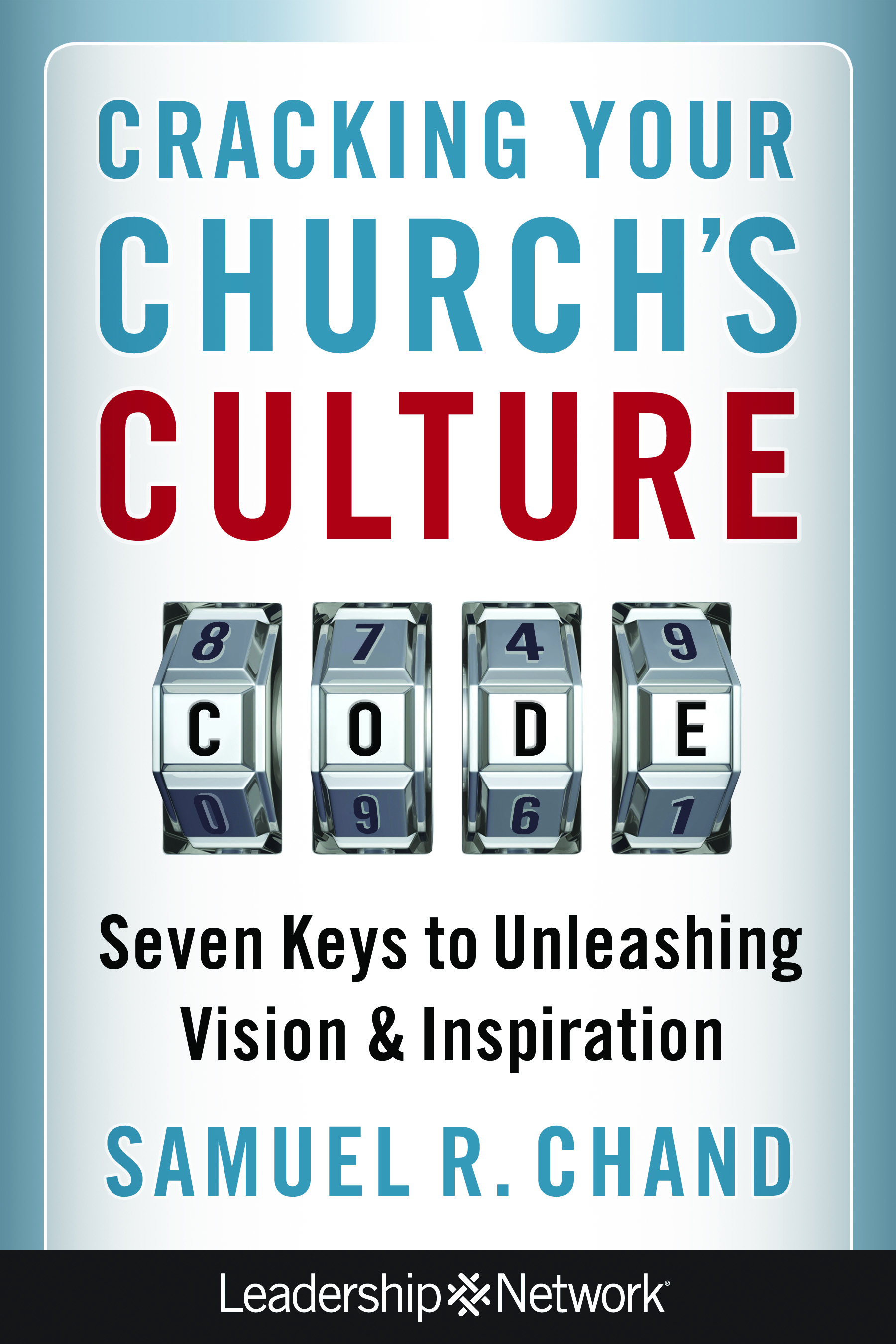 “Culture – not vision and strategy – is the most powerful factor in any organization.”
Samuel Chand brings a much needed perspective to the hype over mission statements and strategy with the book Cracking Your Church’s Culture Code. Why do great strategies not produce results? “culture eats strategy for lunch. You can have a good strategy in place, but if you don’t have the culture and enabling systems, the negative culture of the organization will defeat the strategy.” As a leader who is tasked with helping churches strategize and revitalize for effective ministry this book has been very helpful to me and will be for anyone in church or secular leadership. Dr. Chand defines culture as “the personality of the church or nonprofit” and in the book he gives you insight on how to identify problem cultures, how to influence culture positively and negatively, and how to change a negative/defective culture. The author uses many personal stories and real life examples from his work as a leadership consultant, making the book easy to read. Well worth reading for any leader interested in organizational effectiveness.
Here are a few of my favorite quotes:
- Culture – not vision and strategy – is the most powerful factor in any organization.
- Toxic culture is like carbon monoxide: you don’t see it or smell it, but you wake up dead!
- Healthy teams are pipelines of leadership development. …an organization is only as healthy as the pool of rising leaders.
- developing people is far more essential in creating a healthy culture than training people in specific skills.
- Managers get the most out of themselves. Leaders get the most out of others.
- Healthy teams foster the perspective that failure isn’t a tragedy and conflict isn’t the end of the world.
- We can rearrange boxes on an org chart in a moment, but changing culture is heart surgery.
- Loyalty earned is a beautiful thing, but loyalty demanded is toxic.
- Our ability to connect with people, earn their trust, invite their opinions, and inspire them is the most important trait we bring – even more important than our experiences and skills.
- the sickest cultures are those that close their doors to new ideas.
- How do we know if a vision is from God? One of the measures is that it has to be something so big that it requires God’s wisdom and power to pull it off.
- Most church leaders use their vision statements to say yes, but they rarely us it to say no and eliminate options.
- The conundrum of leadership is this: people want improvement, but they resist change.
Think 10 Conversations
Influence seldom happens with just one conversation. Bad news if your aim is positional and not relational influence. Influence takes multiple conversations and investment in someone’s life. Think 10 conversations and you won’t feel insecure or like you’ve failed when at first someone seems uninterested or unavailable. After each conversation, pray, invest, and keep planting seeds of influence.
My Favorite Martin Luther King, Jr. Quotes
From a recorded conversation with friend and colleague Andrew Young:
“I think the Good Samaritan is a great individual. I of course, like and respect the Good Samaritan….but I don’t want to be a Good Samaritan…you see, I am tired of picking up people along the Jericho Road. I am tired of seeing people battered and bruised and bloody, injured and jumped on, along the Jericho Roads of life. This road is dangerous. I don’t want to pick up anyone else, along this Jericho Road; I want to fix… the Jericho Road. I want to pave the Jericho Road, add street lights to the Jericho Road; make the Jericho Road safe (for passage) by everybody….”
I think of this analogy quite often. I love thinking past helping people, which can become a selfish thing, to transforming scenarios.
And from his famed last speech, “I’ve Been to the Mountaintop” –
the first question that the priest asked — the first question that the Levite asked was, “If I stop to help this man, what will happen to me?” But then the Good Samaritan came by. And he reversed the question: “If I do not stop to help this man, what will happen to him?”
That’s the question before you tonight. Not, “If I stop to help the sanitation workers, what will happen to my job. Not, “If I stop to help the sanitation workers what will happen to all of the hours that I usually spend in my office every day and every week as a pastor?” The question is not, “If I stop to help this man in need, what will happen to me?” The question is, “If I do not stop to help the sanitation workers, what will happen to them?” That’s the question.


 Lane Corley