Category Archives: Church Planting
Church Planting Networks
Planting a new church is one of the loneliest and most vulnerable tasks one can undertake. Momentum can be allusive. Area churches can be at worst territorial, at best uncaring. The needs in the community greatly outweigh the capacity of the team. The loneliness can be stifling.
One solution: The Church Planter Peer Network. Getting together with other planters for prayer, encouragement, worship, and collaboration can broaden the perspective of planters to decrease the role loneliness plays in the church planting process.
Research has shown the validity of church planting networks. In the Church Plant Survivability and Health Study realeased in 2007, by the North American Mission Board’s Center for Missional Research, a survey found that church plant survivability increased by 135 percent when a planter met with a group of church planting peers regularly.
A 2003 study on the effectiveness of the Church Planting Process (meaning an Assessment, Basic Training, Field Supervision/Mentorship, Peer Network, etc.) in affecting attendance at new church starts, a survey of 600 church planters revealed that first year attendance was over 50 percent greater in the churches planted by those participating in a peer network.
As I speak with those that supervise and work with us church planters, the difficulty of getting network participation usually comes up. Why? Let me speak for myself:
- Pride. To be a planter you’ve got to have a bit of an independent streak and that can lead to an arrogance that says “I don’t need others” or “I don’t have time for others” or “I don’t care what others are doing.”
- Insecurity. Church planters are usually forced by circumstances to perform outside of all the boxes and decisions are made with little positive or negative input and uncertain consequences before or after. Insecurity about ideas can make a planter fearful of negative peer criticism, so we stay away.
- Competition. Probably one of the most disgusting things among ministry peers is territorialism and competition. As if one person or one ministry or one approach could possibly reach an entire area with the Gospel.
One of the best things that planting a church has done for me is drive away my independence. I am more certain than ever of my need for God (remember, we’re never alone as we go into the world – Matthew 28:19-20), my need for others, and my desire to invest and add value to those working to expand God’s kingdom through church planting. I’ve planted a church without a peer network and now, planting my second church, I’ll be leaning on peers in church planting for prayer, encouragement, and collaboration.
Friendly Reminders
 I thank God for friendly reminders. When it seems the mission I’m on as a church planter in North America is too difficult, too elusive, too costly, too lonely, etc., etc., God reminds me that the opposite is true.
Last night I met with a church planter who is starting churches in a country of 72 Million people and 3,000 Christians. He lives in danger as an underground Gospel worker. In four years he’s had three conversions. I’m praying for him and his family everyday.
Thank You Father for reminding me…
- that I’m not alone in my passion to do what sometimes seems impossible.
- that there are heroes willing to do what others won’t even imagine.
- that your call is to obedience not capitalistic results.
The state of the Church in Louisiana
 I recently came across some insightful statistics from the American Church Research Project, compiled by David T. Olson of the Lausanne Movement (see www.theamericanchurch.org). They seek to answer the question “How many people really attend church in Louisiana every week?” Here’s what they found:
- 27% of Louisiana residents attend a Christian church on any given Sunday (regular attenders are those who attend 3 out of 8 sundays), including Catholic, mainline, and evangelical. This is #1 in the nation. The national average is 17.5%, down from 20.5% in 2000. What about Barna and Gallup saying that 45% attend. Olson calls this the Halo Effect – people over inflate their participation in activities that create acceptability within their social group. For example, in 1996, 58% claimed they voted in the presidential election but only 49% actually did. Olson’s stats come from actual attendance counts, not cold calls to people who are answering questions based upon what they think they should do and what makes them look good.
- Attendance at Christian churches declined 5.8% in Louisiana from 2000-2005. (.6% in evangelical churches, 6% in mainline churches, 12.1% in Catholic churches)
- Every denominational group except Pentecostals decline in attendance from 2000-2005. (Baptist .1%, Methodist 2.2%, Lutheran 17.6%, Catholic 12.1%)
- There was a net gain of 25 churches in Louisiana between 2000-2005. However a net gain of 81 churches were needed to keep pace with population growth.
The research also reports on individual parishes. I’ll mention some stats on St. Tammany, the one in which I reside:
- 23% of the population of 230,000+ attend a Christian church on any given weekend (9.5% evangelical, 2.8% mainline, 11.0% Catholic).
Personal Observations: We have a lot of work to do if we desire to reach our population and transform lives, families, communities, states, and nations. New churches should be a part of a comprehensive plan to get people plugged into our churches, but more importantly to get church people plugged into the communities and the lives of 72% of people not attending a church and are most likely not in a relationship with Jesus Christ.
Find more info about other states and the US as a whole at www.theamercianchurch.org.
Also see some other finding from the study here.
Kingdom Partnerships: Zimbabwe
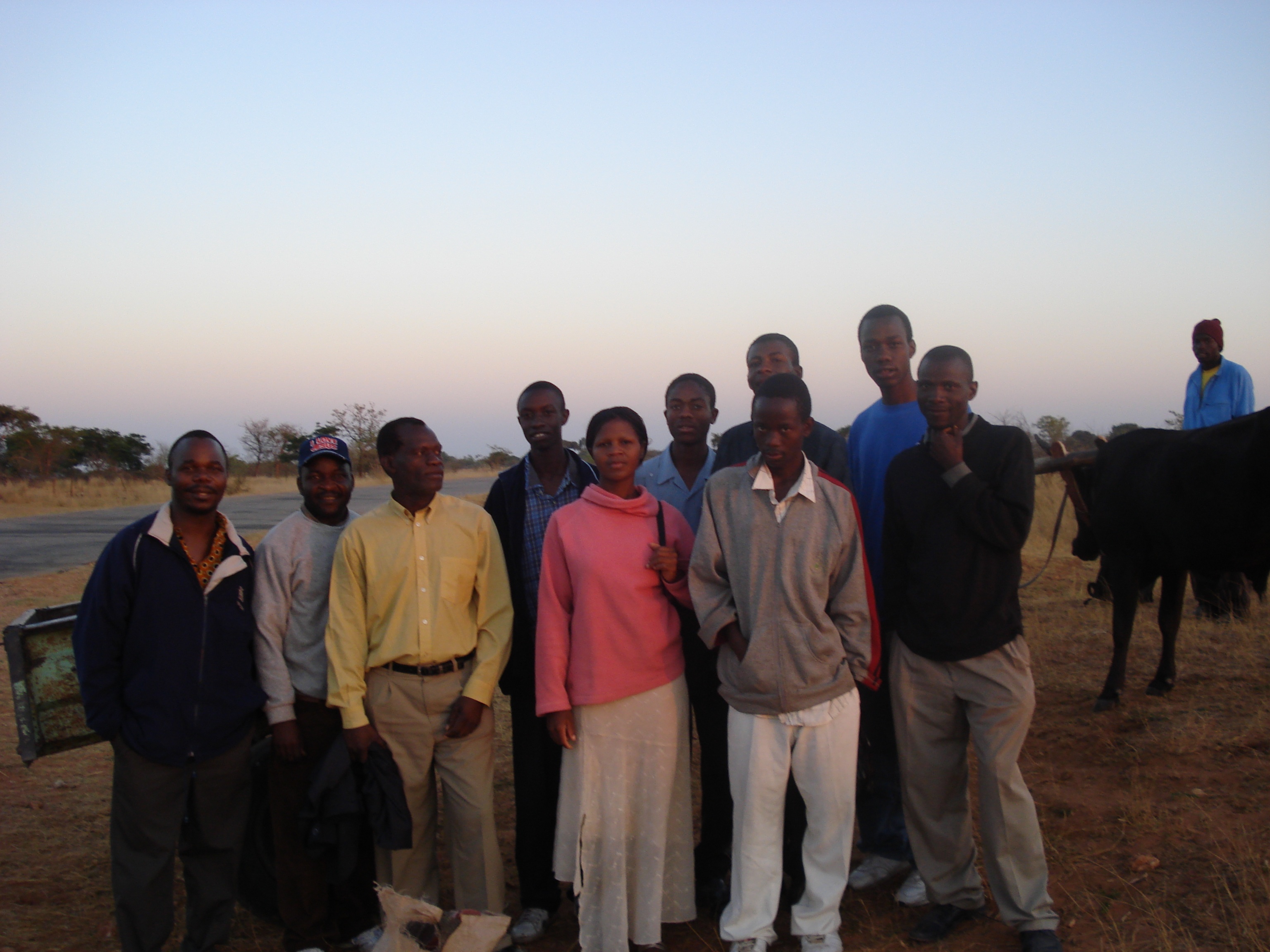 In 2005, I had the incredible opportunity to travel to Zimbabwe, Africa to initiate a partnership with Mbare Christian Fellowship in the capital city of Harrare. MCF is led by the visionary leadership of Peter Mabasa and a team of elders that just might fulfill the Great Commission even with inflationary rates in the millions in the once prospering now teetering country. The needs in Zimbabwe, then and now, are overwhelming. On our trip we visited orphanages providing medical care, worshiped in village churches, provided leadership training, and did some sight seeing. We shared an incredible worship experience with MCF which had an unfinished building with far too few chairs.
Upon returning to the US, our church added them to our missions budget and like good Americans hoped  that we would help them make improvements to their facilities and do a little outreach. I had a lot to learn about vision and passion for evangelism. Instead of taking our money and doing capital improvements they have spent the last three years spreading out all over Zimbabwe starting new churches and helping villages conquer social ills. And it was not that much money by the way. Pastor Mabasa and their small congregation in one of the poorest parts of Harrare, have demonstrated for us what it means to be on mission.
Currently, Hope Church sponsors six church plants monthly and has helped fund ten new churches in rural Zimbabwe through our partnership with MCF. We also help provide quarterly training for pastors, planters, and lay leaders working in rural churches. All this and more has been done through building a great Kingdom Partnership that has led to a movement.
Don’t let your short term mission trip be the end of your contact with a mission field. Build partnerships that can lead to movements. If you or your church are looking to build a partnership, please consider Zimbabwe. Tendai Nyatsunga, one of the elders at MCF is currently studying in the United States and is available to speak to you or to your church about what God is doing in Zimbabwe. You can contact him at Tendai@Hope-Waldheim.com.
Please join us in praying for Zimbabwe!
Read the latest correspondence from Peter Mabasa below:
Six Years of Hope – Greatest Challenge, Greatest Joy
 Yesterday I was asked a familiar question, “why new churches?” This is typical from two groups: 1) The church member that seldom imagines life outside the walls of their church, unless they are bribed or begged to try to think of an unchurched friend that they can invite to a special event or Easter service. For this person, a new church is either a threat or is unneeded because “our church can handle that area on our own.” 2) It is also typical for the guy who has been begged and bribed by those church members and then found the church to be irrelevant or uninterested in him or unwilling to answer his questions and unable to meet his souls deepest needs. For this guy, church is a waste of time, space, and energy. Weekends are better spent in entertainment that medicates the soul and those questions are deferred until they’re forced to be dealt with or until an apostolic believer or church comes along and does the work of the evangelist and in love, makes time to share an authentic witness of Christ.
These two groups represent for me the greatest joys and the greatest challenges of church planting.
Greatest Challenge. As a young church planter I encountered the first person early and often. Honestly, I was not prepared to persuade church members that the world was lost, new churches are part of the New Testament plan for reaching that world, and it is there duty to “Go” into that world with said plan. In a community and nation devastated by addictions, divorce, suicide, and false teaching I have had to accept the fact that many church members are unaware or unwilling to see the needs and do something about them, like host a Bible Study, help with a block party, volunteer for a community org., start a church, etc. More challenging has been to watch the church we planted begin to take on some of the same characteristics. One of the challenges for the church planter who wants to start a church focused on the needs of people is to keep that church, including himself, focused on the needs of people instead of their own likes and dislikes. I believe that this is what the Apostle Paul sought to do with his letters to the churches he had planted, now found in our New Testament.
Philippians 2:2-4, “… make my joy complete by being like-minded, having the same love, being one in spirit and purpose. Do nothing out of selfish ambition or vain conceit, but in humility consider others better than yourselves. Each of you should look not only to your own interest, but also the interest of others.”
1 Corinthians 1:10, “…agree with one another so that there may be no divisions among you and that you may be perfectly united in mind and thought.”
Ephesians 4:3, “Make every effort to keep the unity of the Spirit through the bond of peace.”
1 Corinthians 10:33, “I am not seeking my own good but the good of many, so that they may be saved.”
Greatest Joy. Seeing people get it. The greatest joy has been to see Terry, who found Christ, brought a friend who found Christ, married that friend and now serves together with him at Hope Church. To see Flint and Jennifer, who left jobs to move four hours to help start a church that was meeting in an unairconditioned fire station. To see Greg who overcame personal tragedy and hurt from former church relationships to become a minister to young people at Hope Church. To see the people who have given up vacation time, money, and comfort to travel around the world on mission trips to reach others for Christ. To see those who are willing to put aside personal preference and in obedience to God, and out of love for others, serve instead of seeking to be served, so that people can know His joy in their lives.
I’m praying for a lot more joy at Hope Church in the coming years.
Six Years of Hope – History
In 2001, God led my wife Heather and I to Southeast Louisiana to start a new church in St. Tammany Parish. This weekend that church – Hope Church of Waldheim – will celebrate its 6th Anniversary. Though words can’t describe the experience it has been for our family, I’ve got to try anyway. And lucky for you I’m going to do it with pictures. Today, a little history…
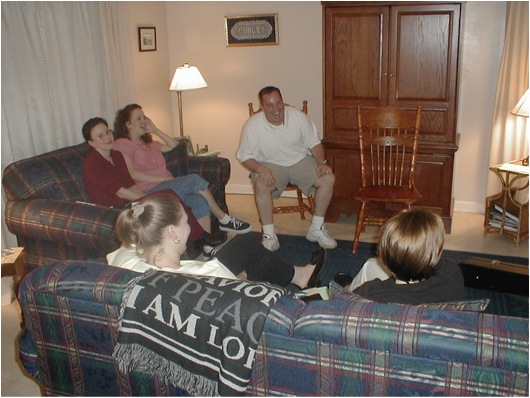 Hope Church began with four people in a home Bible Study in December of 2001.
 The spring & summer of 2002, we conducted a number of Block Parties, preview services, & informational meetings across the region to seek to build relationships & get the word out to our community that a new church was coming to the area.
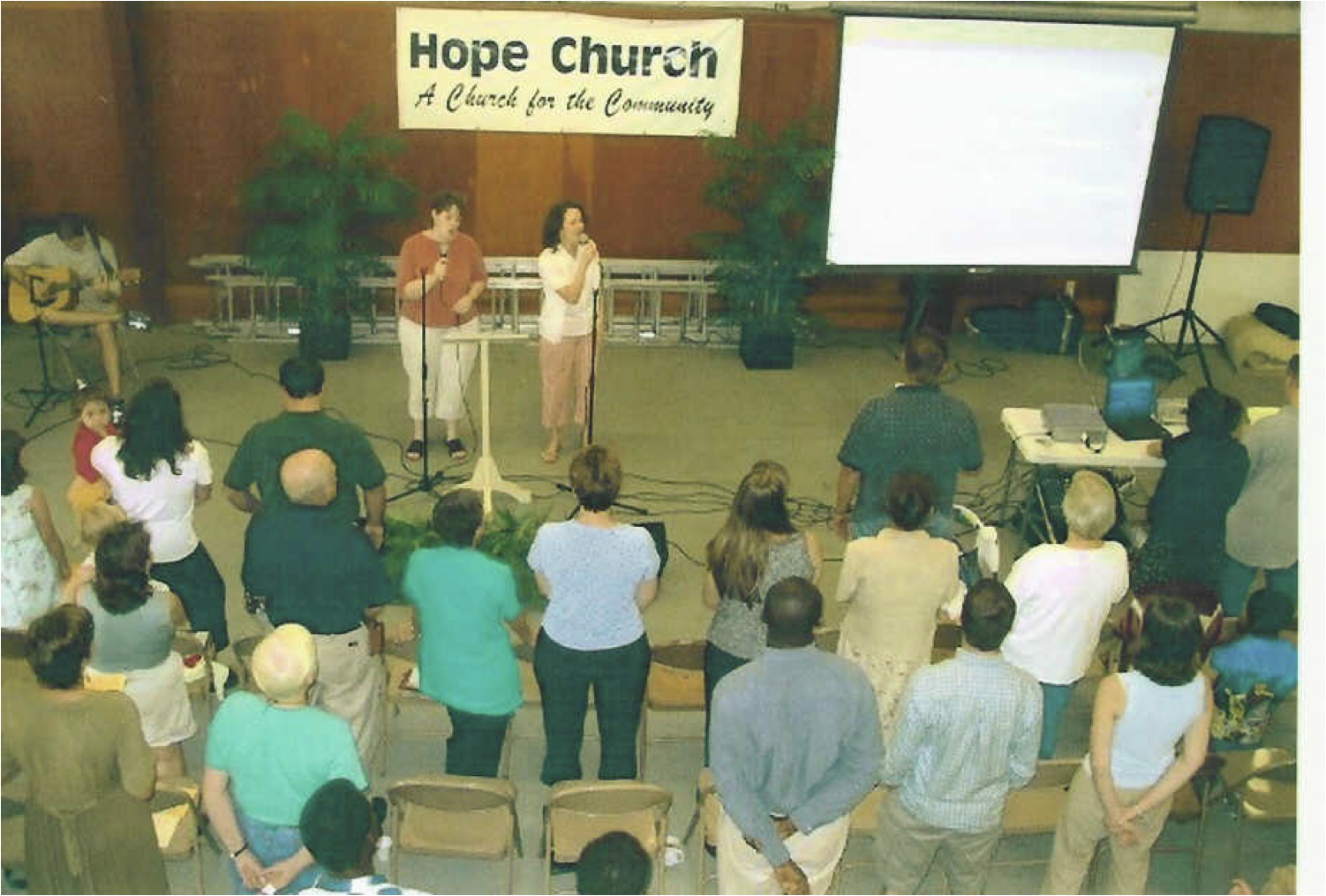
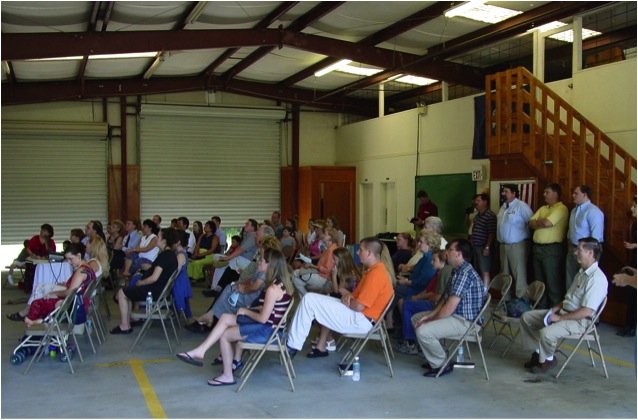 In the Fall of 2002, we launched public worship services in an unairconditioned fire station in rural north Covington, LA. We met there for over two years. Yes, I said there was no air conditioning.
 In June of 2005, with the help of partners, we were able to purchase this 4,000 square foot cafe/bar on 16.6 acres in the middle of our target area. For the first time in the church’s history we had A/C and clean floors. We also had for the first month at the new location our own bar equipped with daquiri machines.
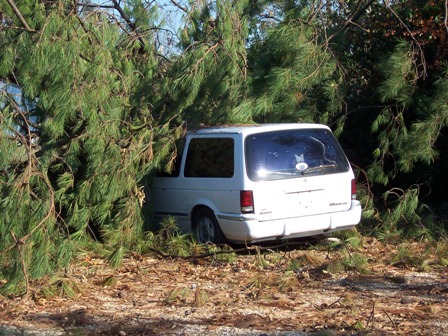 In August of 2005, Hope Church found itself in the way of Hurricane Katrina’s winds. Our community was devastated by falling trees, our church body was cut in half, but we were loved well by the body of Christ as we hosted near 30 mission teams from around the country assisting with cleanup, rebuilding, and outreach.
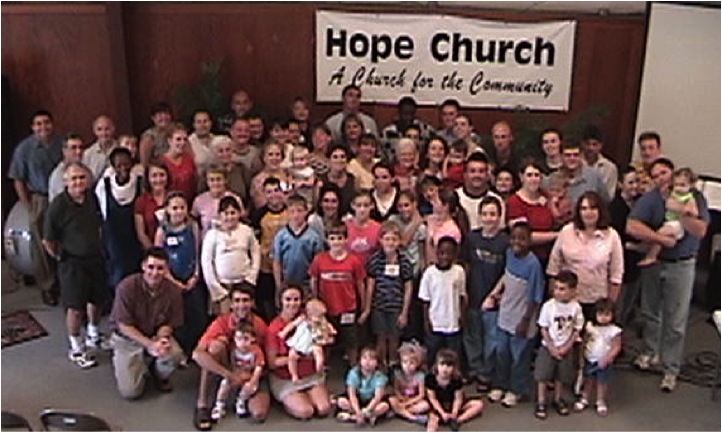 Today Hope Church, holds two services ministering to hundreds each year, has sponsored 10 new churches in Zimbabwe, co-sponsored one new church in Louisiana, traveled to assist the Tzotzil Church Planting Movement in Chiapas, Mexico.
Where today there is a body of worshippers of Jesus, seven years ago was a cafe/bar and a community in need of a witness to the glory of God.
I am thankful to the hundreds from around the country who have prayed, given financially, and sweated for the sake of the Gospel’s influence in South Louisiana. I am also deep in prayer for the leaders of Hope Church as a new door is opening in her history and what lies before her is the opportunity to influence Waldheim/St. Tammany/the world for generations to come.
Next – Greatest Joys and Greatest Challenges.
Church Planting Again
Our family is embarking upon a new journey. This month we began working toward the planting of a church in St. Tammany Parish. After seven years planting Hope Church of Waldheim, I feel no more prepared for this huge task, but I do know a little better what to expect – hard work, reliance upon God and others, incredible highs and lows, falling in love with people that God will save and call and change, and seeing my own life change as well.
What is it like starting a church? This picture says it well…

Found here.
A bit of an overstatment, but pray for us. If you’d like to join our prayer team or partner in other ways give us a shout.
More info about our plant soon…
Worth Reading: Spin-Off Churches
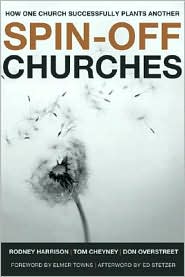
Much needed book written for those contemplating sponsoring a new church and for those that should be. This book leaves few stones unturned when it comes to the issues surrounding church planting, including theology, history, answers for nay sayers, models/approaches, scenarios, hardships, funding, etc. This church planter is praying for gigantic royalties for Harrison, Cheyney, and Overstreet.
Some interesting quotes thus far:
– …church planting is not for us, it’s for God. We do it so God will have a people to worship Him!
– If the American church is content ministering to whoever happens to show up each week, she misses her missiological purpose.
– A church must not be measured by its seating capacity but by its sending capacity.
– …fulfilling the Great Commission is the ability of the maturing church to be able to reproduce in healthy fashion.
– …we have replaced missional zeal with the practice of organizational birth control…Because most churches across our convention are childless. Recent research found out that only 3% of our Southern Baptist churches ever sponsored or planted a new church.
– Churches that plant churches are not focused on turnout, but rather on reproduction and multiplication.
– There is case after case of sponsoring churches approving building programs while the mission pastors of plants they sponsored were struggling far below the poverty level.
And for fun… The Top Ten Signs of a Broke Church Planter:
10. American Express says please leave home without it.
9. You are considering robbing the food pantry.
8. The long distance providers no longer call asking you to switch.
7. You rob both Peter and Paul.
6. You clean your home hoping to find change.
5. Right now a lottery ticket looks like an investment.
4. Your bologna has no first name.
3. You have begun washing Styrofoam plates and plastic forks.
2. You have a lovely basket of McDonald’s condiments in the middles of your kitchen table.
1. During the Lord’s Supper you go back for seconds.
A lot of great info here. This one will stay close to my desk for a long time.
Also check out Tom Cheyney’s site www.planterdude.com.
A Church for Matt
Every now and then God reminds me of the importance of church planting. Matt D. walked into our church in 2007, with hair in a pony tail, cutoff blue jean shorts, not a few tattoos, and a lot of baggage from his fair share of reckless living and sin’s consequences. I watched as God worked in Matt’s life and remember well the afternoon that he shared with me that he knew he needed God and that he wanted to make Christ the boss of his life. A few weeks later he was baptized in a similar pair of cutoff blue jean shorts, demonstrating to the world his new life in Christ. What we didn’t know at that time, was that cancer cells were slowly taking over Matt’s body and would lead to illness and death just six months later.
Rewind back six months – How would your church respond this Sunday if a guy like Matt walked in?
This question is one I will think about every week now for a couple of reasons:
So, you want to be a church planter?
Am I called to church planting or do I just want to do church in a cool way? Read here.
What can I expect as a church planter? Read here.
Are your priorities in the right order as a leader / church planter? Read here.
These articles have informed me about the past six years I have spent planting a church. These are some things I wish I would have read seven years ago.