Category Archives: Church Planting
The Great TRANSFER GROWTH Boogie Monster, part 2
Many church leaders are afraid of church multiplication because of the Great Transfer Growth Boogie Monster that will jump out and get us if we plant new churches. We tend to assume that ALL new churches just take members from existing churches. In my previous post, I talked about why this is wrong/bad strategy and I shared some of Dr. JD Payne’s great challenge to church planters to not settle for transfer growth over reaching the unchurched. (Read all the Ethical Guidelines for Church Planters here.)
Now, a few questions for pastors and ministry leaders on the other side of this, who are poopooing on the whole notion of church planting and off campus multiplication in fear of the great Transfer Growth Boogie Monster.
- Are you practicing what you’re crying out against? When I share with other ministry leaders some of JD Payne’s principles and my own process for those who may be wanting to transfer membership, most admit that they don’t do that themselves, pointing out that there is just no time. So time is better spent talking down the planting of new churches and making unfounded accusations about church planters who are seeking the good of the city? If you gladly shake the hands with a “don’t ask, don’t tell” policy toward transfer members, you should not use that as a reason against church planting.
- Is your fear of people leaving your church really just insecurity about your own ministry? If we believe in the sovereignty of God and his placing of people in the body as He sees fit, and if we are properly discipling people to understand who they are in Christ and their place in the body, what’s to fear? Unless we’re really just appealing to people’s consumeristic tendencies ourselves in order to “get some butts in the seats” (Whoopie Goldberg in Sister Act). There will always be a better show come to town to draw consumeristic attenders. Building ministries with robust disciple making instead of a great and attractive show may mean slower growth at first, but greater commitment to the church family on mission together.
- Is the thought of people leaving your church scarier than people spending eternity in hell? Most pastors today will admit that there are population segments in their community that they cannot and will not reach. And at the same time, not lend support to the planting of new churches to reach those people. Are we content to leave significant numbers of people without a contextually appropriate gospel witness because of fear our numbers may dip?
Transfer growth is not best for the kingdom, but the real boogie moster for us is the growing number of unchurched Americans and those leaving the church and never coming back. We need church planters and healthy churches that will focus on making disciples through on and off campus multiplication.
We could head off transfer growth and grow the Kingdom through an effective SENDING/MULTIPLICATION strategy. That’s for a future post.
Check out Part 1 of The Great Transfer Growth Boogie Monster. Also check out my post entitled Commitment, Honor, & Transfer Growth which deals with ethical guidelines for ministry leaders to consider.
The Great TRANSFER GROWTH Boogie Monster
An assumption of many pastors about church planting in North America is that new churches just draw people  from other churches. Underlying that assumption is the fear that the new church in town is going to do harm to my success and take “MY people.” So, as a strategist I seem to spend a lot of my time talking to Pastors about the potential negative impact of church planting on their church and the SCARY notion that the transfer growth boogie monster will jump out of the closet and get us all if we plant new churches.
And, unfortunately, some church plants have earned this reputation, proving this assumption true, and done harm to church multiplication efforts in several ways. To that I say: SHAME ON THEM!!!
Church planting is about evangelism that leads to a new church, NOT let’s create a better experience than all the other churches and “Don’t Ask, Don’t Tell” when their members pile up in our chairs and put their money in our plate. I heard of one church recently that had “lost” 800 people to a new church with a livelier experience on Sunday morning creating a financial hardship for the church. I heard of another church that intentionally targeted people from other churches because they were people of influence in the community and “God wants our church to be filled with influencers.”
JD Payne has written a great piece called Ethical Guidelines for Church Planters and challenges church planters to “not prioritize transfer growth by designing ministries that will primarily attract believers” and to “have a systematic plan to respond to the transfers who want to become part of the new church.” Here’s some of Payne’s comments:
On planting as Kingdom expansion not just church growth:
Church planting is not about attracting a crowd or launching a worship service, but rather it is about the advancement of the Kingdom as unbelievers become followers of the living God through local expressions of the Body of Christ. Though crowd attraction and starting a new worship service are not necessarily bad things, their manifestations, however, do not necessarily mean the Kingdom has advanced. In many cases, such events actually attract large numbers of Kingdom Citizens. For church planters to settle for large numbers of transfer growth is not the way of the Apostolic Church.
On the dangers of transfer growth to the church planting initiative:
Even for the church planters who are doing everything possible to discourage transfer growth, they will encounter it. Particularly in the North American context, members of other churches will be interested in the new work. Some of these brothers and sisters will have a genuine desire to serve in a new work. Others, however, will be of the massive consumerist crowd looking for the most novel thing in town. These “new-experience Christians” will remain as long as their desires are met. Like parasites on a living organism, they participate to take, until they get their fill or until something else comes along to satisfy their desires. Rather, than understanding who they are in Christ, and their place in the work of the ministry (Eph 4:12), they believe that following Christ is an individualistic, self-gratifying, desire-meeting experience void of biblical koinonia.
On the ethics of transfer growth:
Regardless of the motivation behind any local church members wanting to be a part of the new work, it is unethical for a church planting team (and the new churches) to receive them as members without regard for their local church family in which they are presently involved in a covenant relationship.
What process should be in place? Payne says the church planter should find out what evangelical church the person is a member of and why they desire to leave that fellowship. Second, contact that pastor to inquire why they would want to leave. Third, only allow them to join after discouraging them from leaving their church and asking them to get the pastors blessing that this move is a prompting from God. I’ve added a third question to my on process: “Have you made pledges to that church?” When churches are in capital campaigns, etc. they ask people to make pledges and this is seen as a spiritual commitment. So we challenge people to fulfill their pledge or be released from it. See Ecclesiastes 5:5.
Dr. Payne’s concerns for a code of ethics for church planters are worth noting:
In the face of great spiritual opposition and ministerial challenges, church planters are many times faced with the temptation to accomplish something good for the Kingdom at the sacrifice of something great for the Kingdom. Faced with funding resources that diminish over time, lack of receptivity of people to the Gospel, the pressures to start a worship service and produce certain numbers at a worship gathering, many times leads missionaries down a path that deviates from biblically based and missiological guided church multiplication strategies.
…such as settling for and designing ministries to attract Christians and not penetrate the majority of unreached people in North America and beyond.
In Part two, I’ll ask a few question of pastors and ministry leaders on the other side of this, who are poopooing on the whole notion of church planting and multiplication in fear of the great Transfer Growth Boogie Monster.
Also check out the post entitled Commitment, Honor, & Transfer Growth that spells out a few ethical guidelines for ministry leaders to consider.
Barriers to Reproducing Churches
Are we ensuring the church’s and the gospels reproducibility with our ministry methods? One of the best books on church planting over the past few years is Ben Arment’s Church in the Making: What Makes or Breaks a New Church Before It Starts. Born out of real life experience, and not the kind that usually sells books, his insights are well worth reading. Looking back through this weekend and found this great list of barriers to reproducing churches. Take a look. Great reminders:
- Pride. Reproducing ourselves requires humility. In a world where pastors strive to keep up with one another’s successes, it’s rare to find an example of the kind of humility it takes to multiply leaders.
- Personality. By putting personality ahead of purpose, we make our churches difficult to reproduce, let alone sustain.
- Professionalism. The church can only reproduce itself when the barriers to leadership are sufficiently reduced for ordinary, unprofessional ministers.
- Excellence in Ministry. excellence is often a substitute for authentic and relational ministry. Also, quality at its highest levels is almost impossible to reproduce.
- Personal Legacy. Trying to become a great leader can get in the way of a reproducible church. Trouble comes when we try to create our own personal legacies rather than letting God do it.
“All disciples of Jesus are called to be sent people”
Highlights/Reflections from our Basic Training Event for #ChurchPlanters: This weekend we held our first Basic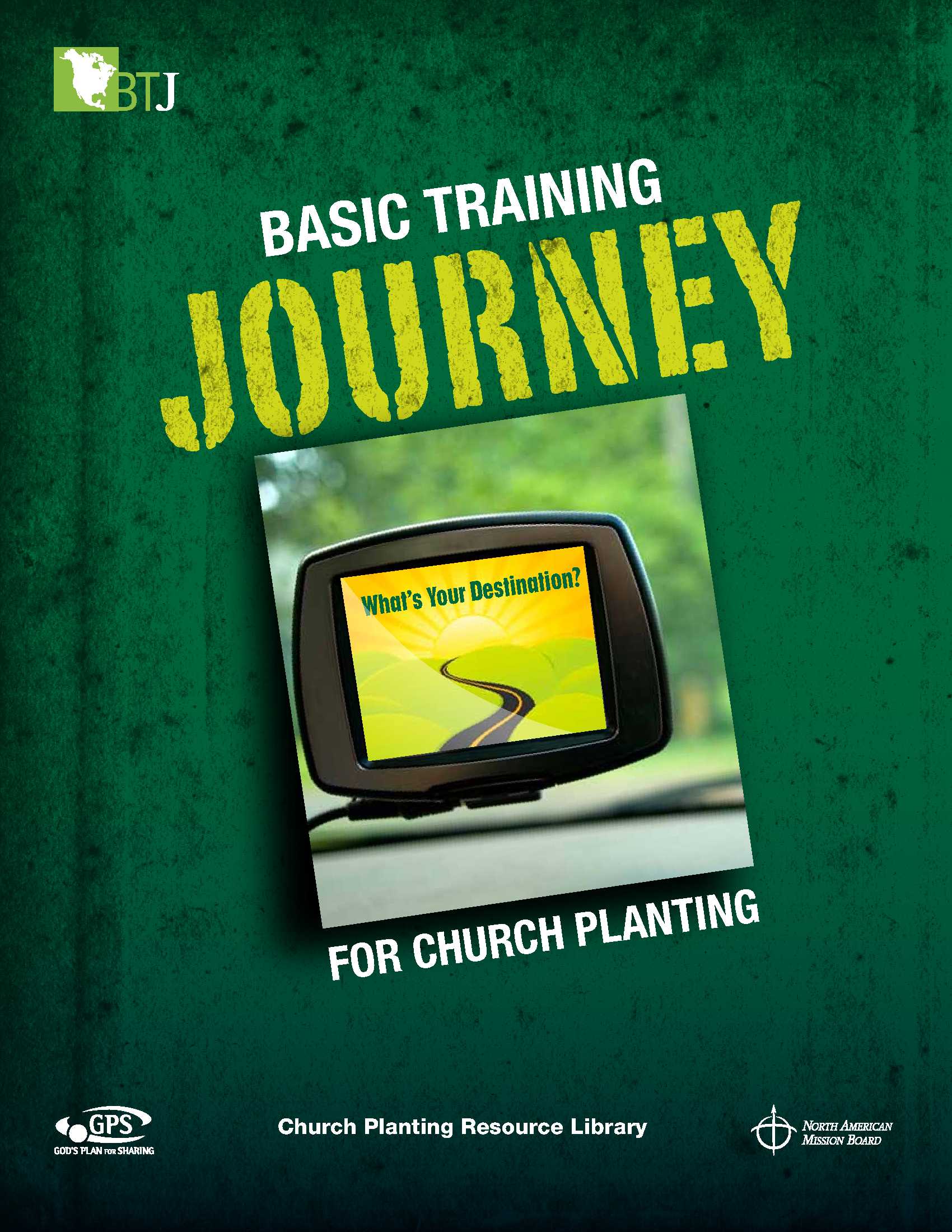 Training for Church Planters on the Northshore. A diverse group of Church Planting teams from across Louisiana came together for the event, including a Biker Church, Asian American churches, Attractional and Missional approaches. This is about my 5th time through Basic Training and I’d say a developing trend that I’m excited to see may be Bi-Vocational church planting teams. Also, NAMB’s new Basic Training Journey has made some helpful adjustments. Get it online here. Also, here is a Google Doc with some resources mentioned and discussed during the workshop. Here are a few highlights for me:
- Church Planting is all about relationships.
- There is only one kingdom and it belongs to God. And God’s kingdom is extended to the ends of the earth through His church.
- All disciples of Jesus are called to be sent people.
- You can’t plant a church in your head, you have to plant it in the community.
- We don’t plant churches just for the community, we plant them for the whole world.
- Every congregation is a world missions strategy center.
- Contextualization is answering the communities questions about God and the gospel in their terms. NOT on their terms.
- Discipleship = Applying the inner meaning of the Gospel to persons at the point of their need.
- Multiplication principles: You reap what you sow. You reap later than you sow. You reap more than you sow.
- Don’t just start services, start making disciples.
- Discipling is a process of learning to obey Jesus.
- Two questions from Simple Church: What is a disciple? What is our process to make and mature disciples?
- Disciples are shaped by serving, not just sitting and singing.
- Don’t use people to get ministry done. Use ministry to get people done.
- Small Groups = Accountability = Growth.
- Small Groups are the seedbed to develop new leaders.
- In church history, a significant amount of missionary activity and advance was carried out by unrecognized teams of church planters. i.e – the Moravians
- The Moravians saw witnessing as the common concern from all members of the faith community and sent small groups of ordinary believers to plant churches and testify for Christ in new areas.
- “Ultimately, each church will be evaluated by only one thing – its disciples. Your church is only as good as her disciples. It does not matter how good your praise, preaching, programs, or property are; if your disciples are passive, needy, consumeristic, and not radically obedient…” Neil Cole
Upcoming Training for Planters and Multipliers
- Basic Training for Church Planters, September 8-10 @ Woodland Park Baptist Church in Hammond. More info here. Register for the event here. After registering Prepare for the Journey here. Basic Training is a workshop that helps shape the vision and direction of a new church. Looking forward to taking the journey again with our newest crop of planter in the NOLA region.
- Greenhouse w/Neil Cole and Church Multiplication Associates, October 21-22 @ New Orleans Baptist Theological Seminary. Here’s the event brochure. Register for the event here. Neil Cole’s writings have inspired me to think beyond planting a church to planting a movement. Looking forward to spending a few days learning with him and his team.
Church Multiplication is a spiritual decision of a local church to put the needs of a desperate world before self-preservation.
~ Stephen Gray – read more: http://tinyurl.com/3dhbpak
“In every apple is an orchard”
Yesterday was our annual luncheon to talk about opportunities and avenues for partnering to plant churches and multiply off-campus ministry on the Northshore. From my notes:
- North America is the only continent where Christianity is not growing.
- No county in America has a greater % of churched people today than 10 years ago.
- Since 1991, the number of adults in the US who do not attend church has nearly doubled.
- Missional affirmations by the LA Bapt Convention: “We believe the Biblical mandate to Make Disciples of All Nations is a call to plant multiplying churches among all people groups in Louisiana.” “We believe that planting indigenous, multiplying churches is the most effective strategy for making disciples and impacting lostness.”
- 1 out of every 2 Louisiana residents surveyed indicated no “personal relationship” with Jesus Christ.
- On the Northshore, population has grown 3 times as fast as church membership. Only 3.3% of the population attend a Southern Baptist Church on any given weekend. Less than 10% attend evangelical church of any kind. If we wanted to double that to 6.6% over the next 10 years we would need to add 16,000+ worshipers.
- Dr. David Hankins shared about the need for a paradigm shift in ministry mentality in North America and four unfounded fears that pastors have about Church Planting: 1) I’m going to lose members, 2) Will the new church remain baptist, 3) We can’t afford it, 4) I don’t have time. Eric Hankins writes about these four fears here.
If you’d like to get an info packet from the event or learn about some of the specific opps to partner in 2012, email me at lanecorley@gmail.com.
Missional Axiom: Don’t start services, start making disciples
Church planting methods in the United States have emphasized starting services as the primary focus of starting new churches. Jesus commissions believers to make disciples, not start services.
Planning and preparing for your first worship service won’t make disciples.
Start with Making disciples!
See other Missional Axioms here.
Multiplication is Built In by God
God has designed each product of the harvest as a package of seeds to produce more. One of my favorite stress relief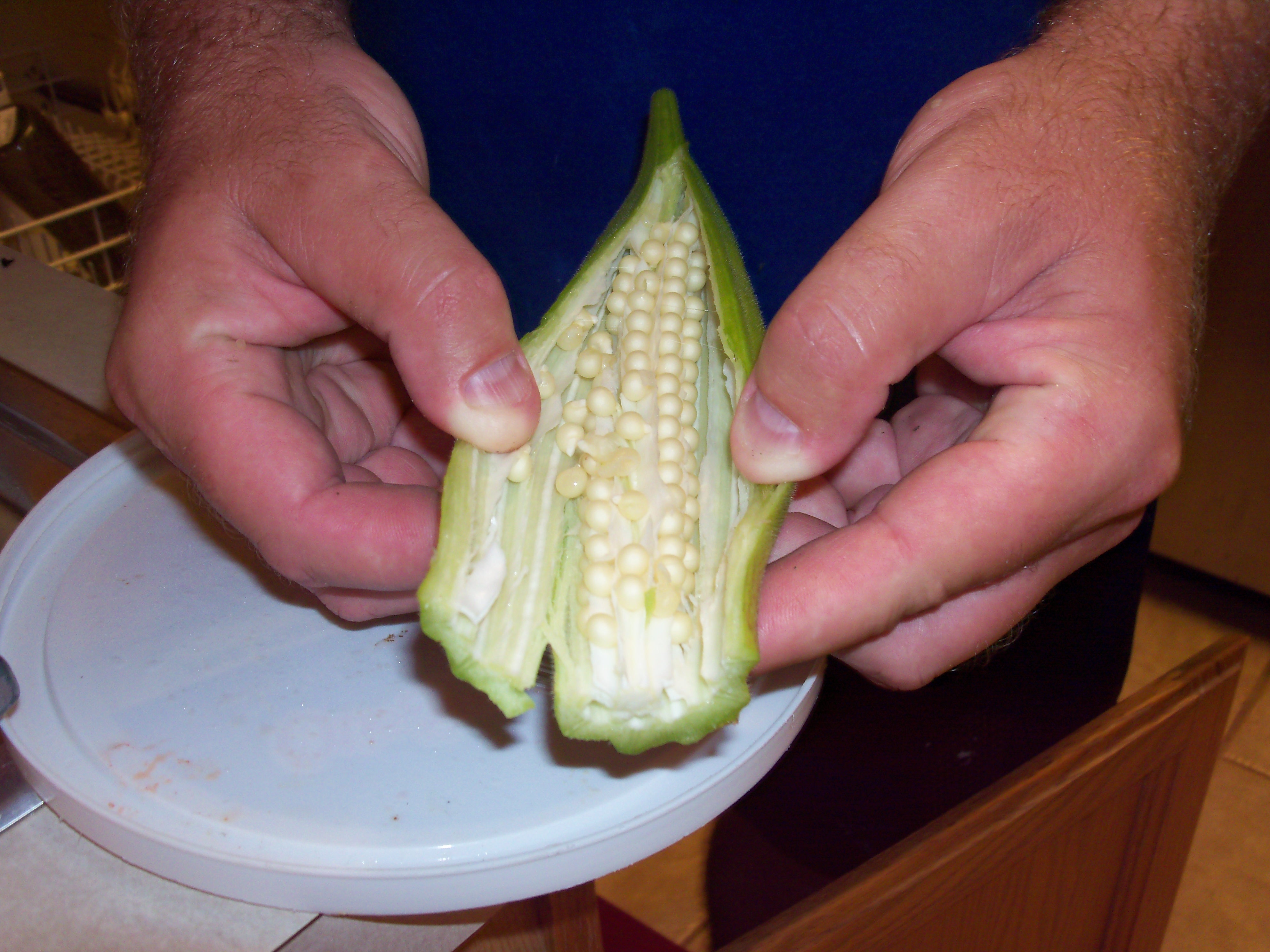 projects is keeping a small veggie garden in the backyard. Did well this year, but we’ve reached the point of looking toward next year. No need to buy seeds or plants again. All we had to do was cut one open. God has packaged them into the harvest. As Bob Logan said, “In every apple is an orchard.”
The same is true for us as Christ followers and churches. We have within us all that’s needed to produce more disciples, leaders, and churches. And that’s His desire for each and every one of us.
Genesis 1:28 (ESV) And God blessed them. And God said to them, “Be fruitful and multiply and fill the earth…
John 15:5 (ESV) I am the vine; you are the branches. Whoever abides in me and I in him, he it is that bears much fruit, for apart from me you can do nothing.
2 Timothy 2:2 (ESV) and what you have heard from me in the presence of many witnesses entrust to faithful men who will be able to teach others also.
Are you planting seeds in the lives of others and within your sphere of influence?
Learn more about multiplication at our Partners-in-Planting Luncheon, Wednesday, August 24th, 10:30am @ FBC Madisonville. Register here.


 Lane Corley