Category Archives: Books worth reading
Worth Reading: Deliberate Simplicity
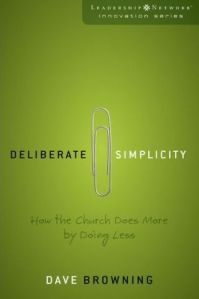 One of my new favorite books is Deliberate Simplicity by Dave Browning. I heard a podcast of Dave speaking at a Leadership Network Confab on multi-site churches last year and when I saw his name and the title I had to get it. Browning is the pastor and leader of Christ the King Community Church in Washington, which is really a network of fast multiplying churches around the globe. The Deliberately Simple Church is a refreshing approach and the book has been hard to leave on the shelf since I read it earlier this spring.
So, what is a Deliberately Simple Church? Browning says its a “boots on the ground approach to the Church’s mission” which changes the focus of church growth from big is better to more is better and makes the main thing the main thing in the Christian life. He describes the approach through this formula:
- Minimality – Keep it simple. The challenge of eliminating the unnecessary to complete the mission of the church.
- Intentionality – Keep it missional. Finding out what really matters to God and concentrating on doing it.
- Reality – Keep it real. Saying goodbye to “impression management” and hello to candor in relationships.
- Mutility – Keep it cellular. More is better than bigger.
- Velocity – Keep it moving. Developing a sense of urgency about the mission and moving from idea to implementation faster for the sake of people.
- Scalibility – Keep it expanding. Staying outward focused.
The book is a must read for anyone interested in seeing an evangelistic movement in the 21st Century West.
Here are a just a handful of my favorite quotes:
- “… the gap holding back most believers is not the gap between what they know and what they don’t know. It’s the gap between what they know and what they’re living. Many Christians are trafficking in unlived truth. They are educated beyond their obedience.”
- “The greatest sin of the church today is not any sin of commission or sin of omission but the sin of no mission.”
- “There is an important difference between asking people to come to us so we can build a church and asking us to go to them so we can change the world.”
- “Activity for God can be the greatest enemy of devotion to him.”
- “… the pastor’s role is to create and sustain an environment wherein the people of the church can carry out their ministry with minimal obstacles and maximum fulfillment.”
- “… our calling is not to build a church but to reach a community. And … trying to reach a large numbers of people in one place is a very limited idea.”
- “The world is moving so fast that there are days when the person who says it can’t be done is interrupted by the person who is doing it.”
- “For the most part we do church as if the gospel commission were given to the lost, telling them to come to our churches. The Great Commission does not say come; it says go.”
Worth Reading: Search and Rescue by Neil Cole
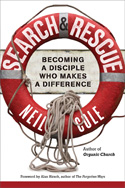 One of the best books I read this summer was Search and Rescue: Becoming a Disciple Who Makes a Difference by Neil Cole. If you’re looking for a simple, personal, and inspirational approach to disciple making, get this book. It contains a lot of information from Cole’s previous two books Cultivating a Life for God and Organic Church, but it is repackaged and updated with the theme of Search and Rescue. I would still highly recommend reading the first two. Cole borrows from his experience as a life guard on California beaches to illustrate the task of making disciples. So, you can learn a great deal about rip currents and rescue swimming along with healthy disciple making. Cole shares his tried and true method of disciple making which involves gathering people into groups of two or three to confess sin to one another using accountability or character conversation questions, plant the word of God by taking the challenge of reading 3-5 chapters of Scripture daily, and reach the lost by praying for specific people to be saved from your personal network of relationships. Cole calls these groups Life Transformation Groups, but gives permission to call them what you want, even listing names being used by other churches and organizations. You may want to follow up as I have by purchasing Cole’s LTG cards which describe the process and offer suggested questions for the group. The author’s resources, articles, and newsletter can be found at www.cmaresources.org.
Here are a few of my favorite quotes:
Worth Reading: Spin-Off Churches
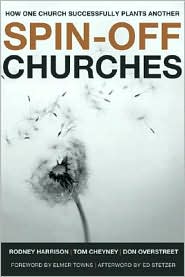
Much needed book written for those contemplating sponsoring a new church and for those that should be. This book leaves few stones unturned when it comes to the issues surrounding church planting, including theology, history, answers for nay sayers, models/approaches, scenarios, hardships, funding, etc. This church planter is praying for gigantic royalties for Harrison, Cheyney, and Overstreet.
Some interesting quotes thus far:
– …church planting is not for us, it’s for God. We do it so God will have a people to worship Him!
– If the American church is content ministering to whoever happens to show up each week, she misses her missiological purpose.
– A church must not be measured by its seating capacity but by its sending capacity.
– …fulfilling the Great Commission is the ability of the maturing church to be able to reproduce in healthy fashion.
– …we have replaced missional zeal with the practice of organizational birth control…Because most churches across our convention are childless. Recent research found out that only 3% of our Southern Baptist churches ever sponsored or planted a new church.
– Churches that plant churches are not focused on turnout, but rather on reproduction and multiplication.
– There is case after case of sponsoring churches approving building programs while the mission pastors of plants they sponsored were struggling far below the poverty level.
And for fun… The Top Ten Signs of a Broke Church Planter:
10. American Express says please leave home without it.
9. You are considering robbing the food pantry.
8. The long distance providers no longer call asking you to switch.
7. You rob both Peter and Paul.
6. You clean your home hoping to find change.
5. Right now a lottery ticket looks like an investment.
4. Your bologna has no first name.
3. You have begun washing Styrofoam plates and plastic forks.
2. You have a lovely basket of McDonald’s condiments in the middles of your kitchen table.
1. During the Lord’s Supper you go back for seconds.
A lot of great info here. This one will stay close to my desk for a long time.
Also check out Tom Cheyney’s site www.planterdude.com.
Worth Reading: The Multiplying Church

The Multiplying Church by Bob Roberts, Jr. Just finished Bob Roberts latest book and I’m sad it’s over. I loved this book! As a church planter, Bob Roberts speaks my heart language and gives me permission to continue pursuing my call and passion to see new churches planted all around the world. This is a must read for church leaders! Here are a few quotes that set my heart’s temperature a little hotter and made me think:
– “The future of faith in America (and anywhere in the world, for that matter) is not tied to planting more churches, but in raising up of mother congregations of every tribe, tongue, denomination, and network that are reproducing like rabbits.” (page 18)
– “The hope of the future of the church in the United States really is not in raising up more preachers; we’ve been doing that in high style for the past hundred years. The hope is in pregnant mother churches.” (page 18)
– “The highest demonstration of maturity for a local church is when it multiplies. Only something alive can reproduce, and it will do so only if it is healthy.” (page 61)
– “Churches that see only their own agenda and refuse to live in the broader context of the universal church will never be a part of the coming global church planting movement.” (page 65)
– “…missions isnt’ something you do – it is an expression of who you are.” (page 74)
– “As pastors…if we fail – or more likely simply refuse – to aggressively plant churches, God will hold us deeply accountable for using the church for our own end as opposed to extending His glory to the ends of the earth.” (page 87)
– “Every believer is a church planter. The lowest common denominator in all church planting is the disciple.” (page 105)
– “How sad that we’ve settled for a growing campus instead of striving for a transformed community.” (page 109)
– “Any vision that doesn’t require your entire life isn’t a vision; it’s just a thought.” (page 172)
– “Converts may grow a church, but disciples change the world.” (page 172)
Well worth reading. Also, check out Bob Roberts blog – www.glocal.net.
Resources for Family Devotion
As a Father of two young boys, I desire to impart to them a vision for God’s glory, an understanding of the Gospel of Jesus Christ, and a heart for the spiritual and physical needs of the world. One practice our family has adopted to this end is a weekly time that we call FAMILY WORSHIP. We read the Bible, sing praise songs, and pray for the needs around us. How tragic it will be if we teach our kids to pitch and catch, to dance and tumble, to hunt and fish, to bike and board, to watch TV and dress fashionably, but don’t instill in them eternal truth.
Here are two resources that we are currently using in our FAMILY WORSHIP that can help you impart truth and vision to your young children:

The Big Picture Story Bible by David Helm and Gail Schoonmaker
This book tells 26 Bible Stories in creative fashion with unique and colorful illustrations. It tells the complete story unlike many Children’s books that skip over the Fall and the Crucifixion. It’s been a great tool thus far for our family.

Window on the World by Patrick Johnstone and Daphne Spragget
A great resource for anyone with a passion for worldwide missions and a desire to pray for God to open doors around the world. Also a good tool for basic geography. The book gives a 1-2 page summary of a needy and/or unevangelized nation of the world appropriate for early elementary kids and adults. Our oldest son Jack gets to pick a region each week and we read about the needs and pray for the missionaries and churches working in that region. Of course, Jackson’s favorite nation to read about and pray for is Madagascar because of this…
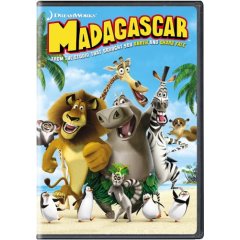
So, if you’re a missionary serving in Madagascar, you should know that there is a five year old boy and his family in Louisiana that are praying regularly for you.
Let me know if you have other good resources that may help parents impart the glory of God to the next generation.
Should We Live Together? part 2
 Before You Live Together: Will Living Together Bring You Closer or Drive You Apart? by David Gudgel
Also check out the author’s website, www.beforeyoulivetogether.com, to read book excerpts and more.
Revealing and helpful book on this topic. Very well researched and practical, complete with real life scenarios and testimonies of those who have paid consequences after deciding to live together. The author, a Pastor and Counselor, piles high the research and real life evidence for deciding that cohabitation is not God’s best for any relationship. KEEP READING BELOW TO FIND OUT WHY.

Worth Reading: Safe People
 They are known for their Boundaries books, but a lesser known book has helped me in recognizing relationships that could have a negative impact on my life. Safe People: How to Find Relationships That Are Good For You and Avoid Those That Aren’t by Henry Cloud and John Townsend, will help you discern character and recognize manipulative harmful people before it’s too late. Here is there list of what to look for in people that are unsafe:
Get this book: Living the Cross Centered Life
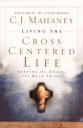
Living the Cross Centered Life by C.J. Mahaney. This one moved my heart closer to Christ. Well worth reading. Here are a few key things that moved me along:
– Mahaney says that there are three main tendencies/temptations we face that move us away from the gospel:
1. Subjectivism – basing our view of God on our changing feelings and emotions.
2. Legalism – basing our relationship with God on our own performance.
3. Condemnation – being more focused on our sin than on God’s grace.
That covers about all of us. Getting beyond feelings, performance, and our failure is what the cross helps us do, but these keep us from the blessing of the cross if we choose them over Jesus.


 Lane Corley