Category Archives: Books worth reading

The Soul-Winning Church: Six Keys to Fostering a Genuine Evangelistic Culture
One of my summer reads was a great new book from Jeff Medders and Doug Logan: The Soul Winning Church: Six Keys to Fostering a Genuine Evangelistic Culture.
The Keys are Praying for Conversions, the Posture of Your Converts, Preparing for Conversions, Personal Evangelism, Preaching for Conversions, and a Process for New Converts.
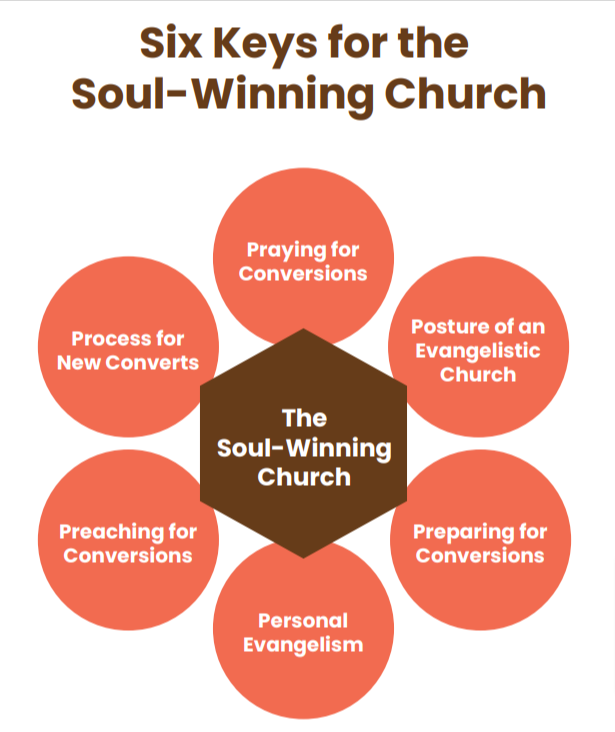
Some great thinking on these essential elements of an evangelistic culture. The book could be a great tool to help build or to revitalize these areas of your church. It even offers an evaluation tool to score your church’s effectiveness in these six areas. It’s here:
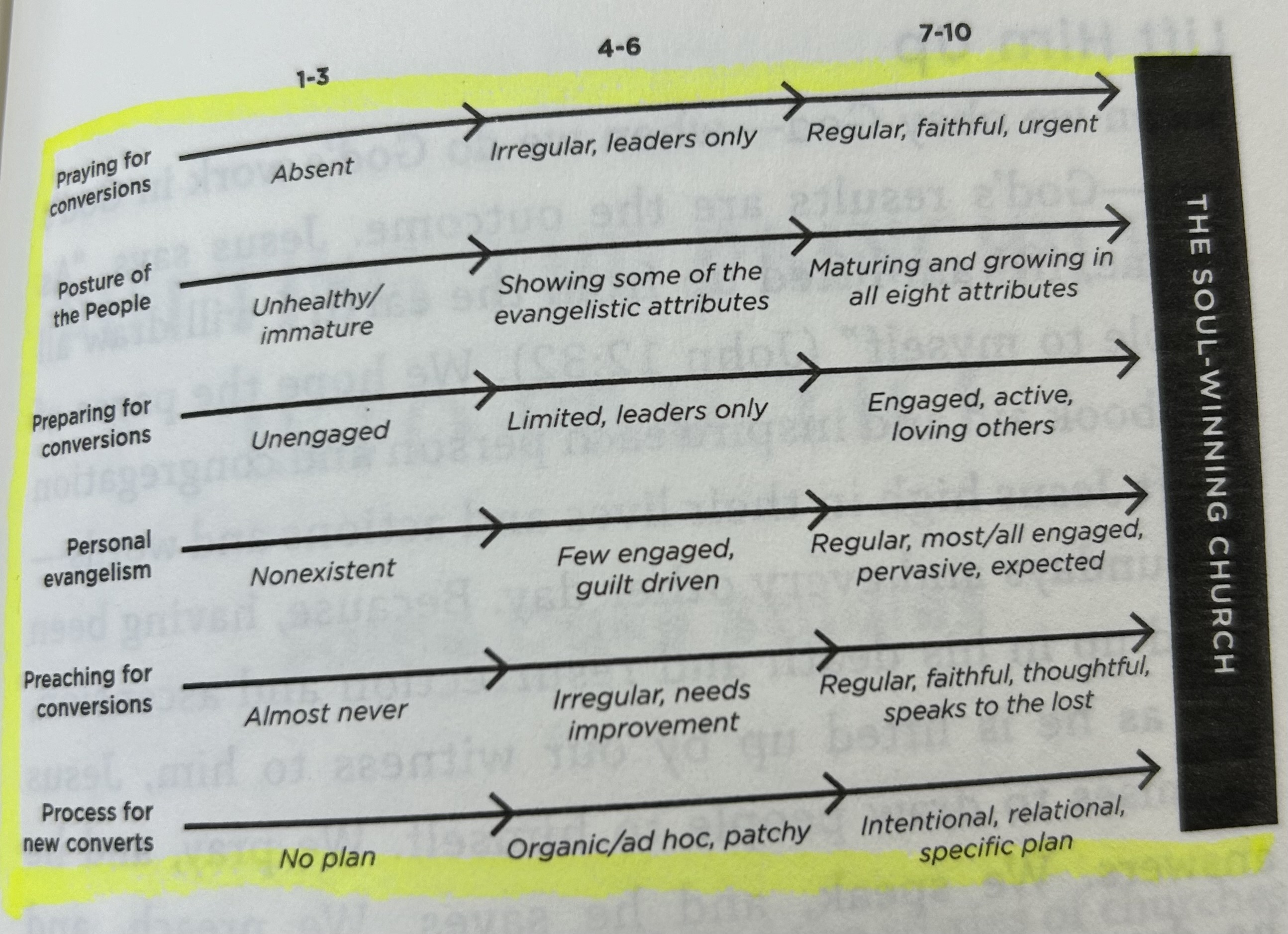
I scored my church at 31 out of 60, so it’s given me some good leadership challenges to work on this Fall.
Here are some favorite quotes and highlights from the book:
- Lost people can’t make themselves “unlost.”
- Most church growth is actually transfer growth.
- Jesus calls us to make disciples, not move them.
- “Effective Evangelism begins with seeking the Effector of the evangel.”
- “Diminished prayer reveals elevated levels of confidence in our natural abilities.”
- Great section on How to Revive your prayer meetings: Pray more + Vary the voices + Try a different time + Start Small + Lead + Celebrate Answers to Prayer + Clarify Expectations
- Are we forming the kind of people who evangelize? Is our discipleship forming the kind of believers in whom evangelism bubbles up as a natural part of their lives?
- Excellent chapter on eight Postures that give rise to evangelistic people: Holiness, Gentleness, Patience and Dependence, Eternal, Boldness, Hospitable, Christ-excited, Ambitious
- Good works prepare the hearer and gives a platform to the teller.
- On Good Works – Two Dangers to Avoid: Treating mercy ministries as equal to evangelism. Treating mercy ministries as optional to evangelism.
- We cannot be evangelistic churches without a culture of every member personal evangelism.
- The problem is not that people reject our witness so much as we do not witness in the first place.
Find some case studies of churches applying these six keys well and other resources at http://www.thegoodbook.com/soul-winning.

Enduring Friendships: Sticking Together in an Age of Unfriending
Bryan Loritts provides a great challenge to build relationships that last in his new book Enduring Friendships: Sticking Together in an Age of Unfriending. The book uses Paul’s New Testament letter to Philemon as a backdrop for thinking deeply about friendship. And it does challenge us to think deeply about our relationships. Onesimus, the slave to Philemon, who likely stole and then ran away from his servitude, making him deserving of severe consequences if not death. Philemon, the enslaver, and partner in the gospel with Paul. Paul, the missionary, who led both of these men to Christ and now pleads with them to do hard things for their relationship and for the glory of God.
- He wants Onesimus to repent and go back and face his offended enslaver.
- He wants Philemon to repent and receive Onesimus, not as a slave who stole from him, but as a brother who merits his embrace and partnership.
- Paul himself wants to pay whatever is owed to Philemon. “Put it on my account.”
We don’t know “the rest of the story”, but can imagine that repentance was had, forgiveness was extended, and God was glorified, because Onesimus is later counted as a Bishop in the early church.
This book reminds us that relationships are hard but worth fighting for. And enduring relationships are costly and take courage to pursue through the messiness of life. What a mess the book of Philemon offers up. But what a beautiful picture of grace and forgiveness if Paul’s formula is lived out. The offender repents, the offended forgives, and the beauty of reconciliation is witnessed by all.
I wish I could say I didn’t have any tangled messes of relationships in my 49 years, but I can’t. I wish I could say that I’ve always done the right and hard thing for the sake of reconciliation. In ministry, the slights received often make us callous toward deep relationships and make it easier just to let people walk away or not make the journey back to the one we offended. People come and go. Sometimes close relationships are resisted because we begin to expect slights, disrespect, betrayal, and eventual departure. Enduring Friendships reminds us that relationships are worth it.
The key to it all of course is Jesus. He empowers us to forgive, to receive grace, and to repent. And he did the hardest thing of all so that we could experience reconciliation by offering up his own body on the cross.
Some great thinking and maturing to be stirred up by Bryan Loritts’ new book. Grab a copy.
Here’s a few of my favorite quotes:
- Soul-level friendship often feels like a full-time job with periods of bad compensation.
- The problem is relationships are drama, and I don’t mean that in a negative way. Whose life is not made up of mountaintops and deep valleys? If we’re not up for drama, we are not ready for relationships.
- A Christian who does not forgive is a contradiction in terms.
- There is no lasting friendship without grace.
- If you want to have sustained friendships over the course of your life, you must accept that you will at various points be Onesimus and Philemon – offender and offended.
- When we fail to allow for nuance and complication, we set the table for short-lived friendships that never resurrect from the graveyard of offense and betrayal.
- The journey of friendship is fraught with unavoidable hurt because those involved are marred by sin.
- Gossip is saying something behind a person’s back we would never say to a person’s face. Flattery is saying something to a person’s face we would never say behind their back.
- Pride is the #1 killer of friendship. Humility is the prime nourisher of healthy relationships.
- When we are at death’s door and inevitably stare into the rearview mirror of our lives, we will not take joy in our acts of retribution.
- An ungracious Christian is an oxymoron.
- nothing illumines our witness and stands more in contradistinction to our world than when we fight to remain at the table of friendship with people who we have wronged and who have wronged us.


Worth Reading: Spiritual Multiplication in the Real World
One of the best books I read in 2022 was Bob McNabb’s Spiritual Multiplication in the Real World: Why Some Disciple-Makers Reproduce When Others Fail.
The book uses the personal experience of the author and research to answer the questions:
- Why do some fruitful disciple-makers cease to be fruitful?
- Why do some disciples become fruitful disciple makers and others do not?
The Answers are not complex. And they would be rather easy to implement for the church or leader that has the will.
Essentially:
- Evangelism training should be emphasized and ongoing and not just a one-off or a one-time event.
- Those who are part of a small group devoted to evangelism are the most effective at disciple-making.
- Effective Disciple Making Groups spend time talking about evangelism, praying for the lost, and doing something evangelistic every time they meet.
- Effective Disciple Making Groups define multiplication as their reason for existence.
- Effective disciple-makers have disciple-making leaders who model evangelism and disciple-making for them.
- Effective disciple-makers put themselves in a position to meet new people regularly and share the gospel early in relationships.
A lot of other research-based observations about effective evangelists and disciple-makers. You can take his survey and find other helpful resources mentioned in the book at McNabb’s website SpiritualMultiplication.org.
Some of my favorite quotes from the book:
- Those involved in ongoing evangelism training led twice as many people to Christ as those who weren’t.
- Becoming a part of a team that evangelizes together is the most important thing you can do if you want to multiply disciples.
- The groups that do the best job of helping their members grow and multiply disciples are the groups that meet for the express purpose of being a disciple-making team.
- Jesus’ goal was never to build individual disciples. He built a team and expected them to build other disciple-making teams called churches.
- Following involves fishing. If you are not fishing, you are not following. Churches are supposed to help their members be successful at catching fish and helping those fish mature and multiply.
- “Rather than asking the question ‘Are we growing?’ we need to ask, ‘Are our members leading people to Christ?’ and ‘Are they successfully helping new converts grow into mature believers?'”
- Wherever you find disciples exponentially multiplying, you will find an emphasis on training.
- Highly effective disciple-makers average twice as much time discussing evangelism, praying for the lost, and actually doing evangelism together with others in their small group as non-effective disciple-makers.
- Most groups that function well as a disciple-making team define multiplication as their reason for existence.
- There is a clear relationship between prayer for the lost and disciple-making effectiveness.
- While the bible plainly characterizes evangelism as a process, it does not teach waiting to talk about Jesus with someone until after one has developed a friendship.
- Respondents who usually shared the gospel within the first few times they met someone exposed an average of 52 people to the gospel annually. This average fell to 15 for those who waited to share the gospel until an ongoing friendship was established and 25 for those who employed a mixed approach.
- Those who shared the gospel within the first few times of meeting someone led more than 400% more people to Christ on average each year than those who waited to establish an ongoing relationship, and they led 44% more people to Christ on average each year than those who approached evangelism with a mixed approach.
- Disciple-makers who said they were a part of a small group that spent at least 20 minutes weekly discussing evangelism, 20 minutes praying for the lost, and 20 minutes doing some sort of evangelism together are far more effective than those who didn’t.
Spiritual Multiplication in the Real World is challenging, inspiring, and practical. A great resource for personal development as a disciple-maker and to be given to those in your disciple-making team. There is also a Study Guide and a companion book called Foundations that are referred to in the book that can be used in small group or team settings.

Books Worth Reading: February 2021
A few Good Reads from February. Connect with me over at Goodreads.com and let’s share our reading adventures.







Spent Matches: Igniting the Signal Fire for the Spiritually Dissatisfied by Roy Moran
Turning an existing church into a Disciple Making Movement. Details what a disciple making movement strategy looks like and then tells the story of Shoals Creek Community Church’s adaptation of the strategy.
Under Our Skin: Getting Real about Race–And Getting Free from the Fears and Frustrations That Divide Us by Benjamin Watson
Powerful testimony, encouragement, and direction from a man of wisdom and faith. Solid answers for how to think about racial issues in the aftermath of events that divide our country.
Milliken’s Bend: A Civil War Battle in History and Memory by Linda Barnickel
A civil war battle in Northeast Louisiana that demonstrated the ability of black soldiers to fight victoriously over the Confederate army. Also, interesting details about life in Northeast Louisiana during the 19th century and aftermath of the Civil War. I’m looking forward to visiting the Milliken’s Bend and Grant’s Canal memorials next time I’m driving across I-20.
In the Way: Church As We Know It Can Be a Discipleship Movement (Again) by Damian Gerke
Another good book on how Disciple Making Movement practices can and should be adapted in the West. I’m going back through this one again very slowly. Much to chew on in this book.
The Story of Joseph Willis by Randy Willis
In the early 1800’s, Joseph Willis started the first evangelical churches West of the Mississippi River. Born a slave in the Carolina’s, Joseph Willis answered God’s call to go west. He endured much to deliver the Gospel to harsh Louisiana. Great story of perseverance. Churches planted and pastored by Joseph Willis are still in existence across south Louisiana today.
They Turned the World Upside Down: A Storyteller’s Journey with Those Who Dared to Follow Jesus by Charles Martin
Fiction writer paraphrases and stories his way through the early church. Always good to hear some new and creative perspectives on the Bible.
Teche: A History of Louisiana’s Most Famous Bayou by Shane K. Bernard
The Teche Bayou runs from Port Barre to Patterson. 125 miles and a lot of history along the banks. Includes the story of an ancient people groups, plantation life, civil war ironclad battles, and the changing nature of transportation and commerce in the south. Good book for anyone who loves south Louisiana.
Movements That Change the World: Five Keys to Spreading the Gospel by Steve Addison
5 Universal Keys to Spreading the Gospel and Starting a Movement:
- white-hot faith
- commitment to the cause
- contagious relationships
- rapid mobilization
- adaptive methods
Love Steve Addison’s books, and all his resources at movements.net.
Books Worth Reading: January 2021
Completed a few good books in January. Hoping to get back above 50 books this year after a down year in 2020. Check out these five when you get a chance.



The Rescue: Seven People, Seven Amazing Stories… by Jim Cymbala
Always great to be reminded of the power of the Gospel to transform. Jim Cymbala shares seven great testimonies of God’s power to save.
The Deepest South of All: True Stories from Natchez, Mississippi by Richard Grant
I’ve always loved Natchez. This book goes deep into some of the stories, scars, and scabs of the last 200 years. Didn’t know that Natchez voted against succession from the union. Didn’t know that there was an African warrior prince enslaved in Natchez for 40 years. Get to know the bitter and sweet story of a favorite southern town.
Dream with Me: Race, Love, and the Struggle We Must Win by John M. Perkins
Compelling book on reconciliation and racial justice. Refreshing to hear the gospel driven worldview on racism and its solution from a true man of God who spent his life in the trenches of the civil rights movement.
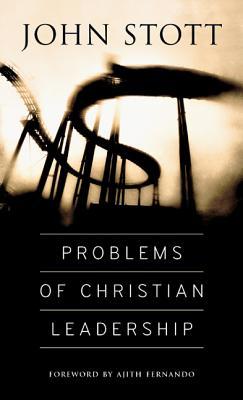
Problems of Christian Leadership by John R.W. Stott
From a series of lectures John Stott gave to ministerial students. Stott shared from personal experience of the every day challenges of a life in ministry. Short book. Worth reading every year.
Why You Think the Way You Do: The Story of Western Worldviews from Rome to Home by Glenn S. Sunshine
Great summary of worldviews through time from a Christian perspective. Became acquainted with Sunshine after reading The Kingdom Unleashed. This book is academic in nature. But accessible.
What are you reading?

A Viral Outbreak from Asia
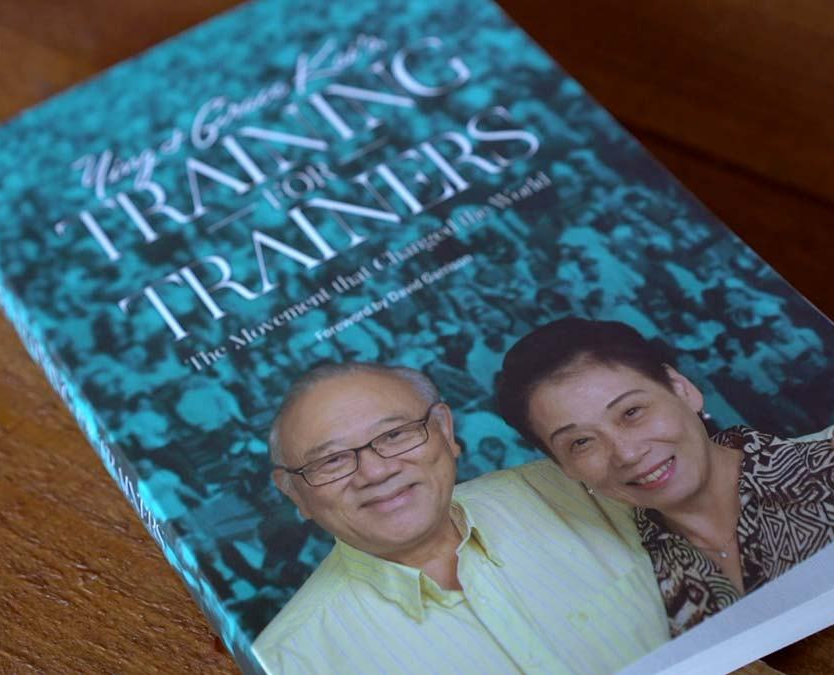 Catching up on some reading this week. You know why. Lol! Reading about another Viral Outbreak that came to us from Asia. Ying and Grace Kai’s Training for Trainers: The Movement that Changed the World. There are several books about T4T, but this is actually Ying’s side of the story. Very instructive to get the heart of the author and orchestrator of a movement that in 10 years, led to 1.7 million baptisms! (and that’s just the ones they know about). This movement has spun off many other expressions of the same kind of principles and practices that Ying Kai began with a group of 30 farmers in 2000. The beauty and the secret of T4T is simplicity. Simplicity leads to reproducibility. Simplicity and reproducibility are key ingredients in viral movements. Considering a reset in your ministry, this book will get you thinking!
The simple step-by-step process:
- Develop a list of unsaved people in your network of relationships.
- Teach your group how to tell their story, repeatedly practicing to become fluent in sharing their story.
- Teach the story of Jesus, repeatedly practicing to become fluent in teaching the story of Jesus.
- Have them commit to share their story and the story of Jesus with five people each week.
- Don’t encourage the growth of one small group, but train everyone to become trainers of their own small group.
- Never give up on anyone.
T4T type disciple making should be the commitment of every Christian, but leaders in this movement concede that only about 20% of people that are trained will follow-up with obedience and action. This is only for doers of the word. But how much time and energy do we spend trying to keep and attract those who only hear. T4T helps you develop a vision for discipling those who have the capacity and heart to disciple others.
Here are just a few of the quotes that jumped out at me:
- We are always inviting people to come to our church…. But Jesus said we are to go and find lost persons.
- It is not until one can train others that they can grow into a true disciple.
- Share the gospel with at least five people each week.
- I may say that I am a Christian, but if it is only knowledge of the truth and I have never really worked in the kingdom of God, then I am just a nominal Christian and not a true kingdom citizen.
- It is our duty to sow seeds broadly and we should not limit where and when we sow.
- God sees our heart to serve and not how talented we are.
- Too much discussion leads to no action.
- Keep things simple so that anyone is able to do it and everyone is willing to do it. Once things begin to get complicated, people start to put it off and not do it.
- We should not encourage them to bring others into our small group. We are training them to become a trainer. They must start and train their own small groups.
- So long as Christian perceive of discipleship as knowledge or simply doctrine, they fall short of the life-changing, world-changing power of true discipleship.
- In every community with whom we share the gospel, there will be men and women who are already under the Holy Spirit’s conviction.
- The Great Commission instructs that we are to go, not invite them to come to us; that everyone is to be engaged in attempting to reach everyone, everywhere; and we are to make disciples, not just church members or converts.
- Whatever is taught, it should not be a knowledge dump, but training simple enough so that the new believer can grasp and replicate what has been taught.
- The real test of success is the trainee taking what he has learned, and training a fellow believer…
- The relationship with God will lead to an international outflow of gospeling and discipling.

What’s Next for the Church in 2020 and Beyond?
 Dave Travis and Leadership Network have given us a great, short look into the future of church in North America with the book What’s Next: 2020 Edition. Many have sensed that the future may require some adjustments and new thinking about some of the methods we have relied on. Churches are either digging in, hanging on for survival, or making adjustments to meet the future. The short book What’s Next: 2020 is a good short primer that will help church leaders adjust thinking for the future. It would be great to go through as church staff or to give to key leaders in your church as you think about the next 10 years.
Most of the book is confirmation of things we’ve heard over the last few years:
- Reaching Millennials is both a must and a huge challenge.
- Tax breaks and incentives for churches and parishioners will probably go away in the future.
- Church buildings will get smaller and less traditional.
- The church must embrace multi-ethnic ministry in the future.
There are a few surprises in the book. Here’s a few takeaways from my Kindle Highlights:
On Millenials:
- In 2019, Millenials will overtake Boomers as the largest generation group.
- Almost one in three Americans is Millenial.
- 45% of Millenials are non-white, making them the most racially diverse generation. 20% of Millenials are Latino, 14% Black, 6% Asian.
- Millenials have a stronger desire to excel at Parenting than any generation before. And kids come first in priority for this generation more than ever before. (Think Helicopter Parenting).
- Millenials are delaying, but not rejecting marriage. 57% are unmarried, compared to 43% of Gen X’ers.
- Millenials have the highest percentage of households in poverty. The are also more likely to rent their homes. And they are less likely to migrate or move than previous generations.
- They are more educated, at least have more degrees than previous generations.
- Millenials are underrepresented in even the most thriving, fast growing churches in America.
- Travis notes several things that are working in efforts to reach millenials. I’ll affirm one here, that we definitely see in Louisiana – Churches planted by and led by millenials tend to reach more millenials.
On Decline of Christianity in America:
- Nominal Christianity is dying. Faithful Christians are still faithful to attend, pray, serve their neighbors, and accept the Bible as wholly true, and in the same numbers as prior generation.
On Outreach and Evangelism:
- Travis notes the opportunity to reach people with technology, giving great examples of churches who have effectively used tech for evangelism and outreach.
- Family ministry is on the upswing. We have the opportunity to help people get married and help young parents pursue effective parenting. “young people today may be confident about many things, but not about the daunting task of raising a child.”
- The role of Groups in reaching people. Travis asserts that radical hospitality becoming a core value will help us reach the future generations. The longing in today’s culture is for social connections. Groups and gatherings in homes provide that necessary element like few other things.
- “We have to be willing to be radical in extending ourselves, our homes, and our group life to those who don’t yet believe and may never believe or walk with Jesus. This can feel disruptive in a group. But those who can handle the tension will yield kingdom fruit.”
- Travis discusses in detail the role of media, Youtube, AI, Instragram in outreach and church ministry in the future. “We need to be thinking visually all the time, because that’s how people are reached emotionally today.”
On Church buildings:
- “Build it and they will come” is giving way to “take your show on the road.”
- We will see less 3,500 seat auditoriums and more 800-1200 multipurpose buildings.
- There are now and estimated 65,000 multi-site congregations in North America, with over one third of them beginning as the result of a merger.
- Growing churches are becoming more multiplication minded, thinking about a second and third site out of the gate.
- “healthy, vital churches should be multiplying, because that’s what creates a future for our beliefs, and hope for those whom we’ve yet to reach for Christ.”
On Tax Issues for Churches:
- Travis sees the future being dire for Property Tax Exemptions, Gifts from attenders to churches not being taxed as income or being tax-deductible for the giver, and Pastor’s Housing Allowance Tax Breaks.
- Implications: Church Building construction will be affected. Buildings will become smaller and less noticable. We’ll see more shared facility arrangements with churches and business and churches and non-profits.
- A Huge Implication: Churches must adjust to the non-tax incentive for givers by teaching attenders the eternal value of true stewardship beyond tax implications. The question I’ve asked: Will lukewarm people give without an earthly incentive? We will definitely find out in the future.
There is much more in this short book that will make for meaningful conversation among church leaders and staffs. Put it on your reading list for early this year.
What do you think will change over the next decade? How do you think these issues will affect your church in the future? Are you thinking differently about church than you were in 2009-2010?

The Mobilization Flywheel
 I wore out a highlighter on an incredible 120 page book recently. It’s called The Mobilization Flywheel: Building a Culture of Biblical Mobilization by Larry Walkemeyer and Todd Wilson. You may recognize Todd’s name from the Exponential Conference. Mobilization is the 2019 Exponential theme. This book, along with companion resources, drives the point home of the needed shifts in today’s church. The big idea is that today’s church may just be holding people back from becoming all that God made them for. Do we see people as mere volunteers to prop up our ministries or as masterpieces, created by God for kingdom transformation?
The book focuses on three things – Missionaries, Gatherings, Church –
- every believer is a missionary,
- every church should be a mobilization station that sends its missionaries,
- every believer can play a role in gatherings that share the gospel,
- and many gatherings can become new churches led by everyday missionaries.
Simple, Biblical steps from Mobilization to Multiplication.
There’s even a great section on how denominations and networks can fuel mobilization and multiplication in the 21st century.
I’m ordering a box of these. Hope you’ll read it and get a passion for Mobilizing God’s Masterpieces for kingdom expansion. You can actually get a free E-book version HERE.
A few of my favorite quotes:
- The average church is always looking for more volunteers to do more church work. At the same time, the typical Christian is frequently seeking more purpose in their lives.
- The church trains volunteers to pass out bulletins, while Jesus trained his disciples to cast out demons.
- From start to finish the call of discipleship is to be sent, to live as sent ones, to live mobilized!
- The church has mostly lived a “Come and See” model while Jesus operated from a “Go and Be” model.
- Too often we see individuals as volunteers to fuel our programs and to serve our purposes rather than as everyday missionaries with everyday mission fields….
- Leaders must shift from a bias of “We can do it, you can help” to one of “You can do it; how can we help?”
- Most so-called revivals these days prioritize greater sensations for the saved, instead of greater sending of the saved.
- Biblical discipleship always majored on going. Disciples were sent to make other disciples. Increasing maturity was evidenced by increased spiritual activity by disciples among non-believers.
- Biblical disciples are individuals who have determined their most significant accomplishments in life will be making disciples who make disciples.
- Biblical churches are churches who have embraced an operating system that prioritizes and practices equipping and sending believers to be disciples who in turn make disciples in their unique mission fields.
- Is today’s church so pastor-centric that believers are motivated to climb upward in the church power structures instead of inspired to move outward into their mission fields?
- Jesus knew that twelve multiplying disciples was a bigger number than 12,000 miracle seekers.
- Jesus trained disciples to cast out demons, but we settle for training believers to pass out bulletins and wonder why the average Christian is bored.
- There is a vast difference between volunteers filling a space and ordinary missionaries reaching an un-reached place.
- We must shift our paradigm from recruiting volunteers to accomplish “our thing” to mobilizing everyday missionaries in their common and unique callings to accomplish “God’s thing.”
- As Christian leaders, our paramount resource is not our building, our bank account, our band, etc…. It is the people the master has trusted us with leading.
- Do I help believers dream about their “more” or try to limit their vision to inside our church’s ministry?
- Churches – prioritize helping members live into their calling outside the church more than inside the church …. Raising up everyday missionaries, not just volunteers for ministry …. Keep the church simple and mission-focused …. Not running programs but equipping members to reach and disciple people in their individual mission fields.

How would Luke (author of Acts) describe the church today?
“They devoted themselves to vision clarity, organizational alignment, clarity of vision, great preaching, monster outreach events, massive marketing campaigns, world class children’s ministry, the best music in town, leadership development, new sites, and the latest growth strategy to break the next growth barrier. Some of the believers came together weekly for an excellent Sunday morning show; others opted for overbooked schedules of travel sports and long work hours to pay increasing debt, leaving no margin for living in common. With divorce, addiction, and crime rates similar to society at large, outsiders mocked the church, wondering why they should be part of something so judgmental, hypocritical, and irrelevant. Rather than praising God for the abundance of blessing and being the fullness of Christ in everything and in every way, church members spent their time praying for deliverance from the same crazy, empty lives as their outsider friends. When numbers were not added daily, they looked for the next silver bullet to catalyze growth and make the church more relevant. They desperately sought to do church without being the church.”
Instead, let’s try… Acts 2:42-47
They devoted themselves to the apostles’ teaching and to fellowship, to the breaking of bread and to prayer. Everyone was filled with awe at the many wonders and signs performed by the apostles. All the believers were together and had everything in common. They sold property and possessions to give to anyone who had need. Every day they continued to meet together in the temple courts. They broke bread in their homes and ate together with glad and sincere hearts, praising God and enjoying the favor of all the people. And the Lord added to their number daily those who were being saved.
Sounds a lot simpler and a lot more fun. Proved to be fairly effective at changing the world as well. Which one are you and your church pursuing?
via Todd Wilson in his excellent book called More: Find Your Personal Calling and Live Life to Your Fullest Measure.

Break the Huddle
If the elements of God’s mission can be compared to a football game, we might say that the focus has become the huddle instead of the line of scrimmage. The line of scrimmage is where the action happens. We have prioritized huddling over playing our part on the line of scrimmage by purchasing fancier uniforms for the huddle, composing cooler songs for the huddle, writing more speeches to inspire the huddle, positioning every person in the perfect spot for the huddle, holding conferences on how to build a better huddle, even getting the perfect brew to pass around the huddle.
But Jesus’ commission for the church was about going, not huddling. The huddle is vital, but it’s only a brief moment to receive the playing directions from the quarterback. If you stay in the huddle too long, you get penalized and moved backward. The church is getting shoved backward on the mission field… the problem is an overemphasis on the huddle. The church must be mobilized, it must be sent to the scrimmage line.
The Mobilization Flywheel: Creating a Culture of Biblical Mobilization, page 13


 Lane Corley