What Does Missional Look Like?
The call to mission may cause you to memorize the names of everyone on your street; take new co-workers out for lunch; throw parties to connect friends who don’t know each other; go out of your way to ask people, “How are things going?” You might intentionally give some money to help people or support church, civic, or global causes that meet practical needs. You might feel the call to give time to volunteer. You might even participate in local or global missions.
Worth Reading: Church in the Making
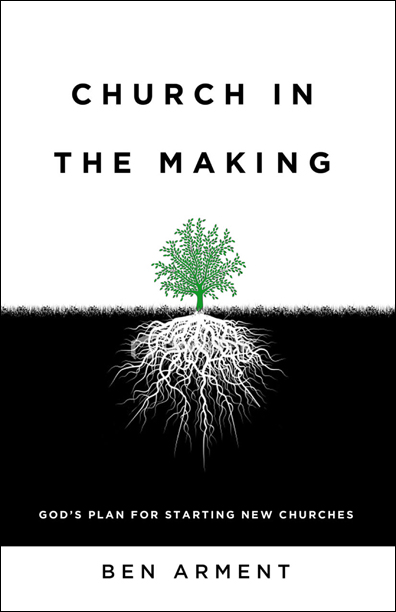 “Why do we continue sending planters out to the field by themselves with no momentum, very little support, and the odds stacked against them?” So ask Ben Arment in his new book Church in Making: What Makes or Breaks A New Church Before it Starts. And this is the big question that many veteran church planters and there families have found themselves asking after seasons of discouragement and disillusionment. This book is written from the perspective of one who has been there and worked through what it takes to build momentum, gather support, and overcome obstacles. We may not like many of the answers. There is need for cultivation, it’s sometimes necessary to pull the plug, the best planters are locals and not big shots that parachute into town, ability to build a social network is a necessity. I hope every church planting strategists will read this book for solid ideas about prepping the ground and knowing what planters on the field are going through. For church planters, the questions for discussion after each section would be great for core development meetings. Well worth reading. Plan on keeping this book close to the desk for a few years.
You’ll also do yourself a favor by following the author’s blog.
Here’s a few of my favorite quotes:
- “Just like farming, there are two activities for church planters: cultivating and planting. If you do the right thing in the wrong season, you get zero results.”
- “If you dive headlong into planting a church on tough soil, you’ll get discouraged quickly and burn out.”
- “behind every great church is a cultivated community.”
- “there’s nothing more destructive to a church planter’s well-being than starting a church with no momentum.”
- “Buzz covers a multitude of sins.”
- “Church planting is the fine art of emptying ourselves for people who reject us and forgiving them for the sake of the gospel.”
- “As church planters we have to be careful to plant the church our community needs, not the church in our heads.”
- “The minute your congregation decides to exist for itself, the church is dead.”
- “It’s easy to sacrifice vision when the money is running low and you could generate revenue by becoming more things to more people.”
- “By putting personality ahead of purpose, we make our churches difficult to reproduce, let alone sustain.”
What is Community?
The call to community is more than just going to church on Sunday. A commitment to community might change the way you think about your Christian friends. Instead of working to impress them with your spirituality or your “edginess”, you might find yourself entrusting them with your struggles. Which might lead to better relationships. Which might lead to you going on mission together. Which is the whole point.
Good stuff from the TK Primer, which our church is tracking through this Summer.
Block Party Maximizer
Simple idea to maximize the impact of your evangelistic Block Party: Invite the local Ice Cream Truck to crash the party. And why not pay for the Ice Cream?


Just Like You
I think of this every year around Father’s Day.
There are little eyes upon you, and they are watching night and day;
There are little ears that quickly take in every word you say;
There are little hands all eager to do everything you do,
And a little boy who’s dreaming of the day he’ll be like you.
You’re the little fellow’s idol, you’re the wisest of the wise,
In his little mind about you, no suspicions ever rise;
He believes in you devoutly, holds that all you say and do,
He will say and do in your way when he’s grown up to be like you.
There’s a wide-eyed little fellow who believes you’re always right,
And his ears are always open and he watches day and night;
You are setting an example every day in all you do,
For the little boy who’s waiting to grow up to be like you.
Source unknown
Motives
…if someone is pre-committed to falsity and will not pursue God with pure heart and motives, they will hear only what they want to hear. The horrifying result of impure motives is that people sincerely believe it is God who has spoken, when all along it is was their own lying hearts.
Alan Hirsch in Untamed: Missional Discipleship
Worse than not doing Christianity, is doing Christianity with selfish and impure motives.
How Can My Church Get Involved in Church Planting and Multiplication?
 Reaching North America for Christ is too big a task for one church to handle. New Church Multiplication is one of the best ways for us to work the North American fields to the edges. And every church can get involved in multiplication of new Churches. How? The sky is the limit. There is no right or wrong way to support church planting. The question is, what are you willing to do? How big of a commitment are you willing to make?
Here are three levels of relationship that excludes no church from involvement. I offer a few suggestions that are not meant to be an exhaustive list under each level.
It’s All About Relationships
Continuing our Close Encounters series at Bridge Church. Talked this week about the importance of relationships in Jesus’ ministry and the need for relational approaches to reaching our friends for Christ. In the book Lost and Found: The Younger Unchurched and Churches that Reach Them by Ed Stetzer, Richie Stanley, and Jason Hayes, they demostrate this need with statistical data. A few statistics:
- 17% in todays world would go to church if seeking spiritual guidance. The church is no longer the place to go to find answers about spirituality.
- 90% believe they can have a good relationship with God without being involved in a church.
- 91% have at least one Christian among their close friends.
- 90% said they would be willing to listen to someone share his or her beliefs.
- 60% said they would be willing to study the Bible if a friend ask them.
- 48% would be willing attend a small group of people to learn more about the Bible and Jesus.
So people do not consider church for answers, but they have connections with Christians in our churches and would even be willing to open their lives to listen to friends. So releasing and empowering Christians to reach their network of friends off of our campuses should be a major part of our strategy. Neil Cole in his book Church 3.0 comments about this research with this question: “Why is it that when we consider ways to reach out to the lost we always plan events rather than using the natural relationships God has already given us?” Could this be a solution to our churches budget crunch? Less expensive productions, more releasing people to form organic relationships that will bring others to a close encounter with Christ.
Current Church Planting Bibliography
More than occasionally I’m asked by people interested in Church planting, “Hey, what should I be reading?” Here’s my current top ten list of favorites in no particular order. Most of these are in the category of “I wish I’d read that before I planted a church.”
- Church in the Making: What Makes or Breaks a New Church Before It Starts by Ben Arment. Honest book about the difficulty of planting a church. Discussion questions after each section would be great for Core Group Training.
- Deliberate Simplicity: How the Church Does More by Doing Less by Dave Browing. Great book to help with focus and vision. Here’s a brief review I wrote a few years back.
- Planting Missional Churches by Ed Stetzer. The textbook.
- Viral Churches: Helping Church Planters Become Movement Makers by Ed Stetzer and Warren Bird. Great book for churches wanting to sponsor churches or plant multiple churches and campuses. Research based. Great reference guide to what’s up out there in Church Planting.
- The Multiplying Church by Bob Roberts. From an experienced sender. The chapter on Starting a Church Planting Training Center at Your Church would be worth reading for every sponsor church pastor. My thoughts here.
- Church 3.0: Upgrades for the Future of the Church by Neil Cole. Challenging questions and answers for the church going forward into the future. Can’t get this book off my desk right now.
- Breaking the Missional Code: Your Church Can Become a Missionary in Your Community by Ed Stetzer and David Putman. “Don’t plant the church in your head. Plant it in the community.” One of my fav Ed Stetzer quotes. This book helps us do that.
- It’s Not Personal: Surviving and Thriving on the Journey of Church Planting by Brian & Amy Bloye. Reading right now. Incredibly honest look at the life of the church planter.
- Exponential: How You and Your Friends Can Start a Missional Movement by Dave & Jon Ferguson. Great text book for starting at every level. Includes great chapters on multisite and sending out church planters, which is a core competency of the Ferguson’s church.
- Missional Renaissance: Changing the Scorecard for the Church by Reggie McNeal. Is it going to be about how many, how much, how often? I hope not. This book will help you get the right scorecard.
Other books that have been foundational for our current church plant: The Externally Focused Church by Eric Swanson and Rick Rusaw, The Tangible Kingdom: Creating Incarnational Community by Hugh Halter and Matt Smay, Total Church: A Radical Reshaping Around Gospel and Community by Steve Timmis.
What would be your recommendations?
The Tangible Kingdom: Posturing Toward Others
 Summer is here and for Bridge Church that means seven or eight mission teams, a Zephyrs game or two, renting out the largest water slide in southeast Louisiana, Worship Gatherings at the YMCA, building a few handicap ramps and other crazy compassion/service projects. And one of the most exciting things for me is that in Community Groups we’ll be working through the Tangible Kingdom Primer: An Eight Week Guide to Incarnational Community. It’s a simple study designed to challenge us to intuitively live life on mission for others. Looking forward to leaning in on what it means to be the presence of Christ in my neighborhood and community. One of the basic concepts in the study is the idea of posture, which is defined as “the way a person or community expresses itself toward others.” My personal posture and that of churches in which I’ve been a part of, has often been self-centered, inward focused, and closed off to nonconformists and anyone on the outside. What would it look like for us to posture ourselves and be present with those in the world? What honestly is the posture of your life? Toward the needs of others first or personal safety and satisfaction? Looking forward to tracking with Bridge Church through the TK primer. Contact me for more info.
Here are a few resources for those doing the TK:
- The Tangible Kingdom book.
- The Tangible Kingdom video.
- Tanglible Kingdom Primer Introduction. 17 minute description and training session led by the Author.
- Order the TK Primer and check out other Tangible Kingdom resources here.
- Follow the TK guys on Facebook.