Serving on Sunday, part two

A trend in church life is congregations taking a Sunday and scattering throughout the community to serve. Most are doing it once a year. A few, like the church I’m part of, are doing it once per quarter. I’ve heard of at least one church doing it once a month. This week I saw an article about Rick Warren’s southern California mega-church Saddleback, taking a weekend called Good Neighbor day. I don’t think this is for every congregation and I don’t know that the congregation I lead will do it forever, but I think that a Faith in Action Sunday can be a powerful tool of cultivation in church and community.

A few weeks back I mentioned three reasons why to do it from the book Barefoot Church: Serving the Least in A Consumer Culture by Brandon Hatmaker. Here is a bit of the reasoning and strategy behind Bridge Church’s quarterly FIA Sunday’s.

  • The end goal of faith-filled disciples and missionaries. The Great Commission’s call is to make disciples. As a second journey church planter I begin to ask myself and others: “If I really wanted to make a disciple what would I do?” and “What was the greatest tool for spiritual growth in your life?” The answer was most often, ” Relationships and serving.” I was often disappointed when people didn’t recall my beautifully illiterated sermon as causing a spiritual growth spirt, but pointed to relationships with other Christians and ministry/mission opportunities as the greatest catalyst for growth. So, we begin to pray about how we could structure for relationships and mission, which led us to the idea of taking four Sunday’s a year for Faith in Action. Let me say: this is not a church growth gimic and definitely NOT a good strategy for church growth. If you’re goal is more attenders, DON’T do it, but the goal of producing faith-filled disciples who see themselves as missionaries caused us to rethink strategy and structure for serving a bit radically and non-traditionally.
  • The other 60%. Alan Hirsch and Dave Ferguson write in their book On the Verge, that around 60% of the population is outside of the church’s reach. That the majority of churches are fishing out of the same pond which includes about 40% of the population. I’ve found this to be a trend in the area where I live and serve. A segment of our population is not attracted by or will most likely not be influenced by our current forms of church. What can we do to reach these people? One answer: Go to them. And as one part of an incarnational strategy of engagement in the hardest to reach areas, we seek to take church to them four Sunday’s per year. Somebody once said that to reach people nobody is reaching you need to do things nobody is doing. In our community we have some amazing churches offering professional worship music, incredible preaching by some unbelievable communicators and men of God, and a full service ministry menu for every day of the week. So we’ve got that covered. Our niche is to be the ground troops moving into difficult areas, bringing the gospel and making disciples/missionaries as we go. Faith in action Sunday serves as a great tool in this regard.

I’ve written about some reason NOT to do this here. In the next two posts on this subject, I’ll take on some of the frequently asked questions and criticisms for Serving on Sunday, like:

  • It subverts the importance of preaching the Word of God.
  • It hurts church growth by making things awkward and uncomfortable for newcomers, visitors, and the disconnected.
  • “We can’t go a Sunday w/o taking an offering.”
  • It promotes a liberal agenda of social action.
  • “I can’t imagine how we would find enough for everyone to do around our community.”
  • Some good ones offered here by Kevin DeYoung.

Then lay out a plan for putting together a Faith in Action Weekend, whether it’s on Sunday or not.

WDJD? 7 Core Practices of Life In Christ-On Mission-4Others:

  1. Listen to God / Connection to the Father – Mark 1:35; John 5:19; 14:10
  2. Be Intentional with People / Incarnation-Proximity to the needs of people – John 1:14; 20:21
  3. Put Your Faith in Action / Responsiveness to the needs of people – Matthew 5:16; 1 Thess 5:15; 1 John 3:17-18
  4. Give it Away / Radical Generosity – Philippians 2:3-8
  5. Tell the Story / Message Clarity – Matthew 4:17, 19; John 10:10
  6. Go Viral / Simplicity-Reproducibility – Matthew 13:34; 28:18-20; 2 Corinthians 11:3
  7. Live Sent / Sending-Multiplication – Matthew 9:35-10:5; John 20:21; Acts 13:1-5

Reflecting on World AIDS Day

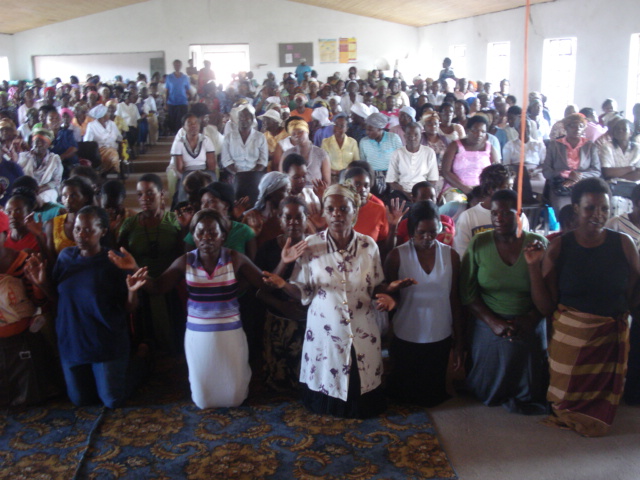
This afternoon I passed a road-side Fruit Stand in my community and remembered the booming road side business I saw in Zimbabwe, Africa a few years ago: coffins/caskets. Praying today for a country where the life expectancy is 42 and 25% of the population is made up of orphans, due in large part to the World AIDS crisis. Glad to see the numbers going the other way, but remembering names and faces of friends, brother and sisters that are VERY close to this crisis. A few personal pics:

Widows gathered for prayer at Mbare Christian Fellowship in Harrare.


Kids at a Zim Orphanage receiving gifts from our community.

See my pasts post about work and partners in Zimbabwe.


What Makes A Successful Church? A few links:

Spent part of this week crunching numbers getting ready for the Northshore Baptist Association’s staff mini-retreat next weekend. Every year I do this, it gets me thinking about what we measure. Are we measuring the right things? Are the metrics we use causing us to fire at the wrong targets? How would Jesus measure success in ministry? What do you think?

Came across a few interesting articles in this regard as well this week. Thought I’d share:

  • Input results in the church world focus on the number of people and dollars that “come into” the church. Common ways we talk about input results include the “ABC’s” (attendance, buildings and cash) or “nickels and noses” or “butts and bucks”
  • Output results refer to actual life-change outcomes that God intends for followers of Christ individually and together. 
  • Impact results capture the broader effect of the church in the surrounding city or community.

Corporate Church vs. Movemental Church by Mike Breen. This one really made me think!

  • Efficiency has replaced effectiveness. Many churches are organizationally efficient, but we aren’t affecting the lives of people the way in which Jesus imagined a family would do.
  • while churches may claim to have “leadership development programs,” what they really have are “volunteer pipelines” that are run by managers, not leaders.
  • What we need is a way of making and moving people so that as we make disciples, we release them into their destiny of pushing into new Kingdom-frontier.
  1. Financially self-sustaining within two-years. (Urban Plants may be longer)
  2. Self-governing after two-years.
  3. Multiplication minded. (Involved in planting other churches from day one.)
  4. Giving 10%, from day one, towards missions (Out of weekly offerings).
  5. Growth which comes primarily through conversion.
  6. At least 45% of attenders actively volunteering in the church.
  7. Engaged in transforming the community. (Not just individuals)
  8. Growing numerically.
  9. Developing new leaders for ministry.
  10. Members are continually and actively inviting their neighbors to church and sharing their faith journey with those around them.
  11. At least 80% involved in small groups by year-two.
  12. Actively involved in foreign missions work.
How large shall we plant? by Steve Sjogren – said the former mega-church pastor. Interesting.
  • Mega-churches are cooler, hipper, usually more exciting than other area churches, therefore they are natural gathering points for already-converted people who are looking for “something more” – namely more program options, better worship, more services with fewer demands…
  • My bottom line: I’d rather plant a network of 15 churches of 500 that are maximizing their potential for outreach than to have one church of 7,500 that is fun to lead, fun to be a part of, that strokes my ego…
2011 Profile of Large Attendance Churches in the United States by Leadership Network. Everyone’s got an opinion about big churches. What does the data actually say? Ed Stetzer’s summary here.

Church Planting Numbers that Matter by Steve Pike. Great equations and guide for the “big launch” model of church planting.

How to Shrink Your Church – Some good thoughts on how dying is gain in church life. Are we pursuing the Hallmark moment and whatever works to grow?

  • while a generation of church leaders acquiesces to the demands of our consumer culture. The demands are simple: tell me something that will make me feel better (sentimentality for the churchgoer), and tell me something that will work (pragmatism for the church leader). Yet it is not clear how either one of those are part of what it means to be the church.
  • you can grow a church without God if you have good preaching, great music, killer children’s ministry, and an engaging youth minister. In the pragmatic church, there is only one question that matters, “What will work to grow my church?”
  • Convincing the church she does not exist for the benefit of her members, but for the life of the world is a bad church growth strategy. It’s also exactly what the church must do. It’s a tough sell because crucifixion seems like a losing strategy unless you believe in the resurrection.

What would you consider success for a church?

“Apathy is passionless living. It is sitting in front of the television night after night and living your life from one moment of entertainment to the next. It is the inability to be shocked into action by the steady-state lostness and suffering of the world. It is the emptiness that comes from thinking of godliness as the avoidance of doing bad things instead of the aggressive pursuit of doing good things.”

John Piper, in his latest book Bloodlines

Thanksgiving Weekend

“Relax and rest. God has showered you with blessings. Soul, you’ve been rescued from death; Eye, you’ve been rescued from tears; And you, Foot, were kept from stumbling.” http://bible.us/Ps116.7.MSG

Enjoyed a restful Thanksgiving with family in Central Louisiana, including many of my 30+ first cousins getting together for our annual turkey feast & a change of pace BBQ dinner with Heather’s family in Pineville. Also, enjoyed a fruitful hunting trip with my boys and of course a fruitful Black Friday experience to get us way ahead for Christmas.

This slideshow requires JavaScript.

So Grateful to Be a Part of this Church

Looking forward to another year of movement making with these guys.

What does “I don’t know how” really mean?

There is so much information available to us today. This year, I ran into questions like “How to clean a carburetor” and “How to pickle okra” and “How to change a delta shower faucet.” Found the answers all on Youtube! and in the case of cleaning a carburetor, found a video of a 10 year old demonstrating. Reminded me that “I don’t know how” many times means something else. Like: “I don’t really want to” or “I don’t really care” or “I’m not interested enough to make time to find out.” There is ignorance, which is defined as the state of being uninformed or unaware about knowledge that’s available. And in most arenas, ignorance is expensive: like my carburetor and delta faucet.

So, spiritually speaking, rethink your “I don’t know how.” Does it really mean something else? God’s word is available to you. Find a person that you know lives for God and ask for their help and prayers. Pray and ask God to guide you to the right stuff. “I don’t know how” is spiritually expensive when we think about the clock ticking on when the kids are grown and gone, the fatherless kids that need mentoring before they become a statistic, those who are depressed that need encouragement, those dying of curable diseases (estimated 26,000 per day), and those w/o Christ that need to know of his love before its eternally too late.

If it matters to us, we tend to find out how. Don’t settle for “I don’t know how” in your relationship with God, the needs of others, and issues that will matter when nothing else does.

Serving on Sunday, part one

A growing trend in church life is congregations taking a Sunday and scattering throughout the community to serve. Most are doing it once a year. Some, like the church I’m part of, are doing it once a quarter. I even heard of one recently doing this once a month! Outreach.com even created some products for this segment of congregations. Seems Pastors and church leaders either hate this idea or love it. Some reasons I’ve heard and can think of against this:

  • It subverts the importance of preaching the Word of God.
  • It hurts church growth by making things awkward and uncomfortable for newcomers, visitors, and the disconnected.
  • “We can’t go a Sunday w/o taking an offering.”
  • It promotes a liberal agenda of social action.
  • “I can’t imagine how we would find enough for everyone to do around our community.”

Brandon Hatmaker in his great book Barefoot Church: Serving the Least in a Consumer Culture talks about his church’s experience with this practice. Austin New Church does a “Serving Austin Sunday” every time there is five Sunday’s in a month. He gives three reasons why:

  1. It creates a service minded DNA. It’s an opportunity to communicate serving is a priority to the church.
  2. It changes the posture to the community. The community sees the church’s deed matching the creed.
  3. The opportunity to invite others. Hatmaker says it’s the most highly attended Sunday for non-believers, skeptics, the unchurched, and the dechurched. “I’m constantly amazed at who might show up at a service project.”

Other reasons for and against? Leave in the comments. I’ll share some of my thoughts for and against after two years and eight Faith in Action Sunday’s a little later.

Brandon’s book is well worth reading! Also check out his blog.

It’s All About ______.

Possible answers: ME or GOD and OTHERS.

The key characteristic of someone maturing in Christ is a God-and-others-centered outlook. You begin to see God’s purpose for and in your life and you begin to see the needs of others as a priority as you grow spiritually. So who or what is it all about for you?

  • Am I responsive to God’s Word? John 14:21, 23
  • Am I aware of the needs of those around me? Philippians 2:3-11
  • Am I willing to serve or waiting to be served? Matthew 20:28
  • Am I looking for opportunities based on personal benefits to me or the potential impact for God’s kingdom? Matthew 6:33
  • Do I stop at feeling sorry for people or am I willing to act on their behalf? 1 John 3:16-18
  • Am I following Jesus into a life of influencing others or do I see Christ and the church primarily through the lens of my own wants and needs? Matthew 4:19, 28-18-20

A few quotes from Jim Putman’s Real-Life Discipleship that have me thinking:

“when we see a person in need, it is an invitation from God to step in with love and service and words”

“When we know Christ, we start to look at people differently.”

How has knowing Christ changed your priorities? Who or what is it all about for you? Is your response to God changing the answers in your life?