When God Gets Personal
 This past Sunday at our church, we were blessed to witness the baptism of four new believers. Baptisms marks a new beginning in a persons life with God. A personal declaration is being made that as Jesus died, was buried, & was resurrected by the power of God; God has done that work in my heart as well. I’m now dead to my old way, my sins are buried with Christ, & I’m raised to walk a new way (Romans 6:3-4). Every believer will have this testimony.
And it also marks the beginning of God’s work of sanctification in a person’s heart & life. A work that he promises to finish.
Philippians 1:6 – “I am sure of this, that He who started a good work in you will carry it on to completion until the day of Christ Jesus.”
What does God do in our hearts? I love what Peter says about God’s personal work:
1 Peter 5:10 – “Now the God of all grace, who called you to His eternal glory in Christ Jesus, WILL PERSONALLY restore, establish, strengthen, and support you after you have suffered a little.”
Peter’s testimony was that, when God gets personal four things happen:
1. We’re RESTORED. The word means mended, as in fishing nets that are tattered & torn. It can also mean equipped or put in order, or fully trained. So the image is of something that was rendered ineffective due to sin, is now being made useful, because of God’s personal work.
2. We’re ESTABLISHED. The word means made to stand. It’s used in terms of planting a plant deep enough that it cannot or will not fall over or vacillate. It also has to do with inner determination. Part of the work of God is to plant in us a determination to get back up, when we fall & we will.
3. We’re STRENGTHENED. This word has to do with mobility. God give us the ability to go farther, faster, & longer than we could before. It has to do with effectiveness & purpose. In Christ, we’re going somewhere, for some reason. For his glory & the good of others. And we’re now backed by his power. God’s strength is like a wind in our sails.
4. We’re SUPPORTED. Meaning we’ve been given a strong foundation, that cannot be quickly washed away. This is the same word Jesus used in his story of the Two Foundations in Matthew 7:24-27. A foundation on the sand gets washed away by wind & storms. A foundation on the rock withstands wind & storms. And it’s knowledge of & obedience to God’s word that gives us this support.
Of course, Peter is giving a personal testimony of what God did in his own life. He was tattered by sin & by failure as a follower of Christ. He fell asleep is Jesus’ hour of greatest need, he reacted in anger & tried to murder a man when Jesus was arrested, & he denied he even knew Jesus as he was facing an unjust trial. He needed mending. He needed to be firmly planted. He needed to be strengthened for a purpose. He needed a foundation that wouldn’t quickly wash away when tested. And these are the things that God gave him, shaping him from a failed follower to the leader of the early Christian movement.
What is your personal testimony? What is the work that God has done in you? Have you allowed God to get personal in your life? Can you say you’re restored, established, strengthened & supported by God? Hopefully you can give a testimony of God’s work. I’ve written mine down on a site called WhatIValueMost.com. Read my story & write your own here: http://whativaluemost.com/Testimony.aspx.

Basic Training for Church Multiplication, April 27-28 @ Acadian Baptist Center
 If I had a bumper sticker it’d say, “I’d Rather Be Planting Churches.” Blessed to be able to work with those planting churches in Louisiana & one of the ways I get to do so is through planning training events. Our next Basic Training for Church Multiplication is April 27-28 at Acadian Baptist Center, near Lafayette. Register here: http://ow.ly/LHbKX. Overnight housing & all meals included.
>> Our Basic Training Workshop works through all the major systems needed for a church to grow no matter the model.
>> Church planters in Louisiana who have attended some type of Basic Training event have experienced 50% higher attendance & 65% more baptisms. Not sure if that’s because of our great training or the teachability that attending training exemplifies.
>> Facilitators are men who have successfully planted churches in Louisiana. This session will include: Andy Tribe from The Bayou Church – Youngsville, Jacob Crawford from Life Point Church, & Joe Garner III from Christ Church.
>> The training is offered free, thanks to gift from Louisiana Baptist churches to the Cooperative Program & Georgia Barnette State Missions Offering.
>> More info at LouisianaBaptists.org/basictraining2015 or give me a call at 985.373.2748.


7 Steps to Establishing Your New Church as a Legal Organization

Guest post by Scott Cheatham, Church Planter with The Way Church in Denham Springs. Scott is one of the facilitators for the Admin Session of our Basic Training for Church Multiplication Workshop in Louisiana.
As church planters, we get excited about the task, but often neglect administrative details. To start with integrity & assure long term success, we must take care of legal issues that can serve as future threats to the health of our organization if neglected. Here are seven steps that new churches need to take to become legal & maintain organizational integrity:
STEP 1- Secure Your Name
Once you have chosen a name for your church, you have to determine whether it is available for use. To do that, go to: www.sos.la.gov/Pages/default.aspx. Go to the “Start a business” tab and search for business filings. Look for the business name in the directory. If it is not already taken, then you can use it. If it is being used, then you will either have to add something to distinguish it, like your city or community. (i.e. Calvary Baptist of Denham Springs) or change the name. Once you have found a name that can be used, you can move on to the next step.
STEP 2- Writing Your Articles of Incorporation
The next step in the process is writing your Articles of Incorporation. I recommend using a lawyer. These documents can be complicated and difficult. Information you will need to have to write your articles: Who are the officers of the church? What is the mailing address? How will your church make decisions and function legally? It would be a good idea if you have some by-laws to present to the lawyer so he can get a clear understanding of the polity of your church. Once the Articles of Incorporation have been written, they need to be filed.
STEP 3- Filing Your Articles of Incorporation
The Articles of Incorporation have to be filed with the Secretary of State. You can either go to the office to file personally or you can file online. Your lawyer should be able to help direct and/or file for you. To file, there is a $75 fee. The Secretary of State also requires you to file an annual report. This can be done online as well. This process only takes a few minutes and insures that the church stays in good standing with the state. Once you have filed, you can then go to step four.
STEP 4- Tax ID Number
Churches need an EIN (employer identification number) or what is referred to as a tax identification number. This number is used to file your quarterly tax reports. This number can easily be obtained by going to the IRS website and filling out the appropriate form. Go to this link and follow the appropriate steps: http://www.irs.gov/Businesses/Small-Businesses-&-Self-Employed/. Once completed, you will have your EIN. Print a copy and keep in your records. You will need this for conducting business.
STEP 5- State Tax Number
Louisiana churches also need to have a state tax number. This state tax number will allow you to file your quarterly state tax forms. This can be obtained online as well. Go to: http://revenue.louisiana.gov/Businesses/BusinessRegistration. Follow the instructions to apply for a Louisiana taxpayer identification number. Once you have been emailed this number, print it and keep for your records.
STEP 6- Open a Bank Account
Now it is time to open a bank account. You will need to bring all of the above-mentioned documents to the bank and open an account. There are a few things that you need to know when you arrive at the bank. Who will sign checks? Do you want a bankcard? What is the mailing address for the church? Knowing these things in advance will expedite the process of opening an account.
STEP 7- Bookkeeping
Step seven is very important. This step involves setting up a good record keeping system. There are several good systems that are available. There are systems designed just for churches. You can go online and find one to match your needs. Quick Books is another option as well. This may require a little experience with bookkeeping, but is user friendly. Another option is to hire a local CPA or Bookkeeper to keep your books. This would insure that you are filing timely and proper tax forms. These firms will also pay bills and do payroll. The expense is usually minimal.
These steps will insure that God’s church is started and operated legally and with integrity.
Other articles about getting started on the church planting journey:
When We Can’t Go On: Scenarios for a Church in Need of Radical Revitalization
 Many churches are experiencing dwindling numbers, changing communities, & the need for drastic change. Sometimes the picture gets so dim that the remaining faithful are forced to make hard decisions about the future of their church. Here’s a spectrum of scenarios that can bear fruit for the kingdom when a church can’t go on as it is.
1. Closing the Doors, for Now
All living things have life cycles & we should not see churches as an exception. Closing the doors of the church often is seen as a failure, but it shouldn’t be. In reality, it’s having the courage to recognize that the life cycle of the current ministry has run its course & it’s time for God to use His kingdom resources in a different way. And remember, God sees death differently than we do (Psalm 116:15; John 12:24). With God, death is never final. And when a church decides to close the doors, the resources will be utilized to birth something new and the legacy of the former members who made that hard decision will be alive forever. This may be the best scenario for a church if the area has experienced considerable population decline & the location may no longer be viable for a church.
2. Replanting the Church
Planting a new church is an exciting venture that begins with a church planter & a core group or launch team seeking God’s will & dreaming of reaching new people for Christ & then designing ministry with the community in mind. So replanting would mean taking a step back to core group or launch team phase & re-dreaming & redesigning with a fresh look at how to reach the community. Most likely, one of the reasons for the decline of the church is the lack of fresh vision & ideas for reaching the lost. As church plants often begin with a sending or sponsoring church & infused resources from the denomination & association, there may be opportunity for a replant to develop these partnerships as well. This may be the best scenario for a church that still has some financial means & people who are willing & able to restore the systems of the church with the help of partners.
3. Merging with a Healthy Congregation
The scenario that is gaining the quickest turnarounds in Louisiana is the merger of a declining church with a healthy, growing congregation. In this scenario, the church in decline essentially gifts its building(s), assets, & autonomy to the growing congregation, who then multiplies their healthy DNA & church systems onto the property. We’ve seen churches with a dozen attenders reaching hundreds within one year as a result of a congregational merger. And, in many cases, remaining members of the declining congregation stay on, faithfully serve, & enjoy seeing the fruits of their giving & sacrifices over the years, increased in fruitful ministry to new generations. Without a doubt, the decision to move your church toward drastic changes like these will not be easy. Don’t think of it as the end, but as the decision to extend the influence & legacy of your church for future generations. How do we begin the process:
- Pray & ask God for wisdom & direction as you seek what’s best for the future of your church & the community.
- Contact your local Director of Missions for help with next steps, legal issues, & potential partners.
Check out some of my other posts that may help on your revitalization journey:
- Do We Need A Church Revitalization Plan?
- Tools for Revitalization: Church Systems Analysis
- Scenarios for Church Revitalization: Diagnosis
- Scenarios for Church Revitalization: Restructure or Restart
- Scenarios for Church Revitalization: Refocus and Re-Energize
- The Solution for Church Health and Revitalization
- 5 Attributes of a Church in Decline
- Revitalization Story: The Grove
- Church Revitalization: Merging & Multisite
Links I Liked and Learned from this Week
- Don’t be a bachelor: Why married men work harder, smarter and make more money – Washington Post. Great article on the benefits of marriage for men.
- 10 Simple Changes You Can Make to Help Boost Weekend Worship Attendance – Carey Neiwhof. Practical steps you can began applying immediately.
- Making Mother’s Day More Meaningful – Outreach.com. Great “ideas for showing the love of Jesus to moms and other women in your community.”
- Photo: Bobcat Catches Shark in the Surf – Field and Stream. Yay for Bobcats! (Pic below)
- 7 Things You May Not Know, but Need to Know About Your Wife – Ron Edmondson
- How to Feed a Crowd and Not Go Broke – Mary Hunt
- How to Get the Most Out of Family Dinners – ArtofManliness.com – “All great change in American begins at the Dinner Table” ~ Ronald Reagan
- Updated my Reading List!

How Ready is Your Church for the Fastest Growing Religious Demographic in the US
 Recently read a great book called The Rise of the Nones by James Emery White. It’s about the fastest growing religious affiliation in the U.S., which is the NON-affiliated. In St. Tammany Parish, where I live, best research shows that we have 116,000+ in that number (http://ow.ly/Ll3D0) or about 50% of our population. And in Louisiana, best research indicates that at least 1.8 million people are in that number.
As Christians, this is an UBER important thing for us to consider, since our mission from Jesus is “to seek & save the lost.”
White talks about how most churches that grow, grow by BIOLOGICAL (natural family growth) or by TRANSFER (Christians swapping churches) or by PRODIGAL growth (Church goers returning to church after years away) & NOT by CONVERSION (reaching nonbelievers with the Gospel). And he says there are 6 kinds of churches in regard to the Nones:
- Hostile – openly antagonistic toward the nones who venture in.
- Indifferent – not hostile, but apathetic and unwilling to answer the nones’ questions.
- Hopeful – want to see the nones reached for Christ, but unwilling to change their environment to do so.
- Sensitive – want to reach the nones for Christ, willing to change their environment, but still primarily catering to the already convinced.
- Targeted – high priority placed on the needs of the nones and make every effort to remove all barriers that made impede their exploring life in Christ.
No Man’s Land – not being targeted enough to reach the unchurched, but being too targeted to the unchurched for the churched.
A few questions:
- Where would you say your church is on this list?
- How many none’s do you know?
- What do you think it would take for a church to reach them?

“Purpose doesn’t take the pain away or make the process easier” Kirk Jones – Generate Conf Recap
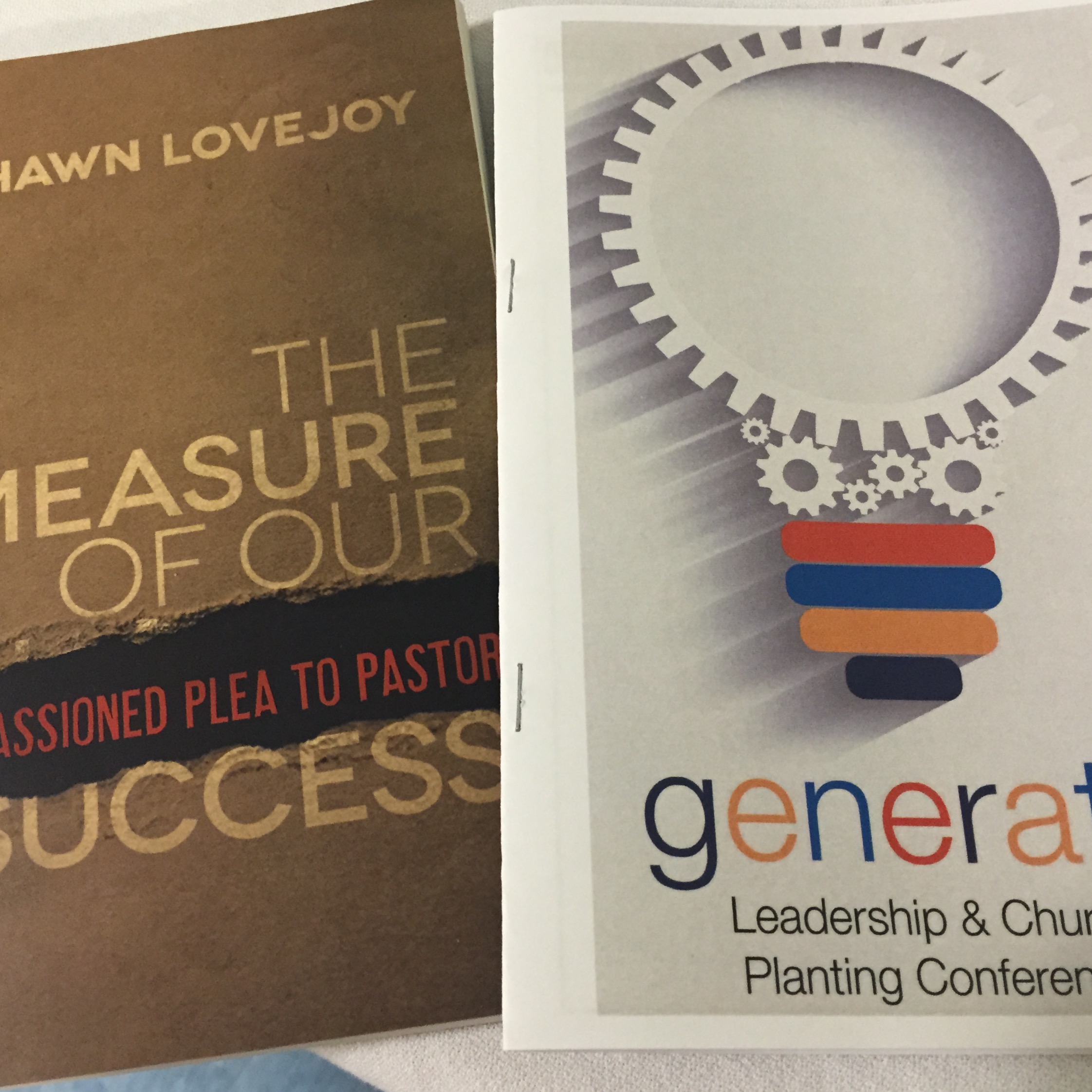 Some Big Takeaways from the Generate Conference with Shawn Lovejoy, Kirk Jones, & Bill Dye. The Conference brought together Church Planters & Leaders from around Louisiana. Great networking & the content was top shelf.
from Kirk Jones, founding pastor of Fellowship Church in Prairieville, on lessons learned while planting:
> Straight rows are efficient. Finished rows are fertile.
> Faithfulness is required, not perfection.
> Preparing the field will never lead to perfection but to fertility.
> Purpose doesn’t take the pain away or make the process easier.
> The more seeds you plant, the more you harvest.
> The more seeds you plant, the more seeds you have.
from Bill Dye, Sr. Pastor of North Monroe Baptist Church in NE Louisiana, on overcoming growth barriers:
> Overcoming barriers comes through vision.
> If you give up on church growth, you’re giving up on people.
> Church is designed for people not there.
> We don’t try to make converts. We want to make disciples.
> Build your vision around the Great Commission. Helps deal with resistance. Who can resist the Great Commission?
> Most important thing to get people to buy in to in church: “It’s not about you.”
from Shawn Lovejoy, Founder of Mountain Lake Church in Cummings, GA & ChurchPlanters.com that host the popular Velocity Conference each year:
> Too many church planters want to plant & harvest in the same week.
> Most pastors quit right before the harvest.
> Be careful what kind of church you plant, you might have to pastor it one day.
> Successful leaders lead themselves first.
> The condition of our hearts determines the outcome of our ministries.
> Be developers of people, not doers of ministry.
> What you celebrate, gets done. Celebrate the individual life, not the huge crowds.
> No discipleship plan is perfect, so work your plan.
And thanks to Fellowship Church for going above & beyond as our host for the conference! Hope it won’t be the last!
-
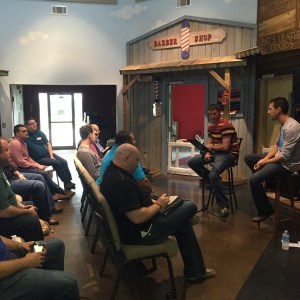
- Kirk Jones & Todd Blount
-
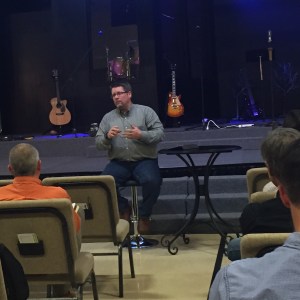
- Bill Dye
-
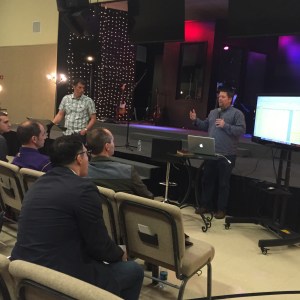
- Bill Dye & Kirk Jones
-
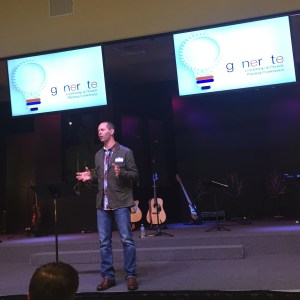
- Shawn Lovejoy

Alternative to the Big Spring #Outreach Event
 Big outreach events are fun & can be fruitful, but can also leave people & the church budget exhausted. Our church examined the fruitfulness of outreach & saw that more people had connected to Christ & our church through relationships & neighborhood events (block parties, small groups, neighborhood BBQ’s, etc.), than our big, expensive Spring Easter Egg Hunt. Doesn’t mean we should never do it again. Even if it seems unfruitful, seeds were sown & relationships cultivated. You never fail when you reach out in the name of Christ. But we wondered if we could put our money into Spring Outreach that had proven the most fruitful in our context & could give incentive for us evangelicals to actually get to know our neighbors. So our teams came up with the Neighborhood Outreach Basket. This Spring they provided two: Neighborhood Easter Egg Hunt basket & the Neighborhood BBQ basket. Basically, a starter kit for a party!
And maybe your church can do both! Whatever it is, do something to gather people & cultivate relationships toward the Gospel.
For more info on throwing a block party check out my post Why Block Parties? And check out the Bridge Church Block Party Manual. For more info on Creative Outreach Check out my post Proven Ways to Plant Seeds & Cultivate Relationships.
Update: Here’s a couple of pics from a recent Neighborhood Easter Egg Hunt in St. Tammany Parish.


#ChurchRevitalization Story: The Grove
“a lot of change… that’s all nothing compared to the fact that you’re saving lost souls”
~ from a member of a church revitalization project

Broussard Grove Baptist Church had experienced an 80% decline in attendance in less than 10 years in one of the fastest growing parishes in Louisiana. They were struggling to keep systems alive in their congregation. Interim Pastor Larry Badon reached out to a sister congregation, Istrouma Baptist Church, for help. Istrouma adopted Broussard Grove a Multi-Site Campus Development, brought in a Campus Pastor / Church Planter, changed the name to The Grove, aligned ministries with to reach the community. Now, two years later, the congregation has experienced a 60% turn around in attendance & are seeing new people follow Christ. See the story for yourself:
Interested in Church Revitalization?
Interested in Multisite?