“You dream. You plan. You reach. There will be obstacles. There will be doubters. There will be mistakes. But with hard work, with belief, with confidence and trust in yourself and those around you, there are no limits”
– Michael Phelps

Love these attitudes toward affliction for the Christ follower that Paul lays out in 2 Corinthians 4-5:
2 Corinthians 4:16. I might would give up, if this life was the end of the story. But much more awaits the faithful. This is only the first mile.
2 Corinthians 4:18. My faith in God is not determined by what I see.
2 Corinthians 5:7. Whatever happens, I know that God is not finished yet. My faith is in Him, not in comfort.
2 Corinthians 5:9. Making self happy is never the goal of the Christian life. Our purpose & pleasure is tied up in His glory & His pleasure.
So…


A great Flood Recovery Outreach idea for churches: Zoar Baptist Church pre mixing the very expensive & hard to find mold killer needed in every home & allowing the public to come by & fill their own garden sprayers. Gave away over 200 gallons just yesterday.
35 gallon tank & plumbing cost about $125 max to put together.


In the first 7-14 days, clothes may be needed in mass flooding situations, HOWEVER listen to those on the ground & double check the list before sending.
After Hurricane Katrina, so many clothes flooded into the area. The Fire Dept I was working with took them in, hoping to be helpful. They devoted one entire station to clothing & created a mountain of used clothes. The mountain never moved. We ran ads in the newspapers for weeks offering FREE clothes. We called non-profits all over the country trying to get someone to come get them. The answer was always no. Sadly, because the station was needed, the clothes had to be disposed of. Don’t assume clothing or anything else for that matter is needed. Look at the list being distributed, or call or text & ask what the top 1-3 needs are at this time & send that.
Better still, may be to send gift cards to local department stores. It allows the people to shop for their own new clothes & can help jump start the local economy.


What an incredible week in Louisiana! Flash floods, roof top rescues, shelters, gutted homes, & now months of recovery efforts ahead of us. I ended last week thinking that I was going into a couple of weeks of heavy promotion for our Multiply Louisiana Conference & I’d keep pushing toward 40 church plants for this year in Louisiana, along with helping my kids get settled into new routines in school & prepping for a big fall with my church. But with the 1,000 year flood that hit over the weekend, I’ve had the opportunity this last week to help Southern Baptist setup Incident Command Operations for one of the worst disasters in Louisiana history. It’s given me the opportunity to see a different side of SBC Disaster Relief operations. I’ve been on chainsaw crews, mud out crews, Assessment teams, & chaplain teams, & I knew about Incident Command, with little knowledge of what went on. Still don’t know much, but here’s a few observation & takeaways from shadowing Incident Command this week:
Incident commanders are trained & equipped a little differently. A communications trailer, laptops, 3-5 phone lines. All managed by volunteers. DR staff from NAMB & the state convention assist them, but they are IN COMMAND of the situation. And remember, these are men & women that are members of churches just like yours & they have given up 1-2 weeks of their time to help us recover.
 The genius of SBC Disaster response is that when a certified mud out or chainsaw team responds, they can expect a place to stay, a place to shower, a place to get laundry done, & a place to get meals. But this system has to be built through local churches & other volunteers coming in first from the local area, then from surrounding states. That’s part of the job of Incident Commanders. They can’t tell people what to do. They must ask & wait on people to respond with a yes.
Brand new phone lines are setup & made available & immediately these phones start ringing. For this disaster we have a Help Line for the public, Help Line for volunteer teams, & a Help Line for Local Churches. While those lines are constantly ringing, maps are being drawn up, collaboration is happening, scribble notes are everywhere. It’s a maddening adrenaline rush! Lol!
It’s never enough & never fast enough the first week of a disaster. And the fluidity of the situation is such that information given out on one phone call is changed by the next phone call. And “I need to call that guy back & tell him that” gets interrupted by the next phone call, that HAS to be responded too. I hardly broke a sweat, but was 10x more exhausted every night than my chainsaw crew days. Lol! The Incident Commanders are trained to expect stress. And they are trained to be the bad guy & the bozo sometimes, which I witnessed & felt this week.
After a week of frustration, I can say that our incident commanders have built a web that will support a long term volunteer response across Louisiana. We are responding to a disaster that includes at least 29 parishes, including Louisiana’s most populated (East Baton Rouge) & fastest growing (Livingston & Ascension). The Incident Commanders have a lot of support to provide. I feel very frustrated tonight, because I’ve already heard local pastors criticizing & saying things like, “the SBC Disaster Relief has been slow &….” I may have said the same thing when I was 6 days in trying to recover from Katrina, Rita, Gustav, & Isaac. But I’ll never say it again! Because I’ve seen the Incident Commanders work & I’ve seen the result. It just takes time to build the system that will support sustained response.
As of Friday, we had 14 State Conventions on the ground or en route, & others are mobilizing & recruiting. Last Spring, 30 out of 42 State Conventions responded! REMEMBER, these are volunteers, who are preparing to put their lives on hold for 1-2 weeks to come to an uncertain environment! Could you do that in 1 week?! Maybe you could, but lets not criticize them for being slow, when they’re preparing to come here on their own time & their own dime to serve! And let’s remember that we’re not the only disaster. California & Colorado Baptist are feeding thousands of people affected by forest fires in the west. West Virginia & Washington are still recovering from flooding. And there are others. When our people are back at work, these teams will still be coming in & working our fields. Let’s be grateful. This system works! These are incredible people working on our behalf! I’m looking forward to seeing the fruits of this week of planning & preparing by our Incident Commanders.
ANOTHER BIG TAKEAWAY: “Under promise, over deliver” is a great leadership axiom. In leadership, its easy to over promise. In Disaster Leadership it’s EXTREMELY easy to overpromise, because of the fluidity of information, but also, because the things that seem easy to get are now hard to get because of the disaster. I fell into that trap this week. Big lessons learned. This is one of those weeks that I’ll be looking back on for leadership lessons for a long time to come.
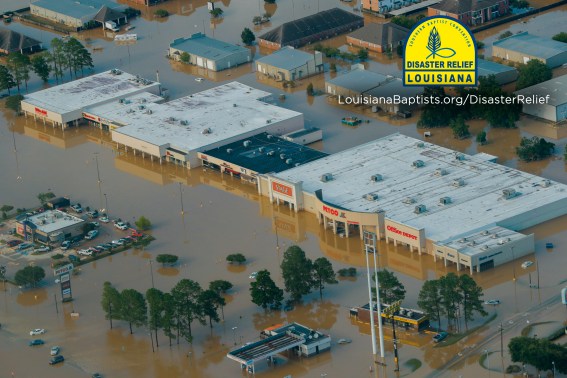

Helpful info for homeowner’s who have flooded – PDF Version – mudout guide for homeowners
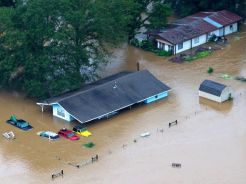 The removal of wet debris from a flooded home is called mud-out because everything flooded is saturated with muddy water. The objective is to get the house cleared of all wet debris to discourage the growth of mold and to allow the structure to dry out as quickly as possible so reconstruction can begin. The following sequence of actions is suggested for your consideration:
1. Look for hazards such as broken gas lines, structural damage and damaged electric systems. Other potential hazards may include contamination by chemical spills and overflowing of sewage systems. Watch for snakes and insects that may be found in unexpected places.
2. Be aware of personal health and physical limitations. People with respiratory or heart problems should approach mud-out work with great caution. Furthermore, flood conditions bring increased risk of tetanus and hepatitis. Wear protective clothing such as boots, coveralls, hardhat, gloves and facemask. A fiber face respirator with N-95 rating is normally adequate for dust and molds, but not for gas or chemical fumes.
3. Open all doors and windows and use fans to help circulate air through the house. Try to prevent any additional damage to the home. If the roof has suffered damage, temporary plastic roof covering may be needed. Remember, the home can normally be restored to its previous or better condition.
4. Prevent health hazards by removing perishable foods and any chemicals or medicine to safe areas where animals or children will not get to it.
5. If the flood water was high enough to get the walls and insulation wet:
a. Remove all damaged furniture and wet debris from the house. Separate it on the curb by type, as appliances, furniture, food, chemicals and dry wall (sheetrock). Put insulation and miscellaneous items in plastic bags. Please be aware that many of your things can be saved if properly cleaned and restored.
b. Remove the carpets and pads. These can be cut into manageable pieces with a box knife for safe removal. Some carpet cleaning companies can clean and restore carpets but the wet carpet pad has to be replaced.
c. Remove the baseboard, window and door trim where the dry wall and insulation is wet and must be taken out. Drill 1” holes in the bottom of the wall between each stud to get air circulation.
d. The dry wall and insulation should normally be removed about one foot above the high water level. Moisture Meters can be used to check the condition of the dry wall and insulation.
e. Remove any wet items from fixtures or cabinets. Open all doors to cabinets. If the water level was only several inches, drill a 1” hole in the bottom of each cabinet so an air flow can me maintained. Leave permanent fixtures and cabinets for repair or removal by professional craftsmen. Dry wall and insulation behind or on the opposite wall of a fixture should be removed to allow the dry wall behind the fixture to dry.
f. If the flood water only reached the floor level but did not get the dry-wall and insulation wet you may only need to roll the carpet and remove the carpet pad, as some carpet cleaners can clean and dry the carpet and replace the pad. Adequate ventilation will be needed to remove excessive moisture. See item c.
6. When an area is drying, do not rewet it with a hose or power washer. Let the area dry out and then sweep up the remaining debris. Spray with a fungicide such as Shockwave. If it is not available, a mixture of one half cup of bleach per one gallon of water may be applied where the site is still wet and mold is growing, this may not affect black mold.
7. Allow the house to dry out for several weeks before putting in new dry wall and insulation. The time required for adequate drying will depend on temperature, humidity and how well ventilated the structure is.

 A local church speaks God’s Word in the local language & to local needs in a way that impacts souls & connects real people to God & each other through Jesus Christ.

by the Apostle Paul
In 1 Corinthians 2:1-5, the Apostle Paul gives five keys to church planting filed under Church Planting 101:
Keep these five close by for greater fruitfulness & lesser frustration in church planting.

“You dream. You plan. You reach. There will be obstacles. There will be doubters. There will be mistakes. But with hard work, with belief, with confidence and trust in yourself and those around you, there are no limits”
– Michael Phelps