Before and After
 We spent a recent few weekends restoring an old dining room table and its six chairs for our new dining room. I love the experience of restoration. If you ever do it, you’ll never look at old wood furniture the same again. You can see it’s potential and envision making it come alive. I was reminded over and over again through our little revitalization process of the restoration that God has begun on my heart and life, stripping away my selfish pride one layer at a time, and adding His touch to the interior of my life making me come alive. Also, couldn’t help but think about some of the guys in our church right now who have joined me in this continual process. Guys carrying a lot of baggage, lots of scuff marks. I can see God’s work of refinishing each week.
 And we’ve got a responsibility in this process as well. Galatians 6:1 says, “if anyone is caught in any trespass, you who are spiritual, restore such a one in a spirit of gentleness.” The word restore was actually used by the Greeks to describe the refinishing of wood or the mending of nets. It could also be translated “equip” or “mend.” The sense is that the object is to be made useful and fit for service once again.
That’s what the Gospel does. Takes something old, dry, dead and restores it to beauty, usefulness, and for service. And I love seeing the before and after pictures of God’s work in the lives of people. Not always an easy process. Not always enjoyable for those walking with people in God’s restoration program. It’s much easier to just draw a crowd, stay at arms lenght, and assume everyone’s ok, than to actually develop and seek the restoration of what the world has damaged.
Good questions:
- Am I allowing God to restore my heart? We can’t do it alone (2 Corinthians 5:17; Philippians 1:6; Ephesians 2:8-10).
- Who am I restoring, equipping, encouraging?

Excited the old table is back in service. Today was our first day to utilize it. Even more excited that b/c of Christ, my lifelooksdifferent today and can be useful to Him. Glad to be one of God’s before and after stories. Looking forward to seeing and hearing about many more.
Responsiveness
Talking with a single parent with three kids who is disabled and unable to work.
Me – “Anything I can pray for you about? or help out with?”
SP – “Yea, my water heater just went out.”
Me – “Wow! I’ll pray for you. Bye.”
On my way home to relax.
God – “If a brother or sister is poorly clothed and lacking in daily food, and one of you says to them, ‘Go in peace, be warmed and well filled,’ without giving them the things needed for the body, what good is that?” James 2:15-16.
Me – Ouch!
God – “If anyone has the world’s goods and sees his brother in need, yet closes his heart against him, how does God’s love abide in him. Little children, let us not love in word or talk but in deed and in truth” 1 John 3:17-18.
Me – Wait a minute!
God – “Whoever closes his ear to the cry of the poor will himself call out and not be answered” Proverbs 21:13.
Now there’s a Water Heater in the back of my truck!
Living life on mission is about PROXIMITY, RESPONSIVENESS, AND GENEROSITY. Responding to needs sometimes means putting feet and funds to our prayers. Responding to the needs of others often means responding to God’s word. He blesses us to be a blessing to others.
New Small Group Resources
New Small Group Bible Study Resources available to churches at the Northshore Baptist Associations office: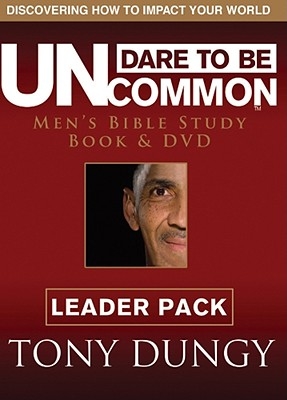
- Dare to Be Uncommon (7-week Men’s Bible Study) by Tony Dungy
- Compelled by Love (7-week Bible Study) by Ed Stetzer and Philip Nation
- Breaking Free: The Journey, The Stories (11-week Bible Study, Updated Edition) by Beth Moore
- Esther: It’s Tough Being a Woman (10-week Bible Study) by Beth Moore
- The Incredible Power of Kingdom Authority: Achieving Victory through Surrender (7-week Bible Study) by Dr. Adrian Rogers
- What Every Pastor Ought to Know (21 session study for Pastors, DVD) by Dr. Adrian Rogers
Contact Kathy @ 225.567.5086 to reserve one of these group studies or check on the availability of other studies before you buy. And let us know if your church has group studies that you’d be willing to make available to other churches.
Distorted and Different
 Last Sunday, Bridge Church began a series of messages on the book of Galatians called Set Free. Follow the series at bridgenorthshore.com. The intent of the letter written by Paul the Apostle, to churches that he had been a part of planting in modern day Turkey, was to confront the false teaching that Jesus wasn’t enough. Along with Jesus, God expected a person to keep the law. Paul accused the Galatian Christians of deserting God by receiving this false gospel.
One reason I trust the Bible as authoritative is because of its timelessness. The theme of this letter is as relevant today as this hours news headlines (with technology, the morning newspaper is already outdated). So many today have a distorted and different view of the Gospel.
What is the Gospel? Paul defines it well in Galatians 1:3-4 – “the Lord Jesus Christ, who gave Himself for our sins to deliver us from the present evil age, according to the will of our God and Father.” The Gospel is the truth that Jesus lived, loved, died, to deliver/rescue/save people from the penalty, power, and presence of sin. And this deliverance/rescue/salvation has nothing to do with our works or effort, but God’s work and will (John 1:12-13, John 6:44).
Here are some common ways we distort the Gospel today:
1. Become a _____________. The false teachers in Galatia were basically saying that to be a true follower of Christ you had to become a Jew. You had to believe the Gospel and be circumcised and keep elements of the Old Testament law. Today we fill in that blank with other things. “I’m going to become a BETTER PERSON” is the most common. “I’m going to become a CHURCH MEMBER.” “I’m going to become a CATHOLIC/BAPTIST/METHODIST.” Not that these are bad things, but if they become something that we trust for our deliverance/rescue/salvation, what we’re saying is Jesus is not enough. I can do this by becoming ____________.
2. Jesus + ______________. Another way we do this is seeking to add to what Jesus has done with our activity and effort. Cults do this. Churches sometimes communicate this when talking about membership. In our desire to assimilate people into our churches we must be careful that we don’t communicate Jesus +. When you add to the work of Christ what you’re really doing is taking away from the work of Christ. What you’re saying is Jesus is not enough.
3. Reversing Roles with God. Here’s the Gospel: “I’m accepted, forgiven, set free by God, so I’m transformed by God, so I obey God.” Here’s a distorted gospel: “I obey and I’m made changes to my life, so now I’m accepted by God.” The question is, whose work is it? A distortion of the gospel takes the work of salvation out of God’s hands and places it somewhere else – self, a church, a path of enlightenment, etc. Self-salvation is no salvation at all or as Paul says, “You are following a different way that pretends to be the Good News but is not the Good News at all” (Galatians 1:6-7 NLT).
Looking forward to Part two of our series this Sunday at Bridge Church, 10:30am, at the West St. Tammany YMCA.
Worth Reading: A Few Links
A few posts that caught my attention this week related to church planters:
- David Putman On Budgeting / Financing the Mission / Raising Money
- “Are you a Leader or just a Boss?” – On Leadership
- Critical Issues related to Church Planting in North America by JD Payne. Enjoying these series of post on critical issues.
Life Is A Mission Trip
Would you go on a mission trip if it were free and you could sleep in your own bed at night and not miss a day of work? Most people would say yes, and these opportunities are all around us. Though I wish everyone could go with us to Zimbabwe, or Chiapas, or New York City, and I hope you will get uncomfortable and sacrificial in your going at some point in your Christian life, a mission trip doesn’t have to be hours away. The Great Commission command to “GO” is not cushioned with any specifications as to what Great Commission living looks like. Find a need, make a friend, and GO meet that need, invest in that person and you are on mission.
This weekend, our church will be taking a Local Mission Trip. We’ll be GOING into New Orleans and serving the hundreds of homeless men and women that live around New Orleans Mission. Working with Brown Bags and Jesus, we’ll serve a hot meal, seek to build relationships and pray with some of the neediest in our region.
Last week, myself and a group of church leaders met with Volunteers of America in our area and learned of hundreds of needs from wheelchair ramp building to cleaning house for someone who is elderly and alone. There are lots of opportunities to GO, through building partnership with local agencies.
I’m proud of those in my church who are ON MISSION through serving at our local Crisis Pregnancy Centers, leading Boy Scout packs, visiting at area nursing homes, teaching at our local jail, and being available for needs in their neighborhoods and spheres of influence.
A mission trip should not be a once a year experience. For the disciple of Christ, life is a mission trip.
What is Lent Anyway?
This week marks the beginning of a major religious celebration around the world called Lent. In our area it means FRIDAY’S ARE FOR SEAFOOD! What is Lent exactly? In Brief:
For Roman Catholics, the Eastern Orthodox Church, and other liturgical protestant denominations (those with a continuous history before AD 1500) Lent is the forty day period from Ash Wednesday to Holy Saturday. It is to be a season of soul-searching and repentance. It can be loosely traced to the early days of the church, but was certainly less formal (most scholars believe the time of fasting was two to three days and not forty) and of course much more spiritual. Lent, as we know it today, originated in the fourth century and has changed in practice throughout the years. In AD 325, the Council of Nicea discussed a forty day season of fasting and preparation for new converts to be baptized. In the seventh century, Gregory the Great moved the beginning of Lent from Sunday to Wednesday, now called Ash Wednesday. He is also credited with beginning the ceremony of marking foreheads with ashes, as a symbol of repentance taken from the Old Testament. The practice of fasting during Lent has become more relaxed over the centuries and in 1966, the Roman Catholic Church restricted fast days to Ash Wednesday and Good Friday.
Having moved to South Louisiana just 10 years ago, I have observed that Lent is practiced but not understood by many. Even many irreligious people will give up something of value (if you count chocolate, certain adult drinks, coffee, or some other modern convenience that doesn’t really affect a person’s way of life as valuable) and will abstain from meat on Friday. When asked the purpose behind this, the person will say, “I’m not sure,” or take a great guess that would fool everyone if they were playing the board game Balderdash. Herein lies the problem with modern spirituality – it’s long on activity and short on meaning and understanding.
Too often we use religious expression, such as Lent, as a means to fit in, to feel better about ourselves, but not to understand and conform to God’s desire for our lives. In many ways Lent illustrates our lack of understanding about God and His will for humanity. Many people give up for forty days what they know they shouldn’t be doing anyway. In the 2002, movie 40 Days and 40 Nights, a single man vows to stay celibate during Lent, but meets the girl of his dreams and regrets being unable to rebel against God’s commands concerning sexual purity (1 Thessalonians 4:3-8) and to “let the marriage bed be undefiled” (Hebrews 13:4) until Lent is over. As this movie illustrates, some people may see Lent as a window of time to be serious about their faith. I tend to believe God deserves and expects 365 days of devotion and obedience, not just forty.
A somber season of soul-searching and repentance, which includes fasting, is necessary for our generation. I don’t search my soul when I give up my favorite commodity but when I understand and get a glimpse of what God has done for me through Jesus Christ. His suffering, His sacrifice, and His love should make us forget modernity for awhile and focus ourselves on repentance and new life that Christ’s death and resurrection make possible.
So how should we view Lent? One 19th Century preacher called it “The Season of the Cross.” I like that. It’s the cross that is the centerpiece of our faith (1 Corinthians 15:3) and it’s the cross that we are called to carry (Luke 9:23). So, join me during the season of the cross and do more than just mark your calendar and do without some material luxury. Let’s increase our awareness of Christ’s love and His desire for our lives. We may find ourselves gaining more, spiritually, than we could ever give up in 40 days.
Worth Reading: The Hole in Our Gospel by Richard Stearns
 Very challenging book that I will revisit often. Richard Stearns, President of World Vision, USA, paints a vivid picture of the major needs of the world and how making a difference is possible for every one of us. Today’s church needs to be reminded that we are saved for a mission and invited to join God on His mission in the world. The things I see God doing in scripture are giving radically (John 3:16), transforming people (2 Cor 5:17), AND caring for the needs of the poor and destitute (James 1:26-27). This book calls us back to that way of life. Stearns gives details of his very personal struggle with the Gospel, with having compassion for the least, with obeying God when that means inconvenience, pay cuts, and career changes. The Hole in Our Gospel will be helpful on the shelves of communicators, with many stories from the World Vision fields, statistics on the needs of the world, and quotes on the Christian life. Great book. Well worth reading. Here are a few of my favorite quotes and meaningful stats:
Northshore Seminary Extension starting Feb 23rd
Excited to announce that we will have an Extension of New Orleans Baptist Theological Seminary on the Northshore beginning this month. The classes will meet for now at the offices of the Northshore Baptist Associations at 11411 McLaughlin Lane in Hammond. On February 23rd there will be an orientation meeting. Below is a memo from our local “Dean” (my title for him), Randy Davis. He will teach the first class.
Dear Co-Laborer,
The Plans for our North Shore Seminary Extension Center are finalized. We have been approved by New Orleans Baptist Theological Seminary, so we are ready to get started.
We will have an orientation meeting on Tuesday, February 23, at 7:00 p.m. at the Clegg Missions and Ministry Center (11411 McLaughlin Lane, Hammond LA 70403). I will tell you about the costs, the textbook and where you can find it. We will discuss the class schedule. If you are interested in taking the class you need to be there for the meeting or get in touch with me and let me know. Once the class starts it will be very important that you not miss a class. We will meet once a week for two hours. This will last for 8 weeks.
One final bit of information you need. Each class is a one-hour class. The survey of the New Testament will be covered in three separate classes and each class will be for one hour of college credit. There is a one-time registration fee of $25.00 and each course will cost $100.00.
The best way to contact me is by email, randy@kudzuvine.org. I hope to see you at the orientation meeting.
Randy Davis
Let me or Dr. Davis know if you have any questions. The course work is part of the Certificate Program at New Orleans Seminary. One hour of college credit is earned with each course. This will be a great opportunity for those who have always wanted, but never had the opportunity for theological education, those who just want to stay sharp in a continuing Education kind of way, or for those who are mulling around with starting their theological training formerly. Hopefully, the program will grow and more courses can be offered in the future. Thanks to Randy and Dr. David Cranford for their work to get this program kicked off on the Northshore.
Small Things, Big Breakthroughs
 Planting a church I’ve learned to celebrate the small things. A big pile of them will often produce big breakthroughs. Last year we identified the needs of a large local trailer park and began doing whatever we could to serve the residents. That’s included delivering food to needy residents, cutting trees, pressure washing trailers, building handicap ramps, picking up trash, throwing block parties for kids, assisting park management with domestic issues, and a Christmas toy drive for kids in the park. We’ve built significant relationships, several residents have began a relationship with Christ, and tomorrow night we are launching a small group Bible Study in the park. Thanks God for opportunities and breakthroughs. Looking forward to more big breakthroughs in the lives of people.


 Lane Corley