Category Archives: Devotional
But there is forgiveness…
“Lord, if you kept an account of iniquities, Lord, who could stand? But with you there is forgiveness, so that you may be revered.”
Psalms 130:3-4 CSB
https://bible.com/bible/1713/psa.130.3-4.CSB
Spurgeon’s Commentary – “It may be that you have sinned many times and grievously; but ‘there is forgiveness.’ Though a child of God, you have gone far astray from him; but ‘there is forgiveness.’ You have backslidden sadly and horribly; but ‘there is forgiveness.’ The devil comes and howls at you, and tells you that your doom is sealed, and your damnation is sure; but ‘there is forgiveness.’ Oh, blessed sentence!”
Power in the Name
Commentary on Acts 3:6
But Peter said, “I don’t have silver or gold, but what I do have, I give you: In the name of Jesus Christ of Nazareth, get up and walk!” Acts 3:6 CSB
https://bible.com/bible/1713/act.3.6.CSB
There is a story – perhaps true – about a humble monk walking with a Roman Catholic cardinal at a time in the Middle Ages when the Roman Catholic church was at its zenith of power, prestige and wealth. The cardinal pointed to the opulent surroundings and said to the monk, “We no longer have to say, silver and gold I do not have.” The monk replied, “But neither can you say, In the name of Jesus Christ of Nazareth, rise up and walk.”
Reminder: Our power is not in our tools and our treasure, but in the person and work of Jesus.

Bible Reading Plans for the New Year
Time to plan for Devotional greatness in the New Year! Following a Bible Reading plan is a challenge for many people. Like many other areas of life, we are good at starting but struggle to finish our best-made devotional plans. It’s worth the struggle! God’s Word breathes life into my weary soul; it provides wisdom and direction, answers life’s deepest questions, and pierces the hearts of those I’m hoping to influence in a new direction. So, I hope you think about a Bible Reading goal for the New Year. Here are a few that I’ve greatly benefited from that might be a fit for you:
- The One Year Bible Reading Plan is a Whole Bible in 365 Days Plan. It is a great challenge to read the Bible all the way through in a year. It can be done in about 15 minutes per day. I’ve utilized the One Year Bible Reading Plan for years. Daily readings from the Old Testament, New Testament, Psalms, and Proverbs. And you actually go through Psalms twice. Breaking up the reading like this assures there’s always some meat and milk, even when reading through difficult books in the Old Testament. I’ll be following this plan again next year. Friend me on the Bible App, and let’s do it together. PDF Version Here.
- The Disciple Journal Bible Reading Plan from NAV Press – If you’d like to tackle the whole Bible but are unsure if you can do it daily. I understand. No commandment says, “Read the Bible every day or else.” This is a get-to, not a have-to kind of thing, with more benefits the more you read. But anyway, the DJ Bible Reading Plan is a 25-Day per month Plan. So you have 5 catch-up days every month, 60 for the year. I’ve followed this plan several times. If you can stick with daily or almost daily, you’ll finish before the end of the year and can do something different during the holidays. Get a PDF Version Here.
- The F260 Plan – Replicate Ministries has a great plan that covers its picks for the most important major themes in the Bible. It’s a 260-day plan, so 105 days to catch up. There’s also a suggested Scripture Memory Plan provided by Replicate. I’ve put them in the Bible Memory App HERE. Solid plan. I followed it a few years ago and greatly enjoyed it.
There are three of my favorite plans. What’s your plan for the New Year? What plans would you recommend to others?
On Mission Living Produces Thanksgiving
Generosity and on mission living comes with a promise: It will “produce thanksgiving to God” (2 Corinthians 9:11 ESV). Or as another translation says, “Then many people will thank God…” (2 Corinthians 9:11 CEV), as a response to the generous, on mission Christian.
- Who is giving thanks today, because of you and your investment in God’s kingdom?
- Has your life on mission & in obedience to God produced thanksgiving in others?
- Is the community giving thanks for your church because of the on mission members scattering for their good?
A goal for next year: Produce Thanksgiving to God in others by following Jesus into life ON MISSION.

Thanksgiving Journaling or Around-the-Table Exercise
Three ways to reflect on life at Thanksgiving:
- Responsive Thanksgiving – responding to who God is and what he has done for us. If God never gave us another thing, we still have much to be thankful for. Because he is good, faithful, righteous, and he provides, he saves, he’s powerful, etc., etc., etc.
- Aspirational Thanksgiving- responding to what we expect from God in the future or what we’re excited about. example: respond to God’s promise like Philippians 1:6 – “he who began a good work in me will be faithful to complete it.” Father, I can expect to grow this year. Teach me and guide me to maturity.
- Sacrificial Thanksgiving – thanking God for the hard things we’ve been through. “Offer God a sacrifice of thanksgiving” Psalm 50:14. This takes a lot of maturity, to reflect on the sacrificial/difficult/costly parts of life and thanking God anyway or mining the lessons learned and thanking God for them. It also could be a difficult investment you’ve made in a mission or person that has or has not born fruit yet.
So,
- How has the Lord been good to you this year? What attribute of his are you most thankful for?
- What are you most looking forward to in your relationships with God and his mission in the future?
- What has been costly experiences and lessons and relationships that you’ve taken this year that are hard to say thank you for?

The Resurrection was Just the Beginning!
A neat, often untold part of Jesus’ resurrection story is its festival. We know about the Passover festival’s relation to the crucifixion of Christ, but there was also a festival on the day of the resurrection. It was called the Festival of First Fruits. On the first day after the Passover Sabbath, which would have been Sunday, every Jewish male would be bringing a sheaf of barley to the temple. That barley would be offered to God, whose acceptance of the offering was a pledge for a greater harvest to come. Fifty days later, the Jewish people would celebrate the Festival of Weeks or Pentecost to celebrate that greater harvest of wheat that God provided.
Seeing any parallels?
Paul helps us out in 1 Corinthians 15:20-23:
“Christ has been raised from the dead, the firstfruits of those who have fallen asleep. For since death came through a man, the resurrection of the dead also comes through a man. For just as in Adam all die, so also in Christ all will be made alive.”
Christ’s resurrection, among many other provisions, is a pledge of a greater harvest to come. A harvest of people who are dead in sin will be made alive in Christ (Ephesians 2:4-5).
Fifty days after the resurrection, during the Festival of Pentecost, Jesus had ascended, the Holy Spirit was poured out on the church, and 3,000 were added to the kingdom (see Acts 2). A truly greater harvest.
So What? A few takeaways:
- The resurrection was just the beginning! The resurrection of Christ is God’s pledge to bring a harvest from our lives as believers. The life of Christ within us is the power to produce fruit for God. The fruit of godly character and a harvest of disciples made. What is my life producing?
- The harvest doesn’t come without laborers and labor. Fields still have to be cultivated, seeds still have to be planted, and weeds must be dealt with. We should commit to working the fields and do our part to ensure a harvest of disciples made him. He pledges resurrection power to us. What am I doing to prepare for a harvest?
Fifty Days Until Harvest
What will you have to offer God? How many could God add to your church if you, dependent on Christ, allowed him to use you for a harvest? Get started:
- Ask God every day to make you fruitful.
- Prepare the fields by identifying who you can reach.
- Plant seeds by sharing the gospel in every way you can.
- Get equipped HERE.


Epaphras: Faithful Friend + Disciple Maker + Prayer Warrior
Epaphras is an unsung hero in the New Testament. He’s mentioned only a few times. He started and led churches in three significant cities. He made Paul’s list of faithful companions in Colossians 4. That’s where we learn the most about him. His character has stuck out to me this past year as a model for life and leadership. Who was Epaphras?
A Faithful Friend
As Paul wrote to the Colossians, he called Epaphras “one of you.” Making him a hometown hero of sorts. Paul also calls him “dearly loved” signaling that his reputation was thorough as a friend to all.
How faithful was Epaphras? Well, Paul calls him a “fellow prisoner.” So he was faithful even to the point of voluntarily going to jail with Paul. Tracing his story, we see that Epaphras was one of several companions who traveled to Rome to be with Paul during his imprisonment. This speaks of his love for Paul and his willingness to sacrifice his own life for his friend and the gospel, as his alliance with Paul would have made him a conspirator in Paul’s supposed crimes. So he was a Faithful Friend through thick and thin.
Faithful friendship modeled by Epaphras can be as simple as following the One Another’s in the New Testament. And Epaphras’ friendship included the hard ones: Carry One Another’s Burdens, Suffering with One Another, etc.
Who has known my faithful friendship through thick and thin?
Disciple Maker
Paul calls Epaphras a “faithful minister” and a “faithful servant.” And he reminds the Colossian believers that they “learned it (the gospel) from Epaphras” Col 1:7. This tells us that Epaphras likely started the church in Colossae. Later in chapter 4, Paul says that Epaphras also “works hard” for churches in Laodicea and Hierapolis, two neighboring cities to Colossae.
So, Epaphras was faithful to Jesus’ Great Commission. He made disciples as he went and where he lived. People heard the gospel first from him. As a Disciple of Christ, He leveraged his relational network along with the word of God and the Spirit’s work in the world, and people were saved, groups and churches were started, and eternal destinies were changed. That’s what disciple-makers do.
If you are a Christian, Jesus wants you to be a Disciple Maker. Who has learned the gospel from me? is a question we should ask as we think about Epaphras. It should be a personal ministry. And not just for the super spiritual or classically trained. Beginning a disciple-making ministry can be as simple as this:
- Make a list of friends who are far from God.
- Pray for them every day.
- Initiate Gospel conversations with those who express spiritual interest.
- Gather them around God’s word to learn the Gospel.
- Teach them to reach their friends too.
- Simple churches may be formed as obedience to the Great Commission happens.
Epaphras did this in Colossae, then possibly in Laodicea – about 9 miles away, and Hierapolis – about 25 miles away. Imagine the three cities closest to yours having a new witness to the gospel, born out of your disciple-making efforts.
Prayer Warrior
Probably what Epaphras, if known, is most known for, is his life of prayer. His life could be the subject of a book called How to Be a Prayer Warrior. That’s really what the verses in Colossians 4 emphasize for us about his life.
Four words in Colossians 4:12 summarize for us the Epaphras model for prayer that we should all seek to emulate – He was “always wrestling for you.” And Paul tells us what he prayed for: 1) so they will stand, 2) so they will grow, 3) so they will know God’s will. Epaphras prayed for strong, mature, knowledgeable disciples.
In verse 13, Paul continues to describe Epaphras’ life and prayer acknowledging that he “works hard” for the believers and has “deep concern” for their well-being.
Could these descriptions be used to label my life as a prayer partner? Always, Wrestles, For You, Works Hard, Deep Concern. Who have I wrestled/struggled for in prayer? Honestly, compared to Epaphras, my prayer life has been inconsistent, weak, selfish, and apathetic.
How to Be A Prayer Warrior:
Looking at Epaphras as a model for prayer, how can we become prayer warriors?
1. Commit to Pray Everyday, All Day – “ALWAYS”
Research has shown that only 15% of Christians pray every day. Maturing Christians have a daily time to meet with God. Do you have time set aside to meet with God, to pray, to listen? If not, make that time today.
2. Devote Energy and Attention to Prayer – “WRESTLING”
To describe prayer as wrestling is to say that this is the kind of prayer that is focused and attentive. This is not praying on the way to work in the car. Or just a rote prayer before meals. Or a quick prayer before an important meeting.
Wrestling, struggling, and fighting in prayer is to set aside everything else and focus the energy of your heart and mind on a need and beg God for a solution, an answer, a breakthrough.
Jesus said to go into your private room and shut the door. Jesus went up on a mountain to pray. He was talking about wrestling and struggling in prayer.
Prayer warriors don’t do drive-by praying. They devote time, energy, and attention to prayer.
3. Take Prayer and the Needs of Others Personally – “DEEP CONCERN” – “WORKS HARD”
To be a prayer warrior, you need to prioritize your deep concerns. There are so many things lobbying for our deep concern. Politics, Pleasure, People. The disciple-making, prayer warrior is deeply concerned about the souls of people around them, about the glory of God, about obedience to the Great Commission. Deep concern is where your prayer life is defined. If we’re not prioritizing our deep concerns around the deep concerns of God then we’ll never become prayer warriors. Epaphras was deeply concerned for the needs of his fellow believers and it drove him to pray.
I long to be the kind of friend and disciple-maker that prays like Epaphras. Don’t you?
Reflection:
- Faithful Friendship – Who has known my faithful friendship through thick and thin?
- Disciple Maker – Who has learned the Gospel from me?
- Prayer Warrior – Who have I wrestled/struggled for in prayer?

You Can Hope Again: Zechariah and Elizabeth
One of the most significant and unsung verses in the Christmas Story and maybe in the New Testament is Luke 1:11.
An angel of the Lord appeared to him, standing to the right of the altar of incense.
Luke 1:11 CSB
This is the moment that God broke through after 400 years of silence, after allowing the rampaging and devastation and defeat of His chosen people, and after allowing Judaism to become a ritualistic shell of itself. God broke through. God spoke. God set in course the events that would bring salvation to all the world in the person and work of Jesus Christ.
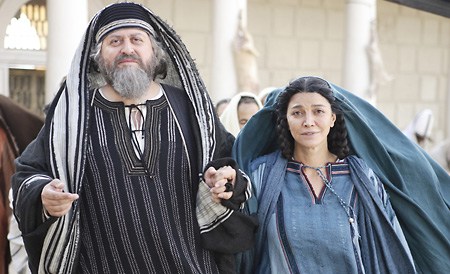
Zechariah and Elizabeth’s characters depicted in the movie The Nativity Story
The before and after of this verse goes like this: An aging Priest named Zechariah got the opportunity of a lifetime to offer incense in the Temple’s sanctuary. He and his wife Elizabeth, who was never able to have children, and now was well along in years, made arrangements to fulfill this obligation. As he offered incense, God reached down and spoke. Unexpected events, unexpected people involved, unexpected announcement that Elizabeth would have a baby. That baby would become the way-preparer for the Messiah, John the Baptist.
This is the moment where God initiated the keeping of His Promises and Securing the Hope of all who believe. This is the moment that those caught up in this story saw their Hope Restored. What does Restored Hope look like? For Zechariah and Elizabeth and that group of ordinaries that surrounded them on this day, it looked like this:
The Pathway to Hope Again:
1. Recognition that God’s Word is still true. The prophecy of the coming Messiah and the Way-Preparer IS TRUE! And in the coming days, 100’s of other prophecies would be fulfilled in the coming of Christ. For Zechariah, this was no longer just stale religious ritual, but a dynamic voice, capable of restoring hope and bringing change.
2. Recognition that God can still use even me. The sun was seemingly setting on Zechariah’s life and ministry, but God broke through and gave he and Elizabeth a place of prominence in the Gospel story. God is never finished. He gets the last word on our significance.
3. Recognition that God can still accomplish the impossible. Elizabeth’s barren womb and old age would be no obstacle to God’s will and God’s promise being kept. Neither will any obstacle that we face in life and leadership. Nothing will be impossible with God (Luke 1:37) will be a core belief of the hope-filled believers.
Maybe this Christmas, you find yourself with lost hope or deferred hope (Proverbs 29:13). Ask God to break through again with these three truths. You can Hope Again. His Word is True. He’s not finished with you. He’s still doing the impossible. Hope Again. Believe Again.
Father, restore our hope through demonstrating the truth of Your Word. Show us that we are your instruments until the day we die. Open our eyes to see the possibilities of your power and your promise.
Shout Outs: John Mark
In Colossians 4:7-18, the Apostle Paul closes his letter to the church at Colossae, with ten “Shout Outs” to friends who were with him on a mission across Asia Minor. A Shout Out is simply a public acknowledgment of good. Paul closed most of his letters with a list of shoutouts. These were one or two-sentence acknowledgments of their contribution to his ministry and life.
These shout-outs from Paul remind us that he was not alone. And neither should we try to be as we live life and participate in God’s mission. Christianity is about relationships. The church is simply a group of friends that are pursuing God’s mission together. Jesus had the twelve. Paul had around 35 that he mentions across all of his letters. The model is Friendship + Mission. There is no such thing as solo Christianity.
Paul’s fourth Shout-Out goes to Mark. Evan McGinty gave a great message on John Mark’s life at my church recently. Here’s what we know about Mark:
- Mark is on the 1st missionary journey with Paul, but for some reason, he abandons the team.
- On the second missionary journey, Barnabas and Paul disagree about Mark’s usefulness. Paul did not want him to go. Barnabas (possibly his cousin, and the encourager in chief) did. Their disagreement leads to a split. Two teams form. One with Mark and one without Mark.
- Years later, Paul, who we last see rejecting Mark, is writing his epistles and he shares some words of redemption. He calls Mark a “fellow worker” in Philemon. And he comes right out and says that he is “useful” in 2 Timothy.
So what can we say about Mark? He got back up. Though he abandoned the team once, he proved his usefulness once again. He didn’t let the regret, the awkwardness, or the fear of others’ opinions keep him from getting back on track with God and the mission. He grew through his own failure and regained the trust of his companions. He didn’t stay down.
Also, Paul didn’t keep him down unnecessarily. Though Paul expressed doubt about his character. His doubts weren’t permanent. He allowed Mark to return to the team.
You may have experienced both sides of this story.
- We’ve let our church or group of friends down and worried about what might happen if we try to go back.
- Or, we’ve had a friend or partner let us down and wanted to banish them from our circle of trust forever.
Neither is the wise path. Redemption is at the heart of the gospel and believing in redemption means we can get back up when we fall and we can trust and partner again with someone who has fallen.
God has a long history of using people who fell down. If we actually believe in the gospel and in the power of God to restore, we must be committed to helping others get back up and allowing others to get back up and be used in ministry again.
No one can say – I’ve never fallen down. No one can say – I can never get up. We will all need grace and mercy and redemption at some point in the journey. Let’s be grateful to God for its abundance. And let’s abundantly share it with others as needed.
7 Types of Christian Suffering
Throughout the New Testament, persecution and suffering are presented as foundational elements of the Christian faith. Jesus said in Matthew 5:11 – You are Blessed when you are insulted, persecuted, falsely accused. He says that we should, “Be glad and rejoice” Matthew 5:12, and “leap for joy” (Luke 6:23) when this happens. Really? A few other verses:
- 2 Timothy 3:12 – “all who want to live a godly life in Christ Jesus will be persecuted”
- Acts 14:22 – “It is necessary to go through many hardships to enter the kingdom of God”
- Philippians 1:29 – “it has been granted to you on Christ’s behalf not only to believe in him but also to suffer for him”
What are we to make of these and other words of Jesus and the Apostles on the issue of suffering?
Defining Christian Suffering
First of all, it’s worth noting that we’re talking about suffering and being persecuted because of your relationship with Christ and his work in and through your life. We can make ourselves martyrs in a prideful way, pointing out how hard we work compared to others and in attempts to get the recognition of others. This usually is not about the righteousness of God but the self-righteousness of man. Jesus gets little glory from prideful martyrdom.
Also, some are persecuted because of rudeness, annoying behavior, or for being jerks, not necessarily for representing Christ. When we set out to offend for the sake of offense, we are not following the way of Christ.
Jesus warns us over and over about the reality of suffering for his followers. He is preparing us for the collisions that are inevitable for those living out his values in a hostile, foreign land.
Christian Suffering Around the World
Did you know? In just the last year, there have been…
- Over 260 million Christians live in places where they experience high levels of persecution
- 4,305 Christians were killed for their faith
- 1,847 churches and other Christian buildings were attacked.
- 3,150 believers detained without trial, arrested, sentenced, or imprisoned
There are many Christians that are suffering persecution around the world. They lead the way for us in standing up for Christ and representing Christ, even in the face of threats. Find out more about modern-day persecution and ways to help at OpenDoorsUSA.org and Persecution.com.
7 Types of Christian Suffering
Life in Christ may bring you face to face with at least 7 types of suffering and persecution. You can also see levels of maturity in these 7 types as well. Or degrees to which you are willing to say “Yes” to following Jesus, and no to self and the world.
1. Discipline and the Natural Consequences of Sin – Revelations 3:19; Romans 6:23; Proverbs 12:21; Isaiah 57:21;
There is a fair amount of suffering in the world, just because of sin and the reality of life in a fallen world. We suffer oftentimes because of our sinful and foolish choices and/or the sinful and foolish choices of others. God also promises discipline for followers that step out of his will. This may mean he allows consequences in our lives that lead to suffering and pain so that we may learn a lesson. There are costs, painful costs to disobedience and choosing the way of the flesh and the world. Many people are stuck in the painful cycle of sin – consequence – start over —- sin – consequence – start over. The suffering we feel at this level is meant to help us want to break out by God’s power.
2. Self-Denial and Humility – Mark 8:34; Philippians 2:3-4
One of the first level, basic calls of life in Christ is to deny self. This includes saying no to entitled living and making life about God’s glory and the needs of others. When we’re immature in the faith, this can be painful and a type of suffering. We must say no to our fleshly nature, to the ways of the world, to relationships that may lead us astray. Denying self leads us to spiritual maturity and life on mission. We discover that joy is found in life that is about God and others. But there may be painful breaks with the sin nature and its ties before this discovery. Necessary pain for those who desire to grow in Christ.
3. Risk-taking and Stepping Out of the Comfort Zone – 1 John 3:16-18; 2 Corinthians 1:5-7
Beyond self-denial, the Christian begins to take opportunities to live unselfishly with intentional choices that make life easy for others but harder for ourselves. As it says of Jesus in Philippians 2:5-8, he chose the good of others every chance he had, even to the point of death. This may include simple things like hospitality and opening your home for others, taking a mission trip to a third world country, living with radical generosity in financial decisions, mentoring or taking in a child that is without a family, teaching a small at church, sharing the Gospel with a friend or neighbor. These things are sometimes risky, intentional steps of generosity and servanthood that are inconvenient and uncomfortable. For the growing Christian, serving God and meeting the needs of others is becoming more important than his/her own discomfort. So it may only seem like suffering in the eyes of others.
4. Being Misunderstood and Misrepresented.
The relational aspect of following Christ can be hard. All relationships are hard. But when you put yourself out there in love with others, you will likely get hurt. Jesus’ closest disciples caused him some of his greatest grief through their betrayal and abandonment in time of need. Sheep bite. Hurting people, hurt people. Leaders and people that are serving have a target on their backs. In stepping out to shepherd and serve others, you can expect to be misunderstood, misrepresented, gossiped about, betrayed, and treated unfairly. It is painful every time, no matter how well prepared you believe you are for it.
5. Experiencing Spiritual Warfare – Ephesians 6:11-12; Revelation 2:10
Spiritual Warfare could be related to each of these seven types in some way. When you get out of the sin – consequence – start over the cycle, and began denying yourself, taking a risk for the sake of the gospel, you will get the attention of the spiritual forces arrayed against God and his glory. They can’t touch Him, but they can influence you. We must be aware that spiritual warfare is a reality, but it’s one that we can overcome in the power of Christ and his work in our lives (see Revelation 12:11).
6. Being targeted for What You Say and Who You Are – 2 Peter 2:2-3; John 3:13
Around the world, believers experience social persecution and isolation. Imagine if just because you’re a Christian, you can’t get a job, go into a store, or access certain services. We may experience some of this in our country or in isolated places, like being targeted for gossip or not included because of our faith. And some may lose social standing for choosing to follow Christ. Are you ready to follow Jesus, even if you lose social standing?
7. Being Tortured or Killed for What You Say or Who You Are – Acts 5:40; Revelation 12:11
Many believers throughout history and still today experience the threat of physical pressure and persecution because of Christ. Many have been arrested, punished, or killed for being Christian. Are you ready to follow Jesus, even if you lose your life?
Responding to Suffering and Persecution:
- Embrace it as a lifestyle. 1 Peter 4:1. From breaking out of the clutches of sin, saying no to self, taking a risk for the good of others, and the growth of the gospel, suffering is a way of life for those who follow Christ.
- Recognize its benefits. Romans 5:3; 2 Corinthians 4:17. Suffering produces! It produces endurance, character, hope, and longing to see and experience more of Jesus’ power. When you’re suffering, you’re in good company as well. Spiritual giants through the ages have faced suffering with great faith and are promised a reward in eternity.
- Trust God to bring justice. 1 Peter 2:23; Romans 8:18. When we suffer, our natural tendency is to consider the unfairness or maybe respond in revenge. The example of Jesus reminds us that it’s not our place. God will bring justice and a reward awaits those who suffer for righteousness and because of Christ.
Next Steps:
- Is your Christian life all about avoiding suffering instead of embracing it?
- Is the fear of losing worldly pleasure or relationships keeping you from fully following Jesus?
- What entitlement do you need to deny or what risk do you need to take to grow in your Christian life this year?


 Lane Corley