Reproduction necessitates reproduce-ability, and reproducibility requires an ecclesiology simple enough for any disciple to reproduce.
@AlanHirsch in On the Verge. Loving this book!
One word stands as a clarion call to God’s work of transformation in the world. The word is “Go.” …nothing of God’s Kingdom happens unless someone is willing to GO.
Sometimes going will require a 30-second email to encourage a friend, a five minute walk across the street to help a neighbor, or the willingness to give up a quiet evening with your spouse in exchange for inviting some friends over who don’t know Christ. Other times, GOING may require a week-long commitment, a large chunk of money, or even a lifelong commitment to leave your city or country to serve God.
Whatever the case, the word GO will cost you something. It will require that you creatively look for the opportunities that God provides you to leave what’s natural and self-serving in order to extend his love to others.
~ from the Tangible Kingdom Primer
Reproduction necessitates reproduce-ability, and reproducibility requires an ecclesiology simple enough for any disciple to reproduce.
@AlanHirsch in On the Verge. Loving this book!
The Externally Focused Quest by Eric Swanson and Rick Rusaw is another thought provoking book about changing paradigms for church and how we see it in North America. In their book The Externally Focused Church they asked the question, “If your church were to close its doors, would anyone in the community notice ?” In The Externally Focused Quest the deeper question is, “How can we be the best church FOR our community?” As opposed to the internal, competing for market share, religious goods and services approach of being the best church IN the community. Not that anyone of us church leaders would admit to this attitude or say it out loud, but our program driven, service oriented, competition driven economy has opened the door for this thinking in the church. A slight preposition change, can change our thinking drastically. The book is well-researched, offering real-life examples of churches making this shift and statistics about the changing culture around us. How do you make the shift in thinking?
A friend of mine sent me this book several months ago. It’s another refreshing look at church through the lens of simplicity. It is a call for the church to get back to its apostolic roots. I love seeing the word apostolic used in its biblical sense. McClung defines it well. It’s also a call for a discipleship revolution. If you want to be reminded of the potent power of Christ’s church, pick up a copy of You See Bones, I See An Army by Floyd McClung. We’ll worth reading. Here’s a few of my favorite quotes:
One good thing about conferences and especially Exponential is the sponsors and vendors. Many of them with merchandise 40-60% off. And of course at Exponential most of the merchandise is in the form of books. Here’s a few of the books that I picked up at Exponential that I will be reading over the next few months:
File this one under books that make you think, excite you, and frustrate you (the last chapter’s first sentence is “It is entirely possible that this book has offended you”), but Neil Cole’s observations about church life and necessary adjustments in Church 3.0 is a great read for ministry and mission leaders in todays America. I recently discovered that in my region of the Bible belt, less than 5% of teenagers and 10% of adults are attending evangelical churches. What does this say about the next generation? Do we need to upgrade to a new operating system? Cole says yes.
What is Church 3.0? Church 1.0 would have been Jerusalem Church which needed a lot of patches and didn’t last very long (many leaders long for Jerusalem’s crowds without considering it’s eventual outcome). Antioch would have been 1.1. Reproduction and sending voluntarily and on purpose started there. Galatian churches would have been 1.3, Corinth 1.4, as Paul added patches and shifted with the Spirit along the way. Church 2.0 came with Constantine and the establishment of the Roman Catholic and Eastern Orthodox Church. 2.1 came with the Protestant Reformation, 2.2 with the Anabaptists and radical reformers. And now Cole says the shift is happening to Church 3.0.
What’s the upgrade?
From the Introduction: “The change to Church 3.0 is a shift from a program-driven and clergy-led institutionalized approach of church to one that is relational, simple, and viral in its spread. Instead of seeing church as something that serves its people, church becomes people who serve – God, one another, and a hurting world. Church is no longer a place to go, but a people to belong to. Church is no longer an event to be at, but a family to be a part of.”
The rest of the book answers questions about Church 3.0 and Organic Church.
A few of the questions:
Agree with Cole or not, you will be challenged to think about simplicity and mission. Here’s a few of my favorite quotes and ideas from the book that seem to have stuck with me:
Are you provoked yet? For good? Thoughts? Read the book. It will make you think.
 The religious landscape of America is changing and with it the attitudes and beliefs of the next generation of Christians are changing. Without a doubt the church in the future will look much different. In the book, The Next Christians: The Good News About the End of Christian America, Gabe Lyons gives us a glimpse of what that church might look like as he describes the new generation of Christians. Using quotes from the book, here’s a list of questions to see if you fit into their number:
The Next Christians are not separatists but restorers and transformers, provoked to engage the problems in the world as change agents and creators of beauty. Their vocations serve as a launching pad for living out God’s calling on every Christian to make disicples. They don’t allow the world to distract them, but desire to be deeply GROUNDED in the faith and engaged in intentional COMMUNITY with others. They understand that relevance is not leadership, but countering culture with the values of Christ.
If you’re a Christian leader I encourage you to read this book and ask if you are seeing this in your current ministry context and how your church may need to adjust as a new generation moves into leadership roles. We know the numbers, 80% of teens leave home after high school, and leave the church. This book will help you understand how they are thinking about the world and how we may can provide a path for involvement for them.
Here’s a few more of my favorite quotes:
 “Culture – not vision and strategy – is the most powerful factor in any organization.”
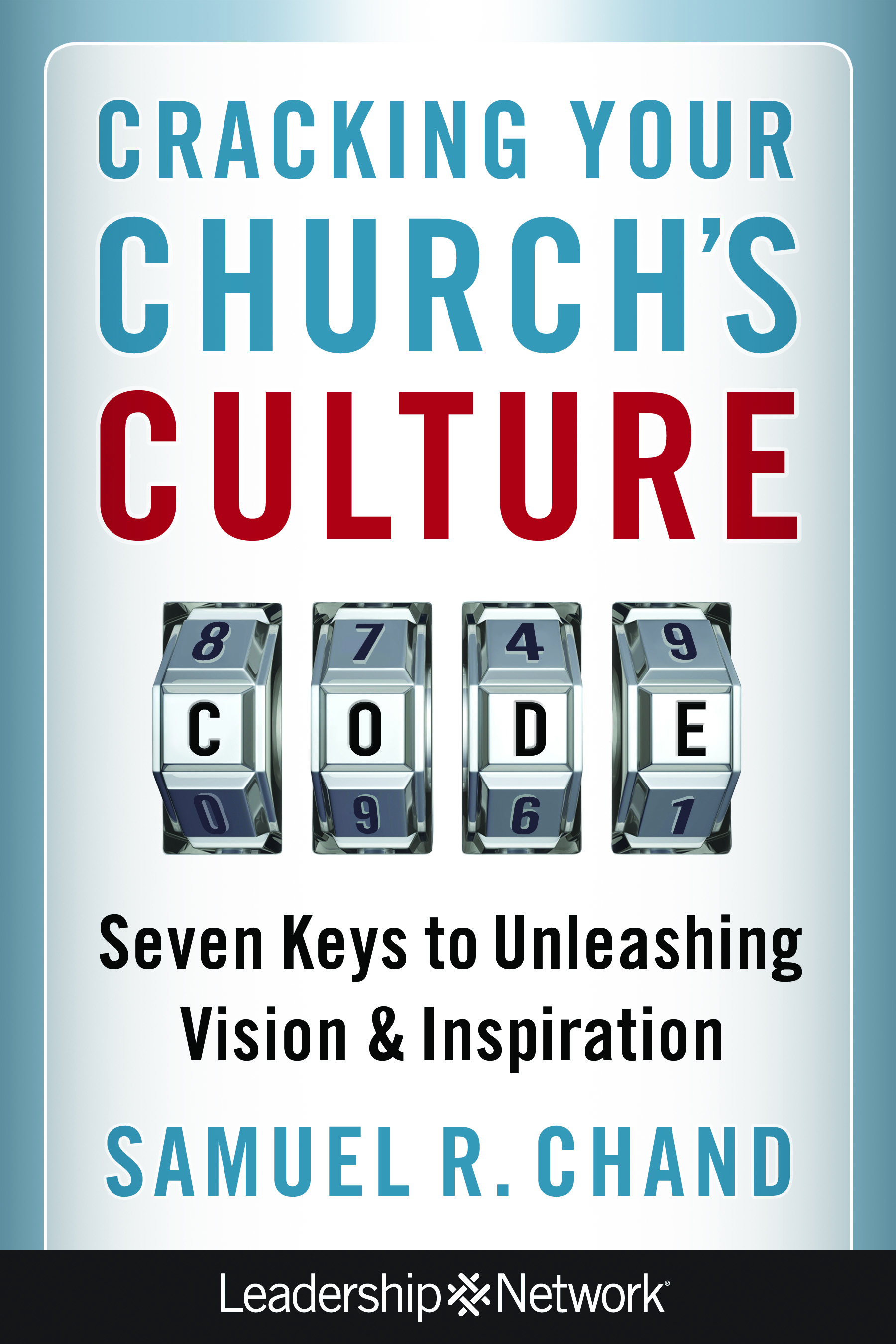
Samuel Chand brings a much needed perspective to the hype over mission statements and strategy with the book Cracking Your Church’s Culture Code. Why do great strategies not produce results? “culture eats strategy for lunch. You can have a good strategy in place, but if you don’t have the culture and enabling systems, the negative culture of the organization will defeat the strategy.” As a leader who is tasked with helping churches strategize and revitalize for effective ministry this book has been very helpful to me and will be for anyone in church or secular leadership. Dr. Chand defines culture as “the personality of the church or nonprofit” and in the book he gives you insight on how to identify problem cultures, how to influence culture positively and negatively, and how to change a negative/defective culture. The author uses many personal stories and real life examples from his work as a leadership consultant, making the book easy to read. Well worth reading for any leader interested in organizational effectiveness.
Here are a few of my favorite quotes:
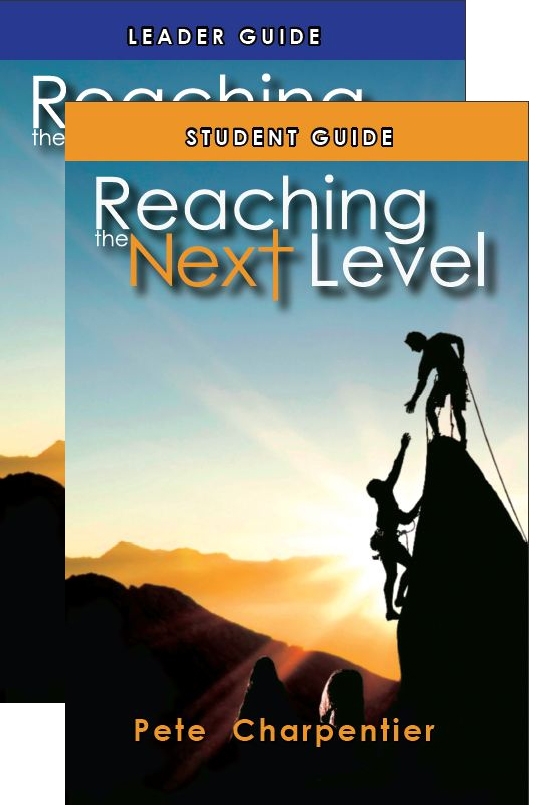 One of our Northshore pastors has given a great discipleship resource to us. Pete Charpentier, Pastor of Woodland Park Baptist in Hammond, recently published Reaching the Next Level. Pete is a Pastor with a heart for discipleship and multiplication. The books are designed for one to one or one to two mentoring or discipling relationships, but I’m enjoying working through it as a personal devotional as well. It could also be used in a small group setting. Check out Reaching the Next Level. Also check out Pete’s blog.

“The world is multiplying while the church adds (at best).” Ralph Moore in How to Multiply Your Church: The Best Way to Grow
Confession: I day dream about being caught up in a movement that would bring Great Awakening like transformation to my community, country, and world. I believe the concept of saturation church planting and evangelism is a path to take to this end. This book is now one of my favs (along with Viral Churches by Ed Stetzer and Warren Bird, The Multiplying Church by Bob Roberts, Deliberate Simplicity by Dave Browning, and Church Planting Movements by David Garrison) on this topic. Really not a whole lot of how to, but more motivation to get out there and do it. And that’s kinda the point we’re at in the history of Christianity. We’ve focused so much on how to and not enough on true reproduction that we are well behind when it comes to keeping up with evangelizing the world’s population. For instance, Moore states early in the book, “The # of protestant megachurches has mushroomed from 16 in 1960 to 1,210 by 1995. The population quadrupled since 1900, while the number of churches has grown by a mere 50%. In other words, the population grew 8x as fast as churches could multiply.” Ralph Moore speaks as a practicioner and coach. Here’s some of my favorite quotes:


 Lane Corley