Church Plants and Volunteer Mission Teams, Part 1
Mission Trips can be powerful tools for the growth of individuals and churches. As a church planter, I have considered every mission team as a force multiplier, multiplying the impact of our church’s outreach in the community. However, they can also be a drain on a church plant and/or planter if proper planning, communication, and strategy development haven’t gone into the trip.
In the next two posts, I want to talk about some tips for producing win-wins out of Mission Trips to help local church plants. Today, rules of thumb for Church Planters. Tomorrow, rules of thumb for churches going on a trip to help a church plant.
Five Rules of Thumb for Church Planters Working with Volunteer Mission Teams:
1. Invite Others to join you on your mission to reach that community.
If God has called you to plant a church, He’s most likely called others as well. He wants to call people from outside your context to join His mission of reaching your community. Start with churches that you have relationships with and invite them to consider supporting you through prayer, financially, OR by taking a mission trip to help you with outreach. There may be times when you help them, more than they help you. That’s part of having a kingdom view of your church plant’s place in history.
2. Ask for a Pre-Visit from a leader.
By far, the most productive mission teams always send an advance team to plan and prepare. That may look like a 1-2 person team several months before or a small team several days before the rest. As you’re planning for outside mission teams, always ask for an advance team of some kind to prepare the way. And the larger the group, the more necessary this will be.
3. Stay away from back-to-back groups. Unless you have Full-Time Staff.
As a church planter, time for the important work of rest and follow-up is always squeezed. You’ll need a week to recover and follow up properly between teams. Unless you have a full-time staff taking care of details. Then plan for at least 3-5 days between teams.
4. Set your calendar and strategy early.
Set your calendar early, so that when mission groups call, you know what times you have available and can receive teams and you know what you need to do to grow your church at this stage in history. This will save you from an exhausting spring or summer that leaves you feeling that you didn’t accomplish anything toward the planting of your church.
5. Plan for follow-up.
Part of a great mission trip experience for a church is seeing the impact they had on you and your mission. Send thank you notes, send pics of the trip or the results if they’ve promoted an event for you that they didn’t get to stay in town for. Send videos as you grow, so that they can feel like they’re a continued part. And invite them back.
Some of our best friends and partners in ministry are people who came on a mission trip to help our church plant. Some of them are now planting churches themselves. The investment in each other and the relationship built between the planter, plant, and church during mission trips is unique. Follow these rules of thumb for a great experience.
Tomorrow we’ll turn to some things churches taking a trip to help a church plant will need to remember to have the greatest impact.
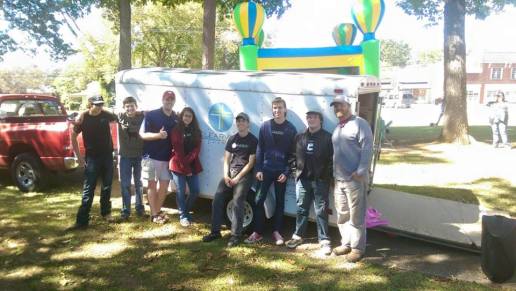
Mission team from Georgia that helped our church plant with Block parties during the summer of 2014.
Posted on March 8, 2016, in Church Planting and tagged Church Planting, Mission Trips. Bookmark the permalink. 1 Comment.


 Lane Corley
Pingback: Taking a Mission Trip to Help a Church Plant? 7 Things You Need to Know | Lane Corley