Author Archives: Lane Corley

“Why do you give?”
 Someone ask me recently, “Why do you give?” Talking about the practice of giving a percentage of our income to our church & other ministries. My answer: Well, I WAS TAUGHT the discipline by my parents when I started mowing yards for $7 a piece at the age of 10 years old. They’d help me count my money out that needed to go in the envelope at church each Sunday. I obediently practiced THE DISCIPLINE, hesitantly at times, as I opened my first bank account & started my first job in my teen & college years. Over the years, I’ve experienced THE PROMISE of God to care for needs of the generous over & over again. Now, I can say I know THE JOY of giving as I see my money pooled with others for the good of God’s mission & the JOY of others. Now, if I didn’t give, I’d feel naked.
Giving should be TAUGHT, as a DISCIPLINE, so that people can know the PROMISES of God, for the sake of their own JOY & the joy of others.
[from this quarter’s Contribution Statement letter from our church]
It’s my belief that giving isn’t primarily about my church’s budget, but my heart’s obedience & worship. The Bible commends regular, sacrificial, & cheerful giving to us as a way of life. Our church offers us the opportunity to pool our obedient giving together for the sake of a common mission. Church is about obedient hearts coming together.
Each quarter our church sends out contribution statements that give us an opportunity to examine our own obedience:
- Have I given regularly? (1 Corinthians 16:2) If not, pick a regular rhythm to begin giving. Once per month, once per week, each time you’re paid, etc.
- Have I given sacrificially? (Malachi 3:10) The Old Testament commands & Jesus commended 10% of our income. In the New Testament many gave all they had. Pick a % of your income that would be sacrificial & try giving it regularly & see how God honors His promises.
- Have I given cheerfully? (2 Corinthians 9:6-7) Is there an enthusiasm in my heart about the opportunity to grow God’s kingdom & put my faith in God’s promises?
Giving has an impact on others, sure, but its greatest impact has been on me.

Breaking the 50 Barrier in Your Church

The vast majority of churches start out with less than 50 people. Actually, 70% of our current plants in Louisiana started below 50. 38% (or 618) of all Southern Baptist Churches in Louisiana reported attendance below 50 in 2018.
Having 50 people or less is not bad. In some communities, 50 is a big church. A church of 50 has some advantages. Less overhead. More community. 50 people can encourage one another and reach out in ways that bigger churches cannot.
Most pastors have the intention of their church growing beyond 50. Mostly because we are motivated to see more and more people saved and discipled for the glory of God. Also, if you are seeing to be a vocational minister and make a living as a clergyman, but 50 people is usually not enough to sustain a large personnel budget in a church.
50 can be a barrier that’s tough to get beyond. So how do we get beyond 50 people?
1. Pray for breakthrough opportunities!
Sometimes a breakthrough opportunity can happen in the life of a church. These are opportunities that open up that can only be explained as a work of God. A key meeting place for a church plant, a well-placed news story, a large financial contribution, a merger with another congregation. Pray regularly for God to open doors that man cannot open or explain.
These do not always = church growth, but they signal God is at work and will usually lead to fruitfulness and health (which have been known to lead to church growth).
2. Give away responsibility and authority
40-50 is a barrier often because 40-50 is about the number of people that one person can lead by himself. Unfortunately, many leaders are just not willing or able to let go of or share the reigns to let others lead with them.
To multiply, the leader must become a leader of leaders.
Fear of losing control. Fear of someone doing it better. Fear of someone messing up. And, “They’re just not ready yet!” I know. Every time I read the passage about Jesus sending out the 70, I have to stop myself from yelling, “They’re just not ready yet, Jesus!”
Sending the disciples out was part of Jesus’ strategy for getting them ready, and it will be so for your leaders as well. For the sake of your sanity, for the development of people, and the growth of church and kingdom, let go and send them into ministry and leadership.
3. Develop a 2nd and a 3rd group
40-50 is a barrier often because it’s a group that can fit in one big room. And sometimes we are too much in love with knowing everybody, having everybody together all the time, and having everybody listening to me (ouch!).
To move past 50 you need multiple groups, which means multiple leaders, which means more people owning the vision and growth of the church.
And starting multiple groups, whether its classes, teams, or whatever, helps get multiplication muscles moving for future growth.
4. Establish systems that lead people to Christ and His mission
How do people hear about your church? What do we want people to know and do once they attend? How do we want people to connect beyond just attendance? How will we help people move toward Christ? How do we help people become leaders?
These kinds of questions help us develop a step by step path for new people coming into the church. Today more than ever, connecting with Christ and His church is not something we can assume people know how to do. We have to lead them there. Systems help us do that.
5. Be on the lookout for speed bumps and dead ends.
Where are people getting hung up in their development as disciples? What is causing attendance to stagnate? What needs are going unmet? Some common speed bumps:
- Building & space issues. A full building is fun for us pastors, but it can put a lid on the growth of the ministry. Starting a second gathering or moving to a larger facility can keep the group growing. Rule of thumb: at 60% full, start making other arrangements and thinking about how you can create more space (2nd service, larger facility, etc.).
- Unity issues within the church. The radar of the world is up for hypocrisy and disunity among believers. Keep relationships straight in order to grow people and the church.
- Needs in the body that are going unmet. Watch for your Acts 6 moments. In Acts 6, the Hellenistic widows were being neglected, threatening unity and testimony. A ministry was started to meet the needs and keep the people and churches growing together.
What other issues or observations about breaking the 50 barrier would you add to my list?
One of my favorite church planting axioms is “In every apple there is an orchard.” God made every living thing in creation with the potential to make more. We’re all carrying seeds that can be planted to grow more of what God wants. For us, that’s disciples and churches. Do you see your church, no matter the size as a potential orchard to create more for God’s glory?

You Don’t Really Lose at the Buzzer

Villanova’s Kris Jenkins sinks a last second shot to win the 2016 National Championship.
My high school basketball career ended with a buzzer beater loss in the 3rd round of the 1992 LHSAA playoffs. My high school baseball career ended in the 2nd round of the LHSAA playoffs with double suicide squeezes in the bottom of the last inning. Watching last nights NCAA Championship game with Villanova winning over North Carolina reminded me of the pain. Ouch! Of course, both times, the pain was not in that last second shot, but in the regret of something that happened earlier in the game that could have made the difference. In that last basketball game, I had missed a free throw that could have tipped the score in our favor. When the buzzer sounded, my mind immediately went to that moment. In that baseball game, there were base running blunders, there were opportunities missed throughout that could have made the difference. Games are not necessarily lost at the last second.
The Bible tells us that will be true in eternity as well. There will be a last second for all of us (Hebrews 9:27). And now we have opportunities to prepare & help others prepare. If we miss the opportunities we’ll be held accountable for the eternal loss that others may experience (Ezekiel 33:8). Let’s not wait for the regret of that moment, but make the most of every opportunity we’re given today (Colossians 4:5).

In Christ, We Stand Where It Has Already Burned
One of the favorite titles I’ve held in my life (besides “Dad”) is Volunteer Fireman. I was honored to volunteer with one of St. Tammany Parish’s finest Volunteer Fire Departments for a number of years and still like to provide spiritual care for our first responders as a Volunteer Chaplain. One night I was out with our guys for a woods fire. The fire was away from a road so our trucks couldn’t get close. The chief says, “I need to know how close that fire is. Two of you go see.” Since I hadn’t volunteered for any assignments involving burning buildings, I jumped out first and took off through the thick woods. As we approached the fire, the wind picked up and we noticed that it was coming at us fairly fast and the way we had come was too thick for us to be able to make a quick escape. We began clawing as fast as we could parallel to the fire until we found a spot that was burning low enough to jump over. The environment at that point changed from scary to eery. The ground singed and scarred, smoke rising, but we were safe. We were standing where it had already burned and the fire would not be able to burn there again. We followed the fire up to the trucks at which point it was quickly extinguished.

That night I was reminded of 1 John 2:2, “He is the propitiation for our sins, and not for ours only, but also for the sins of the whole world.” The word propitiation is used only here in the New Testament and it is filled with meaning for the Christian. The word means “the appeasement or averting of God’s wrath or justice.” So, Jesus, through His death on the cross, appeased, absorbed, and averted God’s wrath toward me. Because of my sin, I faced the fire of God’s judgement (see Romans 1:18, John 3:36), but in Christ I have moved over to where the fire has already burned. Jesus took my judgement, He took my sin, He took my penalty, He took my justice. In Christ, there is an eery safety. There’s been fire here, but there won’t be again.
Hebrews 9:27 says, “it is appointed for man to die once, and after that comes judgment.” On that day of judgement, which side of the fire line will you be standing on?

Taking a Mission Trip to Help a Church Plant? 7 Things You Need to Know
Church Plants and Volunteer Mission Teams, Part 2
Mission Trips can be powerful tools for the growth of individuals and churches. As a church planter, I consider every mission team a force multiplier, multiplying the impact of our church’s outreach in the community. Yesterday I wrote about five rules of thumb for church planters. Today, we turn to the sending church. Here are seven key things to know if your church is taking a trip to help a church plant:
1. It’s not about you.
Every Mission Trip should be about the people that will be served by your church. But sometimes when our expectations are unmet or we see things or are asked to do things out of our comfort zone, things turn inward. Train your team to expect to be uncomfortable and no matter what happens make the trip about the community, church, and people you’re serving. Love the military axiom that applies well to Mission Trip Preparation: “Get comfortable being uncomfortable.”
2. The Planter is caring for you PLUS trying to pastor a church.
The church planter is concerned about you, but he also has a job or two. He may need to make a hospital visit, prepare for Sunday’s sermon, lead a small group Bible Study, etc. As much as he may want it to be, his full-time job will not be to be at your beck and call. If you need that, explain that ahead of time so arrangements can be made.
3. The people at their church are probably new to this.
One of the most frequently asked questions from mission teams: “Where are the people from your church? Why aren’t they helping?” Well, most likely if it’s during the week, they’re at work. Just like you do not hang out at the church and help the pastor most of the time when you’re at home. Also, in most church plants, the people are new to faith and new to missions. The planter as disciple maker is moving them on a path toward engagement with faith and servanthood. Your presence will help as they see you taking a week or weekend to give of yourself. But don’t have unrealistic expectations and don’t be too critical if some of the people from the mission church seem immature in the faith. They probably are. And that actually means the church planter is doing a good job.
4. They love their community. Don’t trash it.
When you go on a mission trip, the community will be different from yours. There may be some things that seem strange to you. There may be some things that seem wrong to you. Hopefully, that’s why you’re there, to improve the community through the gospel and with your unselfish presence. Talking bad about what you see may put the planter on the defensive or hurt those you’re serving. Train your team to leave the community better than when you arrived through encouragement and servanthood.
5. Money is very tight. Bring some.
If you’re taking on projects that you know will cost a lot of money, consider footing the bill. Money is always tight for the church planter family and the new church. Ask them what they can afford to cover during the week ahead of time. Also, consider a love offering if they’ve provided housing for your team. Ask them if they took a day off work to help you around the community and consider covering that cost. And one of the best things your group could do for a lot of church plants is give the planter a date night with his wife.
6. Try to blend in.
If you made T-shirts for your team, wear them on your day off in the community or on the way home. Remember, it’s not about you. You are serving as an extension of the church plant. The church plant will be better off if after your mission trip, the community is saying, “That new church in the community served us” rather than “A big church from ____ came here and volunteered in our community.”
7. Commit 3-5 years.
The mission teams who have had the greatest impact on our community, new church, and family are those who make return trips. Return trips will allow your church to see the annual progress of the new church as they return each year. Anticipation will build naturally for each trip. A visit from the church planter to speak at your church could create a powerful relationship. You could even work it out with a church planter to help them develop one particular area of church life that your church is very strong in – i.e. VBS, Kids Ministry, Evangelism, etc. In that way, you’re reproducing yourself in another community with each trip.
I’m excited to see the huge swell of support for church plants and more churches taking in-country trips to help new churches. Use these 7 need-to-know things to train your team for maximum impact.
If you are a church planter or a church that has taken a trip, what else would you add to this list?

Our church plant, Bridge Church, got to help a church plant in San Antonio last summer.

Church Plants and Volunteer Mission Teams, Part 1
Mission Trips can be powerful tools for the growth of individuals and churches. As a church planter, I have considered every mission team as a force multiplier, multiplying the impact of our church’s outreach in the community. However, they can also be a drain on a church plant and/or planter if proper planning, communication, and strategy development haven’t gone into the trip.
In the next two posts, I want to talk about some tips for producing win-wins out of Mission Trips to help local church plants. Today, rules of thumb for Church Planters. Tomorrow, rules of thumb for churches going on a trip to help a church plant.
Five Rules of Thumb for Church Planters Working with Volunteer Mission Teams:
1. Invite Others to join you on your mission to reach that community.
If God has called you to plant a church, He’s most likely called others as well. He wants to call people from outside your context to join His mission of reaching your community. Start with churches that you have relationships with and invite them to consider supporting you through prayer, financially, OR by taking a mission trip to help you with outreach. There may be times when you help them, more than they help you. That’s part of having a kingdom view of your church plant’s place in history.
2. Ask for a Pre-Visit from a leader.
By far, the most productive mission teams always send an advance team to plan and prepare. That may look like a 1-2 person team several months before or a small team several days before the rest. As you’re planning for outside mission teams, always ask for an advance team of some kind to prepare the way. And the larger the group, the more necessary this will be.
3. Stay away from back-to-back groups. Unless you have Full-Time Staff.
As a church planter, time for the important work of rest and follow-up is always squeezed. You’ll need a week to recover and follow up properly between teams. Unless you have a full-time staff taking care of details. Then plan for at least 3-5 days between teams.
4. Set your calendar and strategy early.
Set your calendar early, so that when mission groups call, you know what times you have available and can receive teams and you know what you need to do to grow your church at this stage in history. This will save you from an exhausting spring or summer that leaves you feeling that you didn’t accomplish anything toward the planting of your church.
5. Plan for follow-up.
Part of a great mission trip experience for a church is seeing the impact they had on you and your mission. Send thank you notes, send pics of the trip or the results if they’ve promoted an event for you that they didn’t get to stay in town for. Send videos as you grow, so that they can feel like they’re a continued part. And invite them back.
Some of our best friends and partners in ministry are people who came on a mission trip to help our church plant. Some of them are now planting churches themselves. The investment in each other and the relationship built between the planter, plant, and church during mission trips is unique. Follow these rules of thumb for a great experience.
Tomorrow we’ll turn to some things churches taking a trip to help a church plant will need to remember to have the greatest impact.
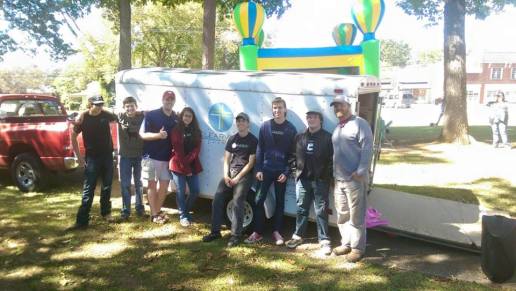
Mission team from Georgia that helped our church plant with Block parties during the summer of 2014.

Do I HAVE TO go to church? No, I GET TO go to church!!!
Church is sometimes billed as boring, out of step with real life, or something in the way of so many other awesome opportunities that come our way on the weekend. The question we sometime ask as kids, but that can stay with us into adulthood, “Church? Do I HAAVVVVEE to?”
If we really understood God’s view of church & His purpose for it, we would change it from a HAVE TO, to a GET TO. Here’s some of the things we GET TO experience through connecting with a church, that make it worth it.
1. I GET TO experience God at work.
Whenever believers get together, Jesus promised to show up as well (Matthew 18:20). And He promised His power would be active through the work of the church (Matthew 16:18). In Christian relationships, we see him at work in the lives of others as we hear & see God working in their lives. We also experience God at work using us as we step out & use our gifts in ministry in the church.
2. I GET TO pool my resources together with others for God’s purposes.
From the very beginning we see churches demonstrating radical generosity to meet each others needs & the needs of the world (Acts 2:41-47). Paul, who started many of the first churches in the Asia Minor, taught the churches to set aside money on the first day of the week to be given for God’s purposes (1 Corinthians 16:2). He taught that giving was to be done regularly, sacrificially, & cheerfully (2 Corinthians 8-9). Giving is not just about meeting the needs of the church. It is an act of worship, reflecting back to God how great He is worth to us, & declaring that our faith is in Him. But I do get excited about giving to my church as I think about how my giving, pooled with others, will make a great difference in our world.
Pooling my resources is also, not just about money, but gifts & abilities. In church, we pool our God given spiritual gifts, passion, abilities, & experiences for the good of each other & the world. The kingdom & church grows by each one contributing their part (Ephesians 4:16).
3. I GET TO die to my sin & selfishness.
Christian relationships are to be marked by selflessness & sacrifice (John 13:34-35; Matthew 20:28; Philippians 2:3-4). In relationships, I’m always seeing how selfish I am. Seeing my selfishness & the selfishness of others, is actually a great opportunity for growth! Some of us see it & change. Some of us see it & vow not to change. Some of us see it, & unfortunately run away. Yep. Relationships at church can be hard. People can be difficult. Differing personalities, beliefs, upbringings, preferences can collide & create sparks. But I’ve learned that if I embrace the sparks & not runaway when I’m confronted with sin & selfishness in me & others, then we are all sharpened & changed & transformed into what God desires for me to be.
Lane, do you mean, God wanted relationships to be hard. Proverbs 27:17 says it like this, “As iron sharpens iron, so one person sharpens another.” Iron sharpening iron is a messy process. But necessary for a tool or blade to be at its greatest strength. Same is true for us in regard to relationships. We will be at our greatest strength when we are sharpened by relationships with others. Relationships where I can humble give & receive love & correction & encouragement & teaching, etc., etc.
These are three things I GET TO DO as I commit to a church. There are more. Like I didn’t even mention the coffee & donuts. If you’re not a part of a church, let me encourage you to jump in. Commit to a relationship with God. Commit to relationships with imperfect people you’ll find there. Commit to change as your confronted with sin & selfishness. You won’t regret it.
You can join my church if your in West St. Tammany Parish. We meet each Sunday, 10:30am at the Maritime Museum in Madisonville. We’re finishing a series on relationships this Sunday called Let the Sparks Fly. Come early for coffee!


Missions and Ministry Team Report

In 2015, the Louisiana Baptist Missions and Ministries Team (Church Planting, Compassion Ministries, Disaster Relief & Men’s Ministry, Women’s Mission & Ministry) conducted 53 Conferences & Events with a total attendance of 8,545 people. The total money spent on conferences and events was $108,727 for an average cost per attendee of $12.72.
Grateful to be part of this team.

Church Planting Update
>> With 88% of reports in, 121 new commitments to Christ, 24 baptisms reported by Louisiana Church Plants in January.
>> We added 2 new churches last month, bringing us to 9 for 2016. At least 3 more starting in April! Great start! Pray for Passion Church in Jennings, Planter Ryan Temple & Faith Church in Franklinton, Planter Larry Lucas.
Keep up with Church Planting among Louisiana Baptist by joining our Facebook Group.
Pic of recent small group gathering with January start, Christ Church Abbeville, planter Scott Guillory.


The Impact of OFF-CAMPUS Church Multiplication

A multiplication mindset is essential to church & kingdom growth. Our churches grow through on-campus multiplication of leaders, groups, & ministries. The kingdom grows through off-campus multiplication of ministries, churches, & campuses. Most of us pastors & churches tend to operate by addition thinking or by “protect against subtraction” thinking most of the time. Multiplication is more audacious, risky, & forces our minds to think big. And if tried, it tends to help us add people & protect against subtraction. Ed Stetzer and Warren Bird in their great book Viral Churches point out a study by Jeffrey Farmer of 309 churches that sponsored a new church(es) that showed that worship attendance increased 22% and giving increased 48% for the five years after sponsorship of a church plant.
Out of curiosity, I did a little research on Louisiana churches that have made the biggest commitment to OFF-CAMPUS multiplication since 2010, either through financially supporting a church plant in a big way, sending leaders to help start a new church, or launching an additional campus. There were 24 very obvious choices. Further research on sponsor churches in Louisiana will be ongoing. These 24 churches range from 120 to 4,000 in attendance, with annual receipts from $90,000 to $5 million annually. Here’s what we found:
>> 92% (22/24) increased in attendance WHILE sponsoring a new church.
>> 83% (20/24) increased baptisms WHILE sponsoring a new church.
>> 88% (21/24) increased undesignated receipts WHILE sponsoring a new church.
Five of these churches had MORE THAN DOUBLED while aggressively focusing outward on church multiplication. As a matter of fact, the smaller the church, the more dramatic impact that multiplication had on their numbers.
There were 9 churches that had started & carried additional Multi-site campuses since 2010. Out of those 9:
>> 9/9 reported increase in attendance within 3 years.
>> 8/9 reported increase in baptisms within 3 years.
>> 8/9 reported increase in undesignated receipts within 3 years.
Now, there are so many factors that play into a baptist churches growth, including pastoral transitions, economic factors in the community, etc. But interesting to see that most of the time, when churches give away themselves, they tend to grow.
A Multiplication Mindset is our solution for growing the Kingdom, revitalizing churches, reaching the world. I’m passionate about church planting, but I can say the greatest need is not more new churches, but more mother churches. Bob Roberts, in his book The Multiplying Church said it like this,
“The future of faith in America (and anywhere in the world, for that matter) is not tied to planting more churches, but in raising up of mother congregations of every tribe, tongue, denomination, and network that are reproducing like rabbits.”
And for some, turning to multiplication will be the key to turning around & revitalizing. Ralph Moore in his great book How To Multiply Your Church says,
“I believe a stalled congregation can nearly always grow its way back to momentum by preparing for and launching a new church. The process is invigorating.”
How can you begin to think MULTIPLICATION instead of ADDITION? Sponsoring a new church, mentoring a potential leader, looking at potential ministry to a population segment that is underserved in your area.
And if we are going to reach our world for Christ, we can’t just add, we must multiply. In my area, we found that only 3.3% attend worship at a SBC Church on any given weekend, & only 7% attend an evangelical church of any kind. If we wanted to double these figures to 6.6%, tracking with population growth over the next 10 years, we would have to add over 16,000 worshippers! Sounds daunting, but the potential for lives & communities changed makes it worth the effort! Let’s get to multiplying!
Check out these resources to help you get started on your church multiplication journey:


 Lane Corley